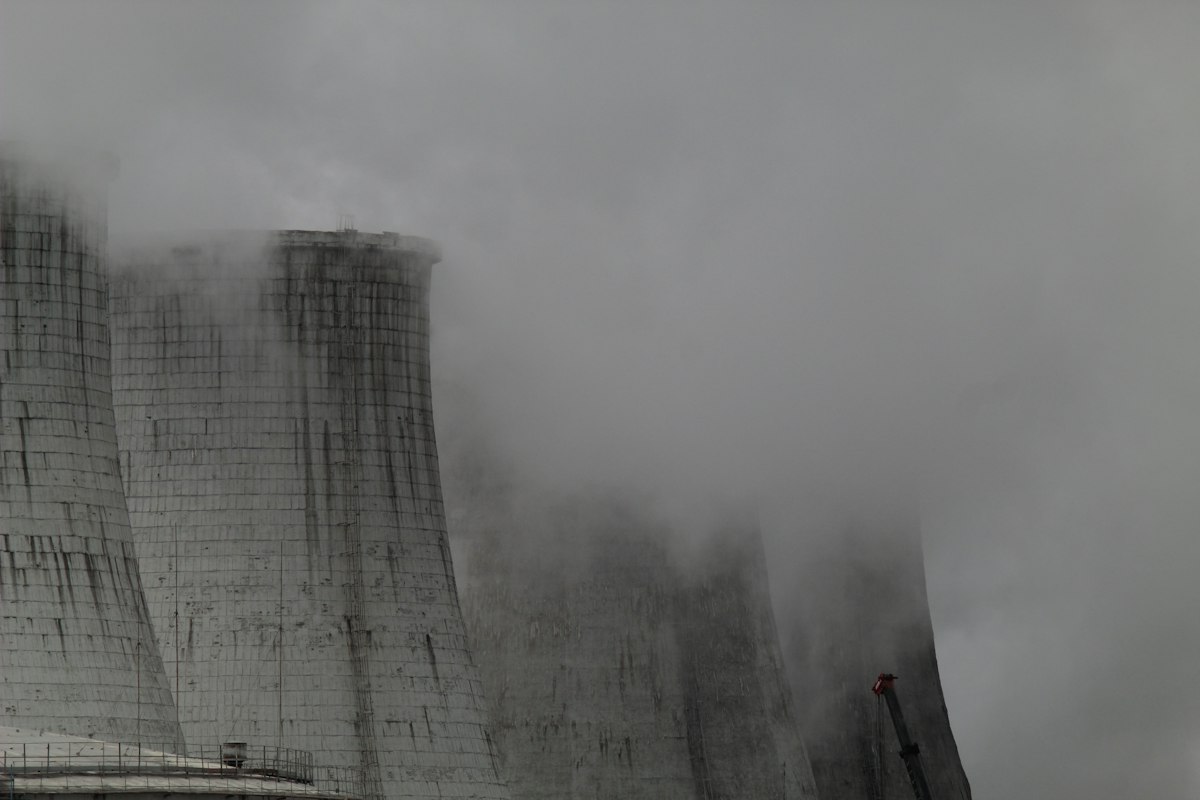
A Nuclear Power Loan Built for the AI Era
America's nuclear power fleet has not seen a new commercial reactor finished on time and on budget in a generation. So when the Department of Energy said this week that it would commit up to $5 billion to help Constellation Energy wring more electricity out of the reactors it already runs, the message was unmistakable. The fastest way to add nuclear power in America is no longer to pour concrete. It is to upgrade the fleet already humming along the grid.
The conditional loan commitment, offered through the DOE's newly branded Office of Energy Dominance Financing, targets eight Constellation plants: Braidwood, Byron, Clinton, Dresden, LaSalle and Quad Cities in Illinois, Calvert Cliffs in Maryland and Limerick in Pennsylvania. Energy Secretary Chris Wright, speaking from the Byron plant, said the work would unlock roughly 1.1 gigawatts of fresh capacity, enough to power more than 930,000 homes, from reactors already licensed and operating. That is the equivalent of a brand new large reactor conjured out of better turbines, upgraded steam generators and modern digital controls.
The financing flows through a program the administration calls UPRISE, short for the Utility Power Reactor Incremental Scaling Effort, launched in March to chase a presidential directive ordering the department to facilitate five gigawatts of uprates across the national fleet. Constellation is the second company to tap it in a month. Vistra secured a roughly $4.2 billion commitment in early October for upgrades at plants in Pennsylvania and Ohio. The pattern is now obvious. Washington has decided that nuclear power is strategic infrastructure, and it is prepared to lend accordingly.
Why Big Tech Wants Old Reactors
The timing is no accident. Every gigawatt in this deal already has a buyer in mind, and the buyers are the largest technology companies on earth. Artificial intelligence has turned electricity into the binding constraint on growth, and the hyperscalers have concluded that the cheapest clean megawatt available at scale is the one sitting inside a reactor that is already paid for.
Google set the template on October 6 with a twenty year agreement underwriting about 890 megawatts of new output across eleven reactors, an arrangement backing more than $4.3 billion of Constellation investment. Amazon moved first, signing a deal on September 30 tied to Calvert Cliffs that supports a 190 megawatt uprate and more than $3 billion in spending. Meta has effectively claimed the entire Clinton plant in Illinois through a separate agreement, with a further expansion on top. Even Walmart has joined, becoming the first retailer to sign a nuclear purchase agreement, for power from Dresden.
What the tech giants are buying is certainty. A power purchase agreement that runs two decades lets a company like Google plan data center buildouts against a known, carbon free supply, while handing Constellation the guaranteed revenue it needs to justify capital upgrades. The reactors do not move, the fuel is predictable and the output runs around the clock, which is exactly what a training cluster demands. Solar and wind cannot promise that at three in the morning. For an industry racing to stand up compute faster than rivals, reliable nuclear power has quietly become the most valuable commodity in the stack.
The Politics of Energy Abundance
For the administration, the deal is a showcase for a doctrine it calls energy dominance. The framing is deliberately muscular, casting electricity as the terrain on which the contest with China will be decided, and nuclear power as the weapon of choice. The department touted more than 10,000 project related jobs and repeated its claim that the added capacity would put downward pressure on electricity rates in the regions these plants serve.
Constellation chief executive Joe Dominguez wrapped the announcement in the same language. He described the approach as pairing private sector demand and investment with smart federal financing to unlock more power from the plants the country already owns, and said the commitment would let the company move faster and go further. It is a neat alignment of interests. The government gets a visible win on reindustrialization, the hyperscalers get their electrons, and Constellation gets cheaper capital than the bond market would offer on its own.
There is a genuine industrial logic underneath the slogans. Uprates are among the cheapest, fastest sources of new generation available anywhere in the energy system. They sidestep the permitting marathon and the cost overruns that have haunted projects like Vogtle in Georgia. If Washington is serious about adding tens of gigawatts of nuclear power this decade, squeezing the existing fleet is the only lever that can move quickly, and federal financing lowers the hurdle rate enough to make marginal projects worth doing.
Read the Conditions Carefully
The enthusiasm deserves a cold read, and the fine print rewards one. This is not a check that has been written. It is a conditional commitment, subject to technical, legal, environmental and financial due diligence, and the department and Constellation both acknowledge that individual uprates are not assured until definitive agreements are signed. Asked which plants might move first, the company said the announcement was all it had to share. The $5 billion is a ceiling and an intention, not a disbursement.
The numbers also wobble on close inspection. Secretary Wright described 15 reactors across the eight plants, while other accounts of Constellation's own plans count eleven. The portfolio of plants named for possible federal financing does not map cleanly onto the roster Google agreed to underwrite, which means the overlap between taxpayer backed loans and privately contracted output is fuzzier than the headline suggests. The first new Google linked capacity is not expected until 2028, so none of this electricity reaches a data center soon.
Then there is the question of who ultimately pays and who benefits. The department promoted the loan as a way to deliver affordable, reliable power to American homes, yet there is no evidence that nuclear power contracted almost entirely to Google, Amazon and Meta will lower bills for the household down the road. Constellation declined to confirm the government's claim that residential ratepayers would see savings. When a public financing program routes its output to the balance sheets of the richest corporations in the world, the promise of cheaper household electricity is the part that merits the hardest scrutiny.
A Market Being Rewired
Step back from the specifics and a larger shift comes into focus. The relationship between computing and the power grid is being rewired in real time, and nuclear power sits at the center of it. A technology once left for dead after Fukushima is now the subject of a bidding war among trillion dollar companies, and a federal government that spent years ambivalent about the atom is underwriting its expansion with public money. The AI buildout has done in two years what two decades of climate policy could not, which is to make new reactors, or at least bigger old ones, bankable again.
The risk is that the enthusiasm outruns the physics. Uprates still require regulatory approval, specialized components and skilled labor that is in short supply, and a conditional loan does not conjure any of those. If the AI capital cycle cools before 2028, some of these commitments could thin out as quickly as they appeared, leaving behind announcements rather than megawatts. Markets have already priced a nuclear renaissance that has so far produced more memorandums than electricity.
Even so, the direction of travel is clear enough to matter. The world's most powerful companies have decided that intelligence is a function of energy, and they are buying the oldest reliable source of it they can find. Washington has decided to help them pay for it. Whether that bet on nuclear power delivers cheaper electricity, a cleaner grid and a durable industrial base, or simply a transfer of public credit to private compute, will be one of the defining economic questions of the next decade. For more coverage of the forces reshaping the energy and AI economy, follow Blumefield, where we track the infrastructure behind the AI boom as it is built.