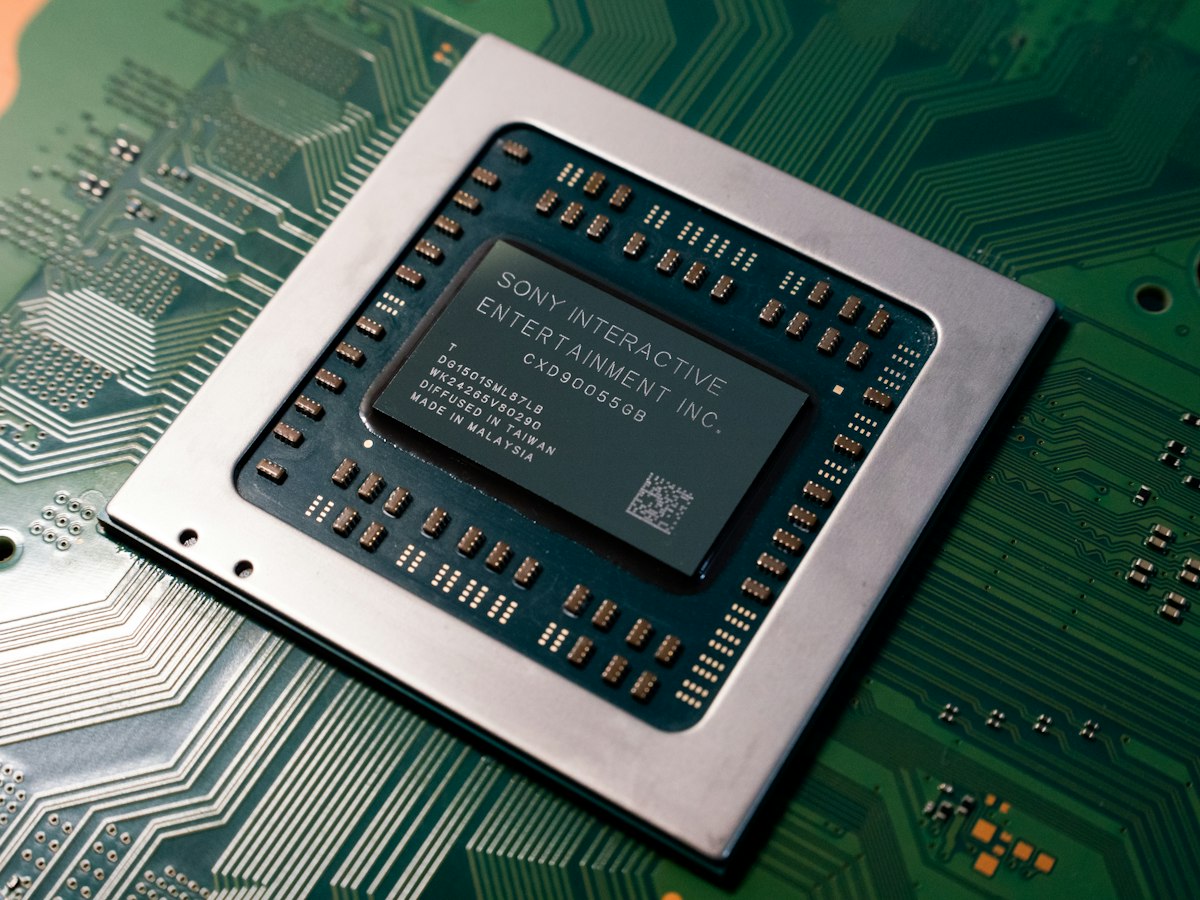
The United States has made its boldest move yet on chipmaking materials, betting half a billion dollars that artificial intelligence can invent the chipmaking materials its semiconductor industry can no longer source safely from abroad. The wager turns chipmaking materials into a frontier of national security.
By Blumefield | June 18, 2026
The $500 million bet on chipmaking materials
On June 17 the US Department of Commerce signed a definitive agreement to give SandboxAQ, the Nvidia-backed artificial intelligence company spun out of Alphabet, a $500 million award to invent new chipmaking materials. The money flows through the CHIPS and Science Act, but the logic behind it marks a sharp break from how Washington has spent that fund so far. Rather than subsidising yet another fabrication plant, the government is betting that AI can discover the molecules and chemistries America cannot currently make for itself.
The award targets a problem that rarely makes headlines yet quietly threatens every domestic chip factory the CHIPS Act was meant to build. Modern fabs depend on exotic chemicals, catalysts, magnets and battery systems, and a striking share of those inputs are controlled by foreign suppliers. SandboxAQ will use physics-based AI to design replacements, validate them with laboratory partners, then license the winning formulations to American manufacturers for mass production. Commerce Secretary Howard Lutnick framed it bluntly as a security measure, saying the award would "accelerate the discovery and innovation of critical materials and reduce our reliance on foreign-controlled materials." The Department of Commerce announcement describes the goal as reinforcing US leadership in semiconductor innovation.
Four chokepoints, one platform
The funding splits across four programmatic areas, and each one is a genuine vulnerability rather than a talking point. The first is PFAS, the so-called forever chemicals used as heat-transfer fluids, lubricants, insulating coatings and surface treatments throughout chip production, where no compliant alternative yet exists at scale. The second is catalysts, which purify the ultra-clean gases used to deposit material one atomic layer at a time and then help neutralise the hazardous exhaust the process creates. The third is permanent magnets, where China controls more than 90 percent of neodymium-based production that sits inside every wafer-printing machine, vacuum pump and precision actuator. The fourth is battery chemistry for the backup power that fabs need to avoid the yield-destroying outages that even a few minutes of disturbance can trigger.
Tying all four together is ReAQT, SandboxAQ's simulation platform, and the Large Quantitative Models it trains. Unlike chatbots schooled on human language, these models learn the laws of physics, chemistry and biology, generating their own high-fidelity training data through simulation before predicting how molecules that have never been synthesised will actually behave. According to the company's own announcement, its catalyst workflows were built on 13.5 million quantum chemistry calculations developed with Nvidia and can screen candidates at near-quantum-chemistry accuracy roughly 20,000 times faster than traditional methods. Work that once demanded decades of laboratory trial and error becomes a targeted computational campaign that runs in software first.
"Securing America's semiconductor future means controlling the materials that drive this vital sector," said Jack Hidary, the company's chief executive. His engineering deputy, Stefan Leichenauer, put the technical claim more plainly, arguing that the most accurate simulations have always been too slow to search materials at scale while fast models break down on chemistries they have never seen. ReAQT, he said, is built to solve both problems at once, compressing development timelines in a way that shifts what is commercially viable.
Why the supply chain made this urgent
The urgency here is not theoretical. China's dominance over rare earths and processed critical minerals has become Washington's most exposed nerve, and a string of export restrictions over the past year has shown just how quickly that leverage can be turned into a weapon. A fabrication plant can cost tens of billions of dollars and still be held hostage by a single magnet or coolant that only one country produces at volume. Seen that way, new chipmaking materials are not a luxury research project but the missing link in the entire reshoring story.
There is also a regulatory squeeze tightening at the same time. Environmental rules are closing in around PFAS just as manufacturers find themselves without a certified substitute, raising the prospect of newly built American factories caught between supply disruption and compliance penalties. By pointing AI at the geopolitical and environmental chokepoints simultaneously, the award tries to defuse two slow-moving crises with one research program. For readers tracking how the chip war keeps widening, Blumefield has chronicled each new front, from export controls to the global scramble for foundry capacity.
The taxpayer becomes a venture investor
The structure of the deal is as striking as its size. In exchange for the funding, Commerce will take a minority, non-voting equity stake in SandboxAQ, and if the company succeeds in commercialising materials in the four target areas, the government will collect royalty payments on the licensed formulas. Officials describe the arrangement as enhancing the benefit to the taxpayer, language that reflects a broader shift toward the state behaving like a venture investor rather than a passive grant-maker handing out cheques.
That model is fast becoming a pattern. Washington has spent the year negotiating equity and revenue-sharing terms across strategically sensitive sectors, and this award pushes the approach into early-stage research where outcomes are far from guaranteed. The bet could pay for itself many times over if even one of the four programs yields a manufacturable breakthrough. It could equally produce very little, because materials discovery remains genuinely hard and scaling a promising molecule from a simulation into reliable industrial production is harder still. The government is, in effect, underwriting scientific risk in the hope of owning a piece of the reward.
What the deal signals for the AI race
The most important signal is conceptual. For three years the AI infrastructure conversation has fixated on GPUs, sprawling data centers and the electricity needed to run them. This award quietly expands the definition of AI infrastructure all the way down to the molecular layer, treating the chemistry of manufacturing itself as something software can redesign. SandboxAQ, last valued near $5.75 billion and reportedly raising at a far higher figure, now sits squarely at the intersection of AI, quantum techniques and national industrial policy, a rare position for a company most consumers have never heard of.
For the wider market, the implications cut both ways. If physics-trained models can compress materials timelines the way the company claims, the technique will not stop at semiconductors, and the same approach could reshape batteries, pharmaceuticals and clean energy within the decade. If they cannot, the award becomes an expensive public lesson in the limits of simulation. Either way, the government has placed a concrete, measurable bet that new chipmaking materials can be discovered in code before they are ever made in a lab, with results published in venues such as Nature's npj Computational Materials rather than asserted in a press release. The outcome, not the rhetoric, will decide whether this becomes the template for the next era of American strategy, and Blumefield will be watching whether the four programs deliver.