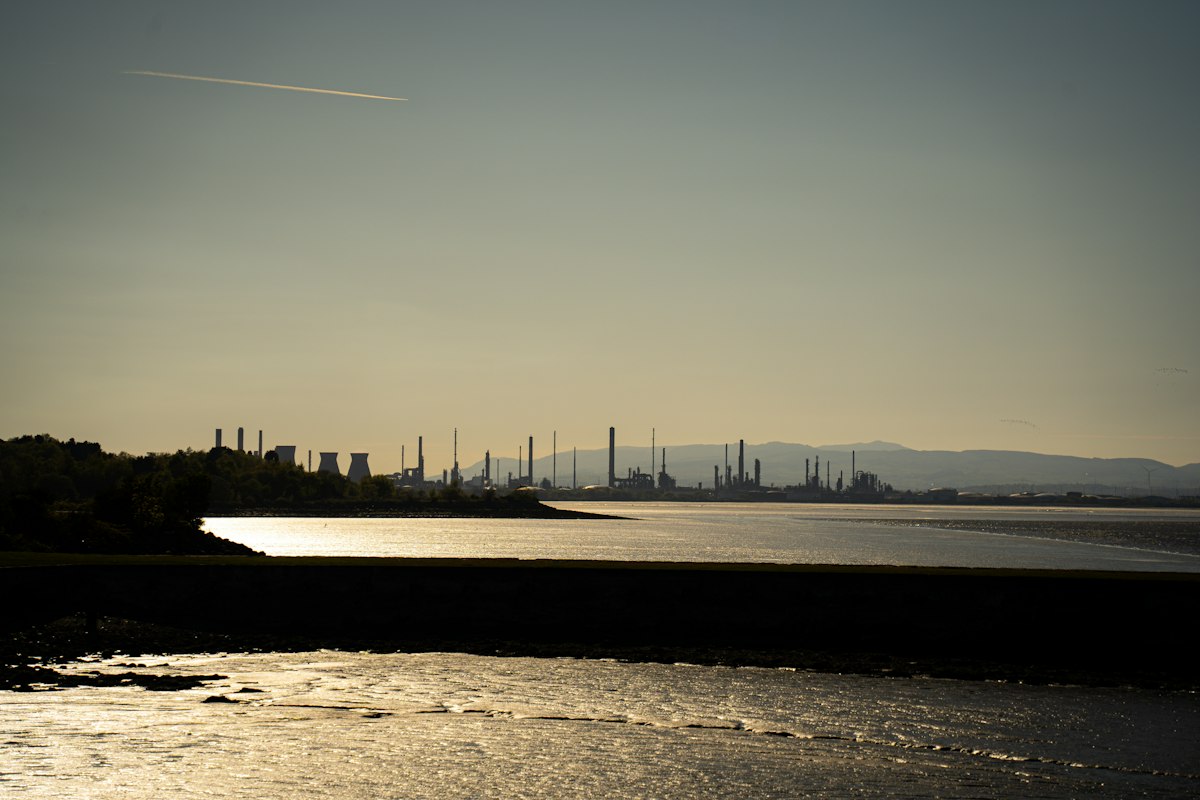
Donald Trump has signed a sweeping Russia sanctions waiver that suspends punishing tariffs just hours before they were due to bite. The order clears Russian diesel for American pumps and keeps Lukoil's foreign empire alive, even as Europe tightens the screws. The stakes for oil prices, Ukraine, and transatlantic trust could hardly be higher.
By Blumefield | October 18, 2026
A Waiver That Rewrites the Rules
On October 16, President Trump signed an executive order implementing the Lindsey O. Graham Sanctioning Russia and Iran Act, then used that authority to do almost the opposite of what the law's sponsors intended. Instead of triggering the statute's harshest penalties, the order delivered a sweeping Russia sanctions waiver that suspended a proposed 500 percent tariff on Russian goods and secondary tariffs of up to 100 percent on any nation still buying Russian energy. Those measures were due to take effect on October 18. For now, they will not.
The White House cast the decision as leverage rather than retreat, arguing that a live threat is more useful than a detonated one. The order does not dismantle the existing sanctions regime. Asset freezes under Executive Order 14024 remain in force, the Specially Designated Nationals list was untouched, and export controls on advanced technology still apply. What changed is the timing. A law written to corner Moscow now sits on the shelf, its trigger disarmed by the same administration that signed it into existence weeks earlier.
The Graham Act became law on September 18 as Public Law 119-111, billed as the most aggressive sanctions tool Congress had passed in a generation. Only one of its provisions, a ban on American purchases of Russian sovereign debt, has actually taken effect. The rest, including the tariff cannon aimed at India, China, and other large buyers of Russian crude, has been frozen indefinitely. Under the order, the Russia sanctions waiver lasts until the President or the Secretary of State decides further action is warranted, with no fixed expiry.
The Diesel Bargain Behind the Deal
The waiver did not arrive in isolation. About a week earlier, Trump announced a deal with Vladimir Putin that would route Russian diesel back into American and global supply. Under the arrangement, Russia agreed to release 300,000 tonnes of diesel immediately, 500,000 tonnes in November, and a million tonnes soon after, alongside a broader commitment to free up roughly three million tonnes of fuel. To make that legal, the Treasury's Office of Foreign Assets Control issued General License 135 on October 9, authorizing the sale, delivery, unloading, and import of Russian-origin diesel.
The politics of that bargain explain why this Russia sanctions waiver has detonated inside Washington. American diesel was averaging $6.31 a gallon, against $3.65 a year earlier, a surge driven by a seven-month war involving Iran and sharply reduced tanker traffic through the Strait of Hormuz. Pump prices that high are politically radioactive, and the administration has effectively traded a tougher line on Moscow for cheaper fuel at home. Critics call it exactly that. Supporters argue there was no realistic path to lower prices that did not run through Russian barrels.
Energy data gathered by independent researchers suggests the flows are already moving. The practical effect is that Russian refineries, battered by Ukrainian drone strikes through the summer, now have a sanctioned but sanctioned-exempt channel back to Western consumers. For the Kremlin, that is a meaningful financial reprieve at a moment when its export revenue had been squeezed hard.
Lukoil's Lifeline to 2027
The second pillar of the week's maneuvering concerned Lukoil, the Russian oil major that Washington and its allies sanctioned in a coordinated action a year ago. On October 15, OFAC extended a general license allowing Lukoil's operations outside Russia to keep running until April 25, 2027. The new license replaces one that was set to expire this month, and it covers Lukoil petrol stations worldwide, including those on American soil, so they can continue serving customers without interruption.
The carve-outs matter. The license still prohibits any transfer of funds to a person or account inside the Russian Federation, and it explicitly excludes transactions involving Russia's central bank, its National Wealth Fund, and its Ministry of Finance. In other words, Lukoil's foreign retail and refining assets can keep the lights on, but the cash is meant to stay outside Moscow's direct reach. A separate authorization covers Lukoil Bulgaria, where a major refinery supplies a significant share of the country's fuel and where a sudden shutdown would have triggered a domestic energy emergency.
For a company that looked, a year ago, like it might be forced into a fire-sale of its global network, the reprieve is dramatic. The failed attempt to offload those assets to an international trader had left Lukoil's overseas empire in limbo. This extension buys it eighteen months of breathing room, and signals that Washington is no longer trying to force the breakup.
Washington and Brussels Pull Apart
While the United States was loosening its grip, Europe tightened. On October 15, the Council of the European Union listed three individuals and nine entities for helping Russia evade sanctions, including two trading companies based in Türkiye, under fresh legal measures carrying asset freezes and travel bans. The contrast could hardly be sharper. On the same day Brussels was adding names, Washington was lifting the threat of secondary tariffs that would have punished the very circumvention networks Europe is chasing.
That divergence is the real story of this Russia sanctions waiver. For three years the transatlantic sanctions coalition held together through market stress, energy shocks, and political turnover. It is now visibly splitting, with the European Union committed to a maximalist posture and the United States pursuing a transactional thaw. European officials cannot undo the American waiver, and the American order cannot touch EU sanctions, which means the same company can be squeezed in Frankfurt and welcomed in Houston.
The backlash at home has been bipartisan. Republican senators who championed the Graham Act accused the administration of handing a gift to an adversary, and sanctions advocates on the Democratic side condemned the suspension in similar terms. For a measure designed to project unity and resolve, the Russia sanctions waiver has instead exposed how fragile the domestic consensus on Russia policy has become. Readers following the geopolitics of energy can track the fallout through Blumefield.
What the Russia Sanctions Waiver Means for Markets
Oil markets reacted with notable calm, a sign that traders had largely priced the thaw in advance. Brent crude slipped 0.27 percent to settle around $105.80 a barrel, while West Texas Intermediate climbed 2.76 percent to $97.71, a split that reflects the scramble for physical diesel rather than any glut of crude. The International Energy Agency said it would accelerate the release of more than 20 million barrels of diesel, along with the remaining volumes of some 400 million barrels of emergency stocks that member states agreed to tap earlier in the year.
Even so, the International Energy Agency warned that relief will be slow. It cautioned that oil markets may experience more turmoil in the months ahead before any surplus emerges, and it expects global balances to stay in deficit well into 2027. In plain terms, the diesel coming out of Russia helps at the margin, but it does not solve a structural shortage created by war and by a damaged tanker route through one of the world's most important chokepoints.
For businesses, the Russia sanctions waiver introduces a new kind of risk. Compliance teams now have to navigate a landscape where American and European rules point in opposite directions, where a license granted in Washington may expose a firm to penalties in Brussels, and where the political ground can shift again the moment prices or diplomacy change. The waiver has no fixed end date, which is precisely what makes it so hard to plan around.
The deeper question is strategic. By suspending its most powerful economic weapon the week it was meant to fire, the administration has shown that cheaper fuel and a working channel to Moscow now outrank the coalition that defined Western policy since the invasion. Whether that proves a shrewd piece of leverage or a costly concession will depend on what Russia does with the reprieve. For now, the pumps are the priority, and the Russia sanctions waiver is the price. Follow the next phase of this story with Blumefield's ongoing coverage.