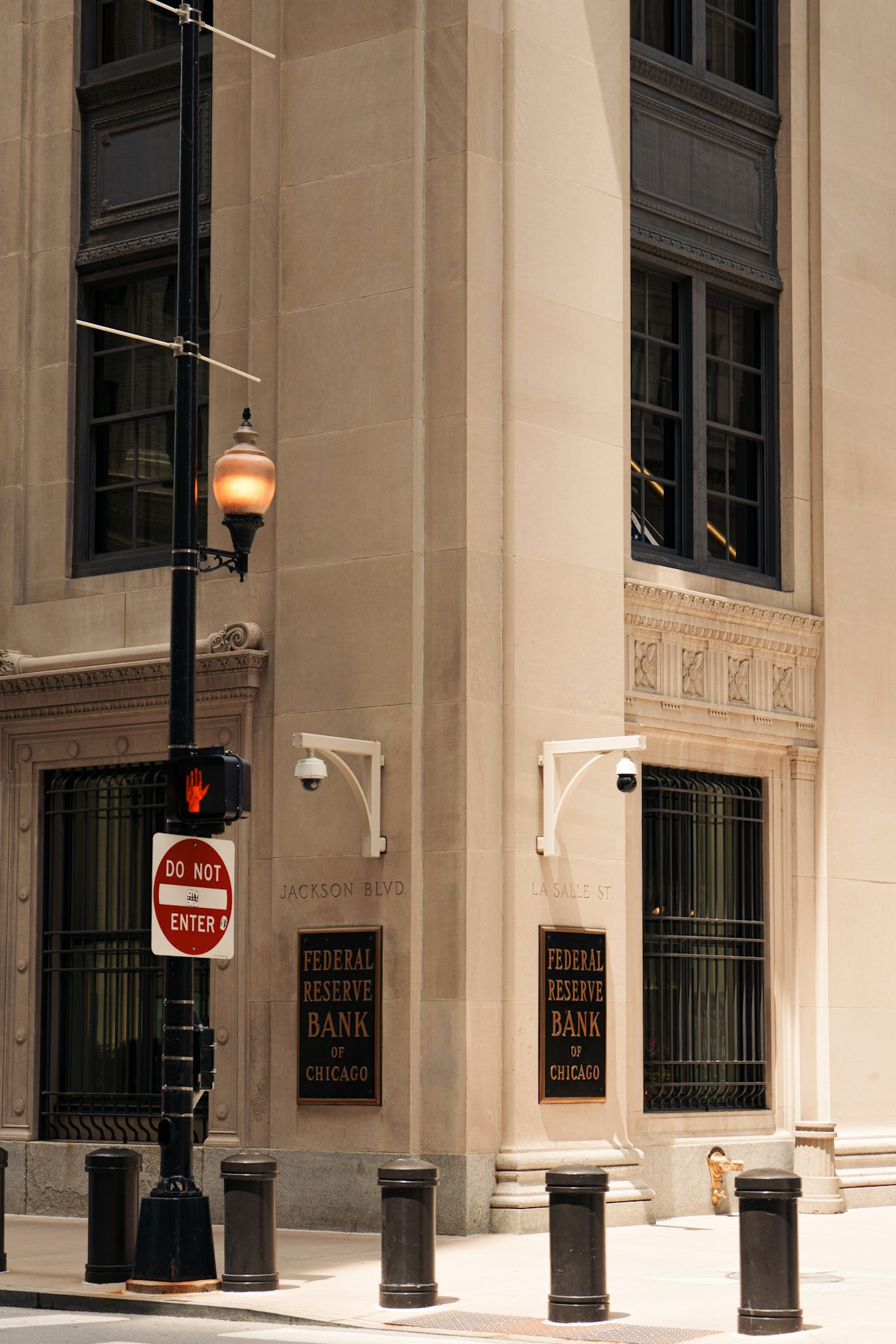
The Warsh Fed just reminded investors who is in charge, holding interest rates high while two of its own governors pushed the central bank to go even further.
By Blumefield | October 29, 2026
A Hawkish Hold That Spoke Loudly
The Warsh Fed did the expected thing on Wednesday and left its benchmark interest rate alone. What it said while doing so was anything but routine. The Federal Open Market Committee kept the federal funds target range at 3.75 to 4 percent, yet the statement it published read less like a pause and more like a warning shot, declaring in plain language that the committee "will deliver price stability."
That sentence matters because it is new. Under Jerome Powell, the central bank hedged, forecast and reassured. Under Kevin Warsh, who took the chair in May, the language has turned terse and unapologetic. The Warsh Fed described the economy as "expanding at a strong pace," an upgrade from the "solid" growth it had acknowledged only weeks earlier, and it repeated that "inflation remains elevated." Taken together, those three phrases amount to a central bank telling markets it is more worried about prices than about growth, and that it has the room to act.
The decision, laid out in the official FOMC statement, followed a quarter-point increase in September, the first rate hike in three years. Rather than signal that the September move was a one-off, policymakers framed Wednesday as a deliberate wait, not a retreat. For an institution that spent most of the decade cutting or holding, the shift in posture is the real headline.
Inflation That Will Not Quit
The backdrop explains the hawkish tone. American inflation reaccelerated through the autumn, with consumer prices running near 3.7 percent year over year in September, well above the Fed's 2 percent target and hotter than forecasters expected. Price pressures that were supposed to fade have proven stubborn, driven by resilient consumer spending, rising services costs and an economy that simply refuses to cool.
Growth, meanwhile, is running hot. The Atlanta Fed's GDPNow tracker pointed to roughly 3.4 percent annualized expansion in the third quarter, the strongest reading in a year. Robust capital investment, much of it tied to artificial intelligence infrastructure, has fed a wave of corporate spending that keeps demand elevated. A booming economy with sticky inflation is precisely the combination that argues against rate cuts and, for some officials, in favor of raising rates further. For the Warsh Fed, strong growth is not a reason to relax but a license to stay tight.
Employment has given the committee little reason to pivot. The statement noted that job gains have kept pace with workforce growth and that the unemployment rate "has changed little." With the labor market steady, the Warsh Fed has lost the usual excuse for easing. There is no weakening jobs picture to offset the inflation problem, which leaves the central bank staring at a one-sided risk.
The Dissenters Who Wanted More
The vote itself told the story. The hold passed 10 to 2, but the two dissents broke in an unusual direction. Governor Lisa Cook and Cleveland Fed President Beth Hammack both voted against the decision because they wanted to raise rates by a quarter point immediately. Dissents demanding tighter policy, rather than looser, are rare, and Cook's was the first of her tenure since joining the board in 2022.
That detail carries weight. When a governor who has leaned dovish breaks ranks to demand a hike, it signals that the hawkish center of gravity inside the committee has moved sharply. Two officials were willing to put their names to the view that the Warsh Fed is already behind the curve on inflation and should be tightening now rather than watching and waiting.
Markets read the message clearly. Futures pricing after the meeting implied a strong chance of a rate increase in December and the possibility of one or two more in 2027. Before the decision, the CME FedWatch tool had shown traders assigning less than a 10 percent probability to a hike this week, with most betting on exactly the hold that arrived. The question has quietly flipped from when the Fed will cut to how far it will climb.
Rewiring the Fed Itself
Warsh is not only changing the direction of policy. He is rebuilding the machinery around it. The chair used his press conference to announce that beginning in 2027, one of the eight annual FOMC gatherings will be set aside purely for monetary strategy, with no rate vote and no policy statement attached. By 2028, the plan calls for two such strategy sessions and six rate-setting meetings, a structure the Federal Reserve's own calendar will have to accommodate.
The rationale, in Warsh's framing, is that the committee needs room for "thinking anew about big questions, looking out over longer time horizons." He has already stripped the post-meeting statement of the dense forward guidance that defined the Powell years, arguing that in normal times, with a strong economy, the Fed should not be in the business of telling markets what it will do next. Asked what the central bank would communicate after a strategy meeting, he conceded it was "not obvious yet," a candor that would have been unthinkable from his predecessor.
These are not cosmetic tweaks. Fewer decision points and less guidance mean markets will get less hand-holding and more surprises, a deliberate feature rather than a bug in Warsh's view of how a credible central bank should operate. Critics worry that a more opaque Fed, meeting less often to set rates, invites volatility. Supporters counter that years of micromanaged expectations left the institution captured by the very markets it was meant to discipline.
Warsh also addressed the politics directly, with midterm elections weeks away and a president who has loudly demanded lower rates. He insisted that political considerations played "no role" in the committee's thinking. Whether investors believe that claim, a Fed that is holding and threatening to hike into an election is hardly delivering what the White House wants.
What It Means for Markets and the AI Boom
For households, the practical effect is that the era of cheap money is firmly over. The average 30-year fixed mortgage rate climbed to 7.33 percent, up from 7.12 percent a month earlier, and home equity loan rates pushed toward 8.8 percent. Borrowing costs are not merely high, they are drifting higher, and the Warsh Fed has signaled no intention of rescuing borrowers any time soon.
The more interesting tension sits inside the AI-driven economy that has powered so much of the recent growth. Warsh himself acknowledged that financial conditions have tightened for some businesses and that credit spreads have widened in corners of the market tied to AI infrastructure financing. That is a notable admission from a central bank that has otherwise celebrated strong capital investment. The same data-center and chip buildout fueling 3 percent growth is also being funded by a swelling pile of debt that becomes more expensive with every basis point of tightening. Readers tracking that financing story will find more context in our ongoing markets coverage.
The broader market took the hawkish hold in stride, with major equity indexes holding their gains, in part because strong earnings have kept risk appetite alive. Still, the Warsh Fed has made clear it will not let buoyant stock prices dictate its policy. But the calm may be deceptive. A Fed determined to keep rates high, and willing to raise them, is a Fed prepared to test how much leverage the AI boom can carry before something cracks. For a market that spent years assuming the central bank would always blink first, that is a profound change in the weather.
The Warsh era is only a few months old, yet its shape is already clear. This is a central bank that talks less, promises nothing and treats inflation as the enemy it intends to defeat rather than the temporary guest it hopes will leave. For investors, employers and anyone with a mortgage, the message from the Warsh Fed is one worth internalizing. The path of least resistance for interest rates no longer points down.