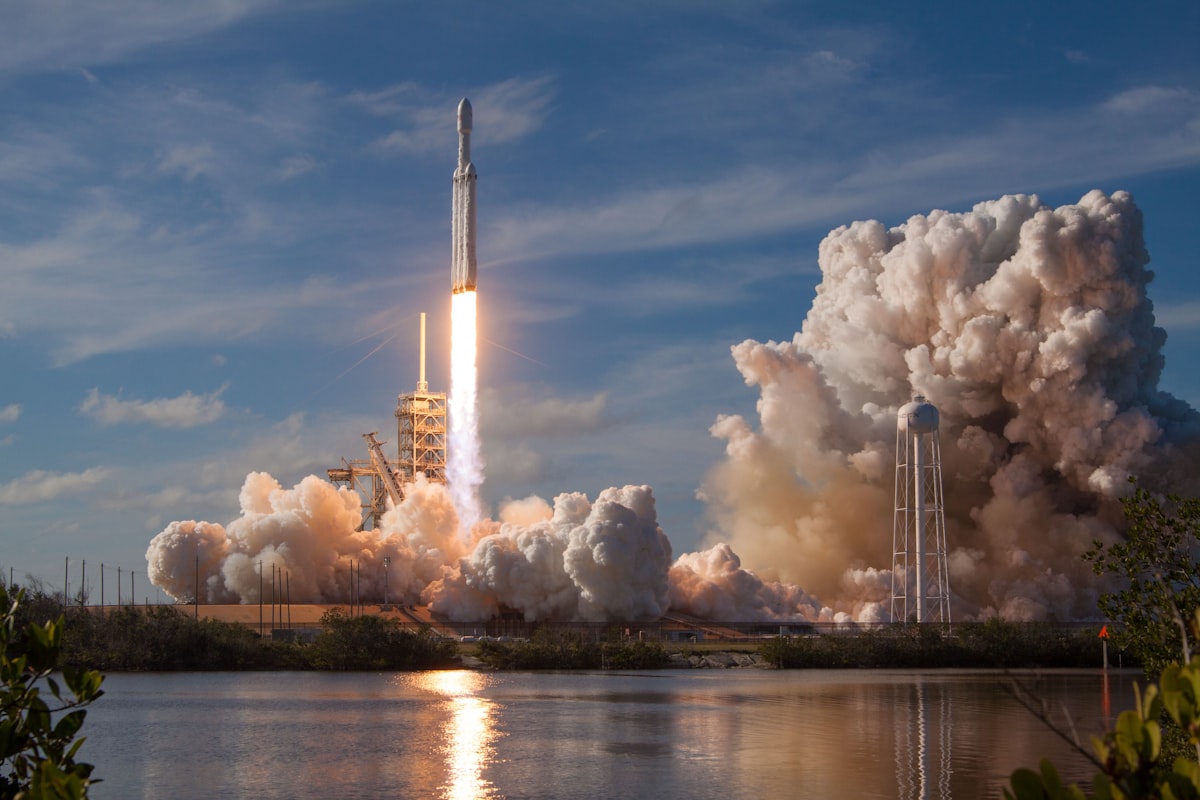
SpaceX has priced the largest stock offering in history, OpenAI has quietly filed to follow, and Anthropic is already in the SEC queue. The mega IPO wave is arriving at the precise moment Wall Street looks least able to absorb it. How the market handles the next few weeks will define the second half of 2026.
By Blumefield | June 11, 2026
For more than a year, the question hanging over the AI economy was when its giants would finally go public. This week delivered the answer, all at once. SpaceX priced a record $75 billion offering on Thursday, OpenAI confirmed a confidential filing with US regulators, and Anthropic's paperwork is already under review. The mega IPO wave that bankers spent 2025 predicting is no longer a forecast. It is here, and it has chosen one of the most fragile market backdrops in three years to make landfall.
A Record Falls Before the Opening Bell
SpaceX priced its initial public offering on Thursday at a fixed $135 per share, selling roughly 555.6 million new shares to raise about $75 billion at a valuation near $1.8 trillion. When the stock begins trading on Nasdaq on Friday under the ticker SPCX, it will complete the largest flotation in the history of capital markets, and the first crest of the mega IPO wave. The previous record, Saudi Aramco's 2019 listing, raised $29.4 billion. Alibaba's 2014 New York debut, long the benchmark for US listings, raised $25 billion. SpaceX is raising more than both combined, with room to spare.
Demand has been extraordinary. Institutional orders reportedly approached $250 billion by Tuesday, roughly four times the stock on offer, with several large investors placing individual orders of $10 billion or more. An oversubscription rate above 300 percent on a raise this size has no precedent. For SpaceX, which is funding Starship production, Starlink expansion and a growing compute business, the proceeds amount to a war chest no private rival can match.
The structure tells its own story. Rather than marketing a price range and building a book in the traditional way, the company set a single fixed price of $135 and let investors decide whether to take it. It is a take-it-or-leave-it posture that only a company with overwhelming demand could attempt, and it has worked. The open question is what happens to a stock that four dollars of demand chased for every dollar of supply once the remaining three dollars start bidding in the open market.
OpenAI Joins the Queue
Three days before SpaceX priced, OpenAI confirmed it had submitted a confidential draft S-1 to the Securities and Exchange Commission. The company's statement was strikingly casual for a document that could precede one of the largest listings ever attempted. "We expect it to leak so we're just announcing it," the company wrote, adding that timing remains undecided and that some plans are easier to execute as a private company.
The caveats matter less than the fact of the filing. A confidential submission lets a company move through SEC review away from public scrutiny, then launch quickly when conditions suit. OpenAI's last private round closed in March at a valuation of $852 billion. Anthropic filed its own S-1 roughly a week earlier at a reported valuation near $965 billion, a story Blumefield has covered closely. Both companies could plausibly list before the end of the year. Add SpaceX's completed raise, and public markets are being asked to underwrite the AI buildout on a scale private capital never could.
A Market in No Mood for New Paper
The timing could hardly be more uncomfortable. On Wednesday, the day before SpaceX priced, the Dow fell 953 points, a 1.87 percent drop that left it at 49,918.78. The S&P 500 lost 1.62 percent and the Nasdaq shed nearly 2 percent. May inflation came in at 4.2 percent, a three-year high, reviving talk of rate rises just as Washington signaled that its confrontation with Iran may escalate further. Oil carries a war premium, bond yields sit near multi-decade highs, and the Federal Reserve's room for error has narrowed to almost nothing.
Markets steadied somewhat on Thursday, but the fragility is plain. Equity investors are being asked to digest the largest single slug of new stock ever issued during a week defined by geopolitical risk and sticky inflation. In calmer times, a record listing is a celebration. In this tape, it is a stress test. The mega IPO wave is not arriving into strength. It is arriving into a market already questioning how much it is willing to pay for the future.
Why Everyone Is Rushing the Exit
If conditions are this awkward, why force the window open now? The answer is arithmetic. The AI infrastructure buildout has reached a scale that private markets cannot fund. Forecasts for hyperscaler and AI capital spending through the end of the decade now run into the trillions of dollars, and the debt markets that financed the past two years of data center construction are showing signs of saturation, with hundreds of billions in AI-linked borrowing already projected for 2026 alone. Venture pools are tapped. Sovereign funds are committed. Public equity is the deepest pool of capital left on earth, and the companies burning the most cash need access to it.
There is also a quieter logic at work. Employees and early investors at SpaceX, OpenAI and Anthropic are sitting on paper fortunes that a decade of private fundraising never let them touch. Index inclusion brings forced buying from passive funds measured in tens of billions. And every AI lab watching its rivals file knows that the first movers into public markets will set the valuation benchmarks everyone else gets measured against. Waiting carries its own price. The mega IPO wave is partly a race, and nobody wants to list third into a tired market.
The $250 Billion Stress Test
What happens on Friday morning matters well beyond SpaceX. If SPCX opens strongly and holds above $135, it validates the entire pipeline and likely accelerates OpenAI's timeline. The unfilled $175 billion of institutional demand becomes fuel for the aftermarket, and the window stays open for every company queued behind it. If the stock struggles, the lesson cuts the other way. Facebook's troubled 2012 debut chilled tech listings for more than a year, and that offering was one fifth this size in a far friendlier market.
The deeper question is absorption. Money that flows into SPCX, and later into OpenAI and Anthropic shares, has to come from somewhere. The likeliest source is the existing megacap complex, the same handful of AI-adjacent giants that have carried index returns for three years. A rotation out of incumbents to fund new listings would reshape portfolios even if not a single new dollar entered the market. The mega IPO wave, in other words, is not just a test of appetite for new names. It is a referendum on how investors want to own the AI era, and at what price.
For now, the record books are being rewritten before the first trade prints. By Friday's close, Wall Street will know whether the mega IPO wave marks the moment the AI economy graduated to public ownership, or the moment the market finally said slow down.