The Iran ceasefire that markets spent a month learning to trust is coming apart in real time. A downed Apache helicopter, two nights of American strikes and a presidential boast about secret oil convoys have pushed crude back above $97 and knocked nearly a thousand points off the Dow. Investors who priced in peace are discovering how quickly a truce can turn back into a war.
By Blumefield | June 11, 2026
A Helicopter Falls and the Truce Follows
The unravelling of the Iran ceasefire began with a single aircraft. On Tuesday night, a US Army Apache helicopter went down near the Strait of Hormuz, and Washington blamed Tehran. Within hours the Pentagon was conducting what it called self-defense strikes against Iranian positions, the first significant American military action since the Iran ceasefire took hold this spring. Iran has not directly claimed responsibility for the helicopter, but the distinction mattered little once the missiles started flying.
By Wednesday the response had widened into something closer to a campaign. President Trump told reporters at the White House that Tehran was taking too long to agree a permanent deal and would pay the price. We hit them hard yesterday, he said, and we are going to hit them hard again today. The follow-on strikes concluded at 9:04 pm Eastern time, hitting Iranian military surveillance capabilities, communication systems and air defense sites. Kuwait, caught in the middle, reported intercepting aerial targets over its own territory.
The timing is brutal for diplomats. As recently as late May, the two sides had mostly agreed the terms of a 60-day memorandum of understanding to extend the truce, with only Trump's signature outstanding. Oil had fallen roughly 20 percent from its 2026 peak on exactly that optimism. That trade now looks premature.
"I Love the Inflation"
The economic cost of the war arrived in the same news cycle. May consumer prices rose at an annual rate of 4.2 percent, up from 3.8 percent the month before and the highest reading since April 2023, driven overwhelmingly by gasoline. Asked in the Oval Office whether the number worried him, the president offered an answer that will follow him into the midterms: "No, I love it. The numbers were great. You know what I really love? I love the inflation."
His reasoning was that the spike is evidence of leverage. Trump revealed what he described as a previously secret operation to take out millions of barrels of Iranian oil while escorting friendly shipping through the strait, claiming on Truth Social that more than 100 million barrels and over 200 commercial vessels had moved through under American protection. It's over for Iran, he wrote.
Government forecasters are less sanguine. The US Energy Information Administration, which in January expected retail gasoline to average $2.95 a gallon in 2027, now projects $3.64. Democrats seized on the president's remarks within minutes, and even the House Speaker was reduced to arguing his boss had been taken out of context. Whatever the politics, the macro picture is unambiguous: the Iran ceasefire was the single assumption holding the disinflation narrative together, and it is failing.
The Convoy Economy
Step back from the daily headlines and the structural story is stranger than the political one. The Strait of Hormuz, the channel that carries roughly a fifth of the world's oil and about 4.5 percent of all global trade, has been effectively closed to normal commerce since March, the first sustained closure since the 1970s. What has replaced it is a convoy system run by the US Navy, a militarised trade artery in which tankers move at night under escort and the White House announces tonnage like a wartime production ministry.
That system works, in the narrow sense that oil is moving. But convoys are not commerce. Insurers price every transit as a war risk, charterers demand premiums, and the throughput is a fraction of normal volumes. Institutional analysis from Charles Schwab's research arm has argued since the spring that traffic through the strait, not the diplomatic communiqués, is the signpost that matters, and that commercial normalisation will lag any political agreement by months. Fertiliser, helium for chipmaking, aluminium and plastics feedstocks all share the same chokepoint.
The deeper problem is infrastructure. Months of strikes have damaged liquefied natural gas facilities, refineries and production sites across the region. Restarting cryogenic LNG equipment is a slow, engineering-constrained process, which means the supply shock will outlast the shooting even if the Iran ceasefire is somehow rescued.
Wall Street Reprices the War
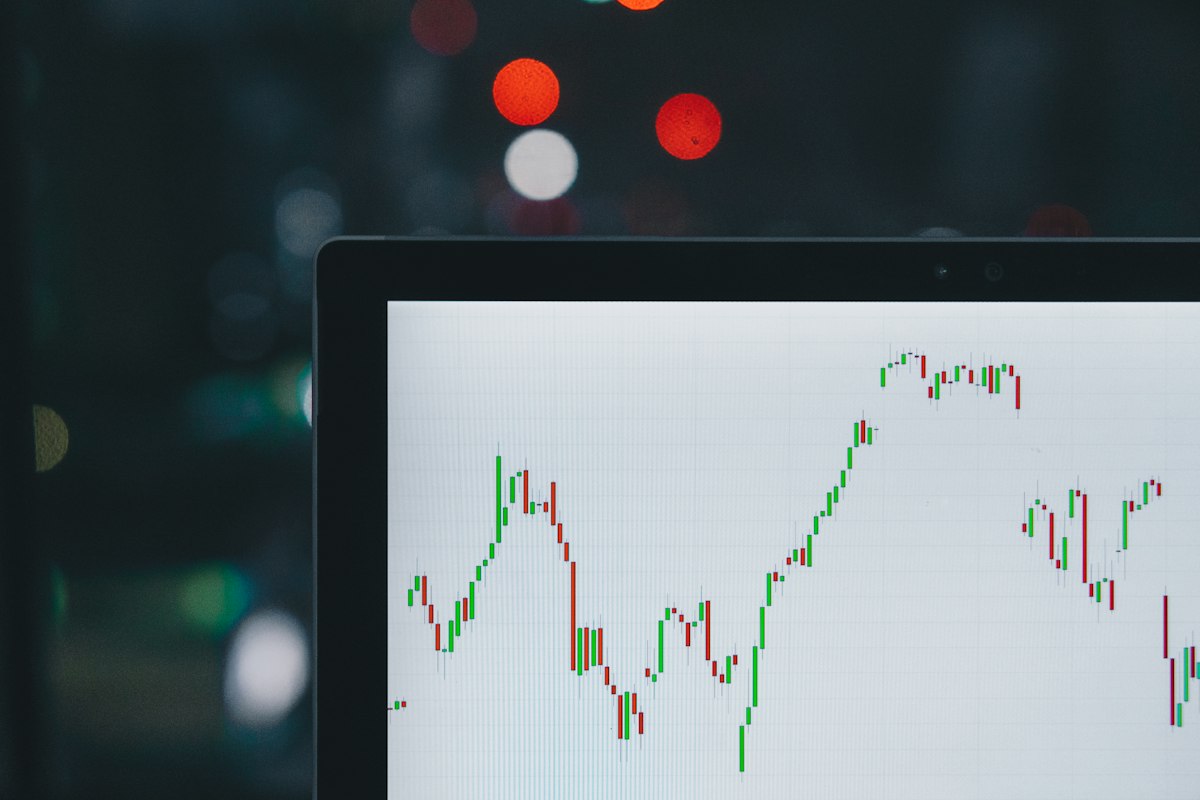
Markets spent Wednesday doing what they have done all year: converting the Iran ceasefire and its unravelling into basis points. The Dow Jones Industrial Average fell 953 points, or 1.87 percent, to 49,918.78. The Nasdaq lost 1.98 percent and the S&P 500 gave up 1.62 percent. The Cboe Volatility Index jumped almost 12 percent to 22.22. Brent crude rose about 4 percent to trade back above $97 a barrel, while gold held above $4,200 an ounce and the 10-year Treasury yield sat at 4.54 percent.
The selloff landed on a market that was already wobbling. Semiconductor and AI stocks, the engine of this year's rally, were still nursing losses from last week's guidance-driven rout, and Asian bourses followed Wall Street lower, with Seoul's Kospi falling more than 2 percent. The concentration that powered the index highs Trump likes to cite is now the channel through which war risk propagates.
The repricing has a framework. Schwab's scenario analysis puts the most probable outcomes between a moderate case, where Brent eases back toward $75 to $100 as flows normalise, and an adverse one, where continued limited strikes keep crude pinned between $100 and $125 into the second half of the year and push Europe and Asia toward stagnation. Two nights of American strikes just shifted the weight of probability toward the second.
What Breaks Next
Three things now deserve more attention than the daily exchange of fire. The first is the unsigned 60-day memorandum: if the Iran ceasefire is to survive in any form, that document is the vehicle, and every strike makes Tehran's signature more expensive. The second is the Federal Reserve, which faces an inflation rate above 4 percent, a war premium it cannot model and a White House publicly celebrating rising prices. The rate cuts markets expected at the start of the year are gone; the conversation has moved to whether the next move is up. The third is tanker traffic through Hormuz, the most honest indicator in this entire conflict.
The president insists prices will come down like a rock once the war ends, and he may eventually be right. But as our coverage of this conflict's market impact has argued for months, energy shocks have long tails: production restarts are slow, insurance stays expensive and trust returns last. The Iran ceasefire was always a wager that both sides wanted out more than they wanted leverage. This week, for the first time since spring, that wager looks like the wrong side of the trade. Readers can follow Blumefield for continuing coverage as the next 60 days decide whether this was a stumble on the way to a deal or the end of one.