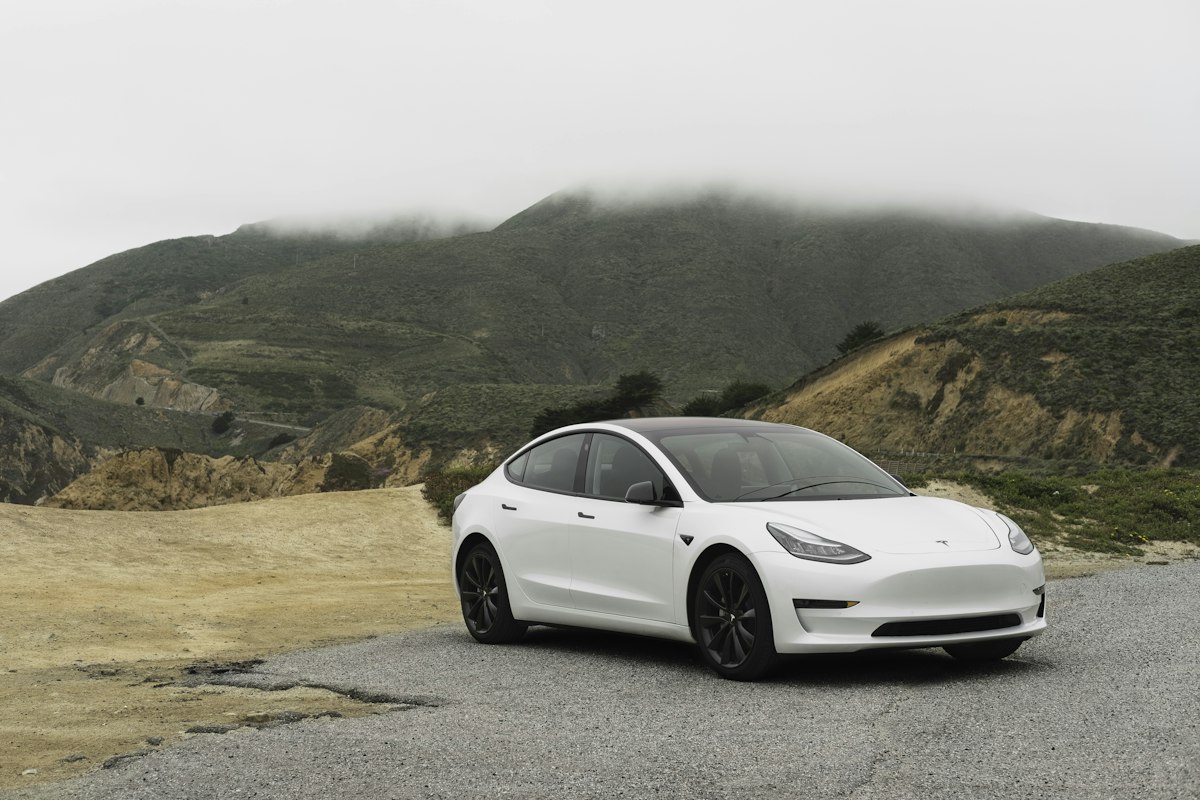
Tesla Q2 earnings turned a record quarter into a $140 billion warning for the entire AI trade.
By Blumefield | July 25, 2026
A Record Quarter That Read Like a Warning
On paper, the Tesla Q2 earnings should have been a victory lap. The company reported $28.24 billion in revenue for the second quarter, up 26 percent from a year earlier and comfortably ahead of the roughly $25.5 billion Wall Street had penciled in. Trailing twelve month revenue crossed $100 billion for the first time in Tesla's history, a milestone that would have made headlines on its own in any calmer year. Deliveries hit 480,126 vehicles, a second quarter record for a business many analysts had written off as stalling.
Investors reacted by wiping out roughly $140 billion in market value. Tesla shares fell about 14.5 percent on the session, sliding from near $374 to close around $320, an eleven month low and the stock's worst single day since March 2025. The reaction was not about the top line. It was about everything sitting underneath it.
That gap between a record headline and a brutal tape is the whole story of this quarter. Revenue is no longer the number that moves Tesla. Profitability, cash generation, and the pace of spending are, and on all three fronts the company delivered news that unsettled even long time believers.
The Margin Math Behind the Miss
Strip away the revenue record and the Tesla Q2 earnings look considerably harsher. Operating income fell 57 percent to $398 million, dragging operating margin down to just 1.4 percent from levels that used to sit in the double digits. GAAP gross margin came in at 16.8 percent. Adjusted earnings landed at $0.33 a share, well short of the roughly $0.49 to $0.53 analysts expected. For a company that once justified its valuation on industry leading margins, a sub two percent operating margin is a jarring figure.
The energy business, long held up as Tesla's quiet growth engine, told a similar story. Storage deployments reached 13.5 gigawatt hours, the second largest quarter the segment has ever recorded. Yet energy gross margin collapsed from 39.5 percent to 20.4 percent. Management attributed the drop to a warranty true up of about $240 million tied to certain vendor cell issues, plus roughly $200 million in tariff benefits booked in the first quarter that did not repeat. Whatever the accounting, the direction of travel was clear. Even Tesla's healthiest margins are getting squeezed.
Put the pieces together and a pattern emerges. The Tesla Q2 earnings show a company selling more cars and more batteries than ever, and keeping less of the money. Price cuts, tariff pressure, and a product lineup that is aging in key markets are all eating into the unit economics that once set the company apart.
Capex Is the New Story
If margins explain the profit miss, capital spending explains the panic. Tesla's capital expenditures reached roughly $5.8 billion in the quarter, a staggering 141.8 percent increase year over year. The company lifted its full year capex guidance above $25 billion, and free cash flow swung to a deficit of about $1.1 billion, figures laid out in its own investor relations disclosures. A business that spent years bragging about self funded growth just burned cash to keep the lights on in its new factories.
The money is going toward artificial intelligence and robotics: training compute, the hardware behind Full Self Driving, the Cybercab line, and the Optimus humanoid program. Elon Musk has spent the past year reframing Tesla as an AI and robotics company that happens to make cars, and the Tesla Q2 earnings are the first quarter where that pivot shows up as a hole in the cash flow statement rather than a line in a keynote.
Timing made it worse. Tesla reported into a market already rattled by hyperscaler spending. Alphabet had just raised its own 2026 capex guidance to as much as $205 billion, and the read across was immediate. On the same day Tesla fell, the Nasdaq dropped 2.2 percent as investors began punishing AI spending rather than rewarding it. Tesla did not cause that mood, but it walked straight into it.
Robotaxi and the Bet on Physical AI
Tesla's answer to the spending question is that the payoff is close. The company's robotaxi service is now live in seven major metropolitan areas, running without a safety driver in Austin, Dallas, Houston, Miami, Orlando, and Tampa, and with a safety driver in the Bay Area. Management said robotaxi miles were growing more than 10 percent week over week, and Cybercab production has begun at Gigafactory Texas. Full Self Driving also cleared its first European regulatory approval, switching on in five EU countries during the quarter.
That is genuine progress, and it is the core of the bull case. If Tesla can turn a fleet of self driving vehicles into a high margin services business, today's capex looks like the down payment on a far larger company. The trouble is that investors have heard versions of this promise for a decade, and this quarter some of the fine print changed. Language about mass production in 2026 quietly disappeared from the outlook for several products, and the paid mile growth curve for robotaxi showed signs of flattening rather than accelerating.
Markets are willing to fund a vision. What they punish is a vision that keeps getting more expensive while its timelines slip. The Tesla Q2 earnings sharpened exactly that anxiety, forcing shareholders to weigh a credible long term story against a very concrete short term bill.
What the Selloff Really Signals
Zoom out and the reaction to the Tesla Q2 earnings is about more than one company. It is a preview of how the market intends to treat the entire AI buildout in the second half of 2026. For two years, spending on chips, data centers, and robotics was treated as proof of ambition. Now every incremental dollar of capex is being interrogated for the free cash flow it destroys today against the returns it might create tomorrow.
Tesla is a useful test case precisely because its bet is so physical. This is not a cloud provider renting out spare compute. It is a manufacturer pouring billions into factories, chips, and robots on the promise that autonomy and Optimus will eventually pay for all of it. When free cash flow turns negative, that promise gets tested in real time, and patient capital starts asking harder questions. For deeper coverage of the AI capex reckoning now rippling across markets, readers can follow Blumefield.
None of this means the thesis is broken. The Tesla Q2 earnings will not be the last report to face this test, and record revenue, expanding robotaxi coverage, and a genuine lead in real world autonomy remain real assets. A single quarter rarely settles a story this big. But the days of the market cheering spending for its own sake are over. Investors who want to follow the next chapter can read the numbers straight from the underlying SEC filing rather than the headlines. The verdict on Tesla will come not from the next keynote, but from the next cash flow statement.