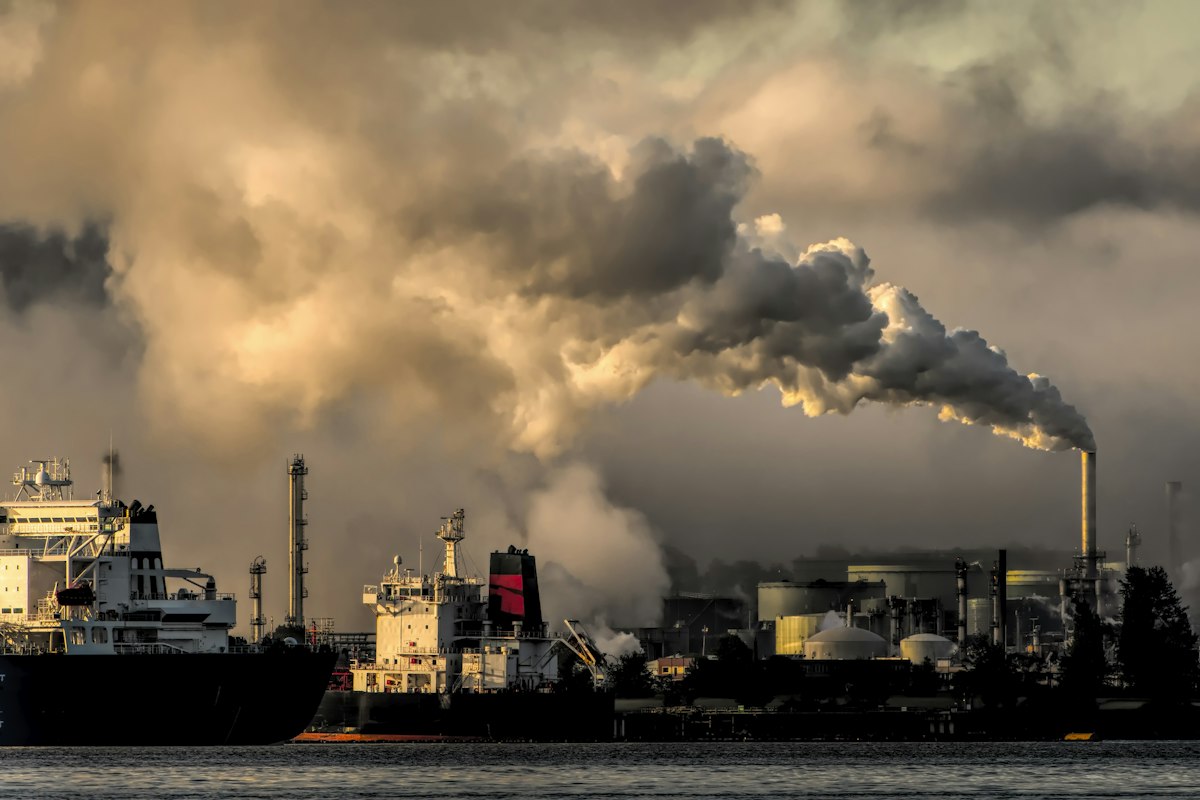
SpaceX gas turbines are now company property, not a rental line item. Elon Musk spent more than $1 billion buying a power plant on wheels, and told nobody. The filing that exposed it also reveals how fragile the AI buildout has become.
By Blumefield | 20 July 2026
A Billion-Dollar Purchase Nobody Announced
There was no press release, no investor call, no post on X. The acquisition of APR Energy, a Jacksonville, Florida operator of trailer-mounted generation equipment, surfaced only because the Federal Trade Commission publishes its antitrust clearances. An early termination notice, transaction number 20261350, dated 14 May 2026, named the buyer. Weeks later the market worked out what it meant. SpaceX gas turbines were no longer a procurement problem. They were an owned asset.
The price has been pieced together from the wreckage of minority holders rather than from any disclosure by the acquirer. Duos Technologies, which held roughly 5 percent of APR, booked net proceeds of $50.4 million, implying a total transaction value north of $1 billion. APR brings with it a fleet of mobile natural gas and diesel units capable of more than a gigawatt of aggregate output, machines that can be trucked to a site and brought to full load in under ten minutes.
That last number is the whole story. The SpaceX gas turbines can reach full power in ten minutes, against an interconnection queue that in most American grid regions now runs four to seven years. Musk did not buy a power company because he wants to be in the power business. He bought it because the alternative was waiting, and waiting is the one thing the frontier AI race does not permit.
Why the Grid Stopped Being an Option
Colossus 2, xAI's second Memphis-area training cluster, came online late last year drawing hundreds of megawatts that Tennessee Valley Authority infrastructure was never scoped to deliver on that timeline. The answer was 27 mobile turbines sited across the state line in Southaven, Mississippi, generating up to 495 megawatts. In grid terms that is a mid-sized conventional power station, assembled in a field, in months rather than years.
This is not a Musk eccentricity. It is the emerging default. When a hyperscaler commits to a training run, the compute is procurable, the buildings are procurable, and the electricity is not. Behind-the-meter generation has become the release valve for an industry whose capital expenditure cycle moves roughly twenty times faster than utility planning cycles. SpaceX gas turbines simply represent the most vertically integrated expression of that logic, since Musk now owns the fleet rather than leasing it at spot rates from a market where everyone is bidding for the same equipment.
The economics reinforce the choice. Turbine order books at the major original equipment manufacturers are effectively full into the 2030s. Buying the operator, and with it the existing fleet and the crews who know how to deploy it, is faster and cheaper than joining a queue. Readers following our coverage of the AI infrastructure buildout at Blumefield will recognise the pattern from the memory and packaging shortages of the past eighteen months. Scarcity migrates to whichever input is least elastic. Right now that input is electrons.
The Legal Bill Is Already Arriving
Speed has a price, and in Southaven it is being paid by people who never signed a compute contract. The Southern Environmental Law Center and Earthjustice, acting for the NAACP and its Mississippi State Conference, are suing xAI under the Clean Air Act over turbines installed without permits, without public notice, and without best available control technology.
The pollution arithmetic is not marginal. SELC estimates the Southaven installation has the potential to emit more than 1,700 tons of nitrogen oxides annually, likely making it the largest single industrial NOx source in the greater Memphis area, alongside roughly 180 tons of fine particulate matter and 19 tons of formaldehyde. Memphis already fails national smog standards. Both Shelby County, Tennessee and DeSoto County, Mississippi carry an "F" grade for ozone from the American Lung Association.
There is precedent for how this ends. At Colossus 1, xAI ran as many as 35 unpermitted units before a notice of intent to sue forced their removal and a permit application for the fifteen that remained. The company then described its intention to copy and paste the approach at the second site. Owning the SpaceX gas turbines outright does not resolve the permitting exposure. It concentrates it, because the entity holding the equipment and the entity holding the emissions liability are now the same balance sheet.
What the IPO Filing Quietly Concedes
The most revealing document in this story is not a news report. It is SpaceX's own Form S-1 registration statement, filed with the Securities and Exchange Commission ahead of its listing. Buried in the risk factors is an admission that the company relies significantly on natural gas and gas turbine technology to power its data center operations, and that injunctions or rescinded permits would adversely affect its AI business.
Risk factor language is written by lawyers to be unexciting, which is precisely why it is worth reading. A company preparing a public listing has told prospective shareholders that a county-level air permit is a material dependency for its artificial intelligence segment. The same filing detailed roughly $2.8 billion in turbine procurement commitments, of which around $2 billion is earmarked for mobile units. The APR purchase converts a large slice of that spending from a supplier relationship into ownership.
For public market investors this is a novel category of risk. Valuing an AI business has generally meant modelling chip supply, model performance and enterprise adoption. It now also means modelling Clean Air Act litigation in DeSoto County, Mississippi. SpaceX gas turbines have become a line item that equity analysts must actually understand, and few of them are equipped to.
The Playbook Everyone Else Will Copy
Strip away the secrecy and the environmental fight, and what remains is a template. If power is the binding constraint on AI scale, then whoever controls generation controls the pace of model development. Musk has taken the most aggressive available position, buying the constraint outright rather than contracting around it.
Others are converging on the same conclusion by less abrupt routes. Utilities are signing multi-decade nuclear offtake agreements with hyperscalers. Fuel cell partnerships are being structured at data center scale. Sovereign funds are financing generation alongside compute. The direction is uniform even where the fuel is not. Vertical integration into energy is becoming a defining feature of the frontier AI business model, and SpaceX gas turbines are simply the least polite version of it.
The uncomfortable part is the fuel. Musk built his reputation on the electrification of transport and the promise of a solar-powered economy. He now personally owns a fleet of methane and diesel generators whose entire purpose is to burn hydrocarbons so that a chatbot can be trained faster. That contradiction is not hypocrisy so much as revealed preference. When the choice was between clean power on a utility timeline and dirty power on a competitive one, the competitive timeline won without apparent hesitation.
Whether regulators accept that trade is the open question. The Memphis litigation is the first serious test of whether behind-the-meter generation for AI can be built at speed inside existing environmental law, or whether the industry has been operating in a gap that courts are about to close. If the NAACP prevails, every hyperscaler with a turbine farm recalculates. If it does not, the SpaceX gas turbines model becomes the standard, and the cost of the AI buildout is quietly transferred to whoever happens to live downwind.