SpaceX just committed more than $74 billion to AI supercomputing campuses in Texas and Arizona. The SpaceX data centers would rival Big Tech's biggest buildouts. But a six-gigawatt plan in the high desert faces a tiny power grid, a retiring coal plant and a town ready to fight.
By Blumefield | November 13, 2026
The $74 Billion Bet
Elon Musk's rocket company is no longer only in the business of rockets. On November 12, SpaceX confirmed plans to spend more than $74 billion building artificial intelligence supercomputing campuses across Texas and Arizona, one of the largest single commitments to AI infrastructure ever disclosed by a private company. The scale of the proposed SpaceX data centers would place the company alongside Amazon, Microsoft and Google in the race to own the physical backbone of the AI era.
The money behind the SpaceX data centers splits across two states. Roughly $24 billion is earmarked for a supercomputing facility at Starbase in the Rio Grande Valley, the same stretch of south Texas where the company launches its Starship rockets. The larger share, close to $50 billion, is destined for a remote patch of high desert in Cochise County, Arizona, where SpaceX has quietly assembled hundreds of acres for what would become the largest of the SpaceX data centers anywhere in the state.
For a company still privately held and preparing investors for a long-rumored public listing, the commitment is a statement of intent. Musk has folded his AI venture, xAI, into SpaceX, and the combined entity now treats compute as a core product rather than a side bet. The SpaceX data centers are the clearest sign yet that the billionaire intends to build, own and power the machines that train his models rather than rent them from anyone else.
A Supercomputer in the Desert
The Arizona proposal is the centerpiece. Filed through a SpaceX affiliate called Tombstone Resources LLC and docketed with Cochise County as special use application SU26-22, the plan describes a nine-building "Cochise Supercomputer Campus" drawing up to six gigawatts of electricity at full build-out. To put that in perspective, six gigawatts is roughly the output of six large nuclear reactors, all dedicated to a single computing site.
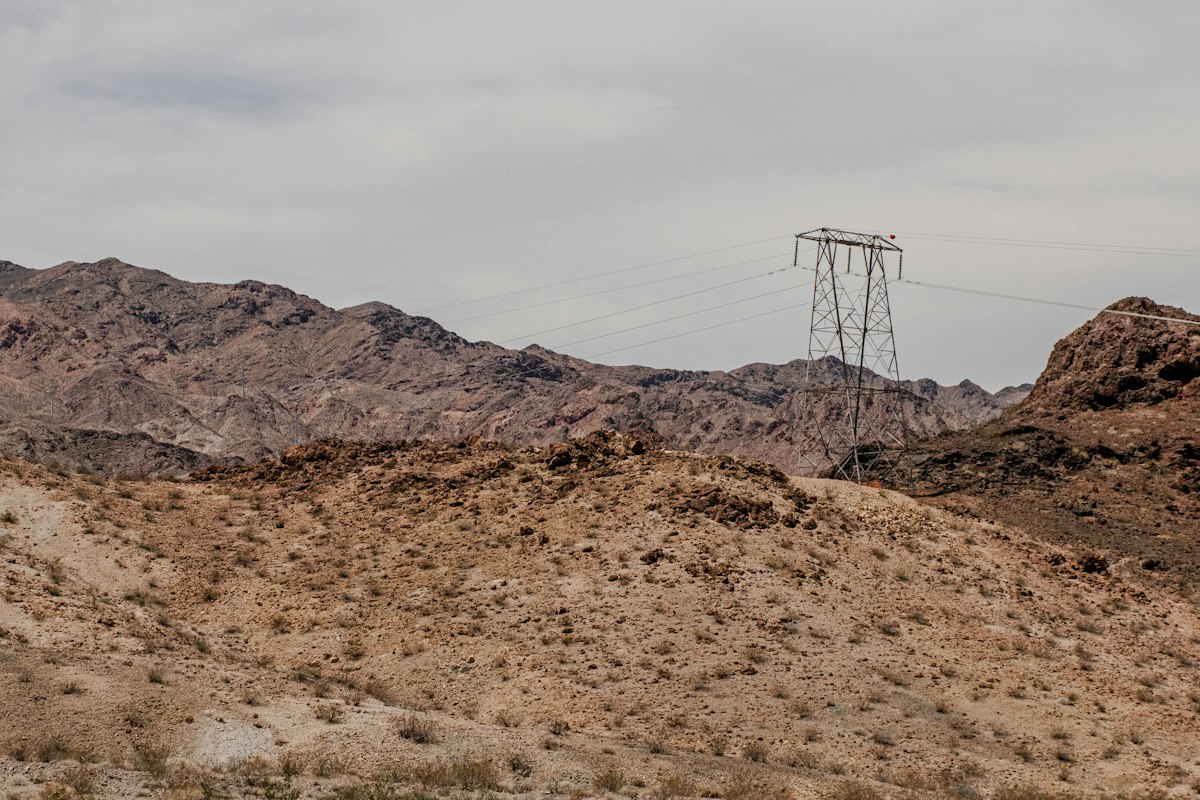
The campus would sit on about 747 acres along U.S. Highway 191 near the Willcox Playa, roughly 80 miles east of Tucson. Each of the nine buildings would span 493,000 square feet, and the project would rise in four phases of about 1.5 gigawatts each. Construction could begin as early as March 2027 if county zoning officials sign off. The full application sits on the Cochise County document portal for anyone who wants to read the fine print.
Riley Trettel, who leads energy and supercomputer development at SpaceX, used a packed community meeting on November 4 to confirm the company's role after weeks of speculation. "SpaceX is the owner, and with approval, will be the builder," he told residents, adding that the company would pay for every cent of the infrastructure. It was the first time SpaceX had publicly tied its name to the project.
The Power Problem
The economics of the SpaceX data centers collide immediately with a hard physical limit: electricity. The local retail provider, Sulphur Springs Valley Electric Cooperative, serves a summer peak of only about 250 megawatts. Phase one of the SpaceX data centers alone would demand roughly six times that, and the finished campus would need about 24 times the cooperative's entire peak load. No rural electric co-op in America is built for a jump of that size.
SpaceX's answer is to build its way out of the problem. The company has pledged $3.6 billion in new transmission infrastructure, which it would later hand to Arizona Electric Power Cooperative at no cost. Wholesale power would come from the adjacent Apache Generating Station, a 626-megawatt coal and gas plant that had been slated for retirement by 2028 and received nearly $21 million in federal upgrade funding over the summer. The plan also folds in a 24-gigawatt-hour battery storage system and 90 megawatts of gas-fired backup generators to steady the load.
Water, the other great constraint on desert computing, is where SpaceX has tried hardest to defuse opposition. The company says the campus would use zero industrial water for cooling, running its servers hotter to avoid evaporation and relying on dry cooling instead. Its application estimates a one-time fill of three to five million gallons, then just two to three million gallons a year for sanitation, comparable to the annual use of a few dozen homes, with no new well drilled into the stressed Willcox groundwater basin.
A Town That Pushed Back
Not everyone in Cochise County welcomes the SpaceX data centers. The November 4 meeting at a local elementary school drew hundreds of residents, many carrying protest signs, and booing interrupted the presentation more than once. Neighbors raised concerns about groundwater depletion, rising electricity bills, wildlife and a process they felt had been kept from them until the plans were nearly complete. A petition against the project had gathered close to 2,100 signatures within days.
The environmental stakes are real. The site lies a few thousand feet from the Willcox Playa, a wintering ground for sandhill cranes, and both the Arizona Game and Fish Department and the U.S. Fish and Wildlife Service are expected to review the designs. SpaceX has promised low-profile buildings, downward-directed lighting and wildlife-friendly fencing in an effort to limit the footprint on the birds and the night sky.
Against those worries, the company is dangling economic rewards. SpaceX estimates the campus would create about 1,000 permanent jobs and 3,000 construction positions, generate between $30 million and $100 million a year in property taxes, and deliver a one-time sales tax windfall of up to $450 million. The decision now rests with the county Planning and Zoning Commission, which holds its first public hearing on the matter on December 9 in Bisbee. More on the county's review process is available through the Cochise County government site, and for the wider trend you can follow Blumefield's running coverage of the AI data center land rush.
The Bigger Picture
The SpaceX data centers do not exist in isolation. They are the newest front in a national building spree that has already reshaped Memphis, where SpaceX runs the Colossus cluster that trains and serves the Grok chatbot and now sells spare capacity to rivals including Anthropic and Google. Musk told investors in August that he expects roughly 15 gigawatts of power plant capacity across his AI operations by the end of 2027, a figure that already assumes a quarter of his projects will slip.
Even at that scale, the SpaceX data centers are not the most aggressive bet in the country. Kevin O'Leary's Stratos project in Utah targets nine gigawatts, and Fermi America's Project Matador near Amarillo is pitched at eleven. What sets the SpaceX data centers apart is the vertical integration. This is a single company proposing to generate its own power, lay its own transmission, build its own campuses and run its own models, from the desert floor up. The approach echoes how the company already builds and launches its own rockets, a playbook laid out on SpaceX itself.
The gamble carries obvious risk. The AI infrastructure boom has rattled markets in recent weeks, with investors questioning whether the hundreds of billions being poured into compute will ever earn a return. A six-gigawatt campus that leans on a retiring coal plant, a tiny rural co-op and the goodwill of a skeptical desert town is a bet on demand that has not yet fully arrived. If Musk is right, Cochise County becomes a pillar of the American AI economy. If he is wrong, it becomes a very expensive monument to a bubble. The December 9 hearing is the first real test of which future is coming.