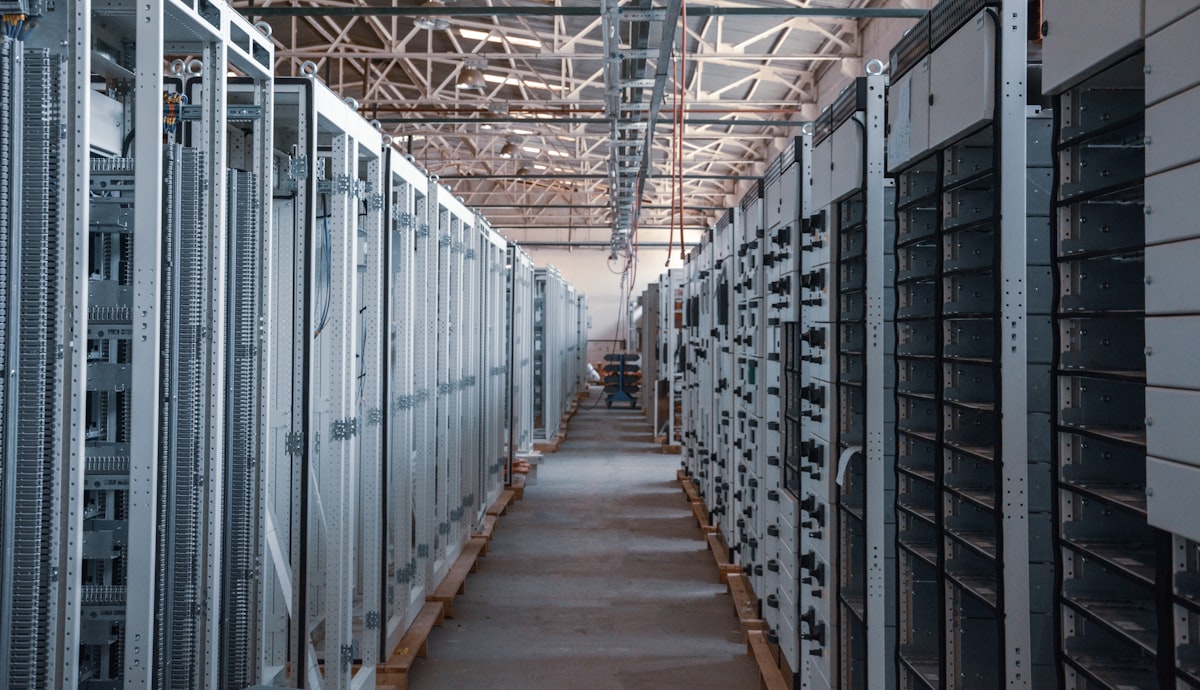
San Francisco has paused new data center construction in the heart of the industry that made it famous. The data center moratorium gives city planners 45 days, and possibly close to two years, to rewrite the rulebook before another server hall breaks ground. For a sector built on raw compute, the message from its home city is impossible to ignore.
By Blumefield | October 17, 2026
The City That Built AI Hits the Brakes
On Friday, Mayor Daniel Lurie signed a citywide data center moratorium that halts new development while the Planning Department studies how these facilities tax local power, water and land. The measure, authored by Supervisor Shamann Walton and fast-tracked by Board President Rafael Mandelman, cleared the Board of Supervisors unanimously the week before. Friday was the deadline to act, and the pause would have taken effect even without the mayor's signature.
The optics are hard to miss. San Francisco is the address on the incorporation papers of OpenAI, Anthropic and a long roster of model labs that have raised the AI industry to the center of the global economy. The city that sells the world its intelligence engines has now told the companies that house those engines to wait. Lurie framed the decision in careful civic language, promising a "thoughtful, responsible framework" that keeps electricity rates low and protects clean water and air, though his statement pointedly avoided naming data centers at all.
That restraint says something about the politics. Few mayors want to be seen slamming the door on the one industry still minting wealth in a city that has spent years fighting to recover its downtown. Yet the unanimous vote suggests the local appetite for unchecked buildout has run thin, and the data center moratorium is the clearest signal yet that even the capital of artificial intelligence is drawing a line.
Why a Short Pause Carries Long Weight
The striking part is how little the city knew before it acted. As recently as September, the Planning Department, the very body that approves permits, could not say how many data centers operate within city limits. Independent trackers count at least six, two of them in Bayview-Hunters Point, the neighborhood carrying more industrial zoning than anywhere else in San Francisco. The zoning code, Walton has noted, does not even contain a working definition of what a data center is.
That gap is the real target of the pause. Walton argues the city needs transparency about water and energy demands, enforceable community benefits, and "a real opportunity for residents to weigh in before projects are approved, not after." The 45-day window tasks planners with building the controls that should have existed years ago, and the ordinance allows that window to stretch to roughly 22 months if the work demands it.
Mandelman put the logic plainly, crediting Walton with forcing the board and the Planning Department to get organized before the next wave of applications lands. In other words, the data center moratorium is less a ban than a timeout, a chance to replace improvisation with policy while the leverage still sits with the city rather than the developers.
A National Backlash Takes Shape
San Francisco is not acting alone, and that is what should worry the industry most. In July, New York became the first state to impose a full data center moratorium, a one-year freeze on facilities drawing 50 megawatts or more while regulators develop environmental standards. Maine came close to an 18-month pause on projects above 20 megawatts before Governor Janet Mills vetoed the bill over a missing carve-out for a single local project. In Monterey Park, California, residents went further still, voting in June to ban data centers permanently at the ballot box.
Seattle enacted its own year-long freeze earlier in 2026, and planning boards from the desert Southwest to the industrial Midwest are weighing similar measures. What began as scattered neighborhood complaints has hardened into a recognizable national movement, one that cuts across red states and blue, rural counties and dense cities. The common thread is a sense that the benefits of the buildout flow outward to shareholders while the costs, higher bills and strained grids, settle on the people living nearby.
The timing is no accident. With midterm elections approaching, utility costs have become a kitchen-table issue, and politicians have discovered that a construction pause is a rare policy that plays well across the aisle. Opposing cheaper power is a hard position to defend on the campaign trail.
The Power Bill Problem
Underneath the zoning fights sits a hard number. A widely cited report from the Department of Energy and Lawrence Berkeley National Laboratory found that data centers consumed about 4.4 percent of all United States electricity in 2023 and could reach somewhere between 7 and 12 percent by 2028. That is a tripling of load in half a decade, concentrated in the exact regions where AI firms want to cluster their machines.
For residents, the math feels personal. When a hyperscale facility plugs into the grid, utilities often expand transmission and generation to serve it, and those capital costs can land on everyone's monthly statement. Water is the second pressure point, since many cooling systems draw heavily on local supplies that communities would rather reserve for homes and farms. The promise of jobs rings hollow when a finished data center employs a few dozen technicians while drawing the power of a small city.
This is the engine driving the backlash, and it explains why a data center moratorium resonates far beyond San Francisco. The AI industry has spent two years telling investors that compute is the new oil. Voters have started to notice that, like oil, it comes with an extraction cost, and they are increasingly unwilling to pay it quietly. You can follow the money and the politics of that shift in Blumefield's coverage of the AI infrastructure boom.
What It Means for the AI Buildout
For the companies racing to train ever larger models, the physical world is becoming the binding constraint. Chips remain scarce and expensive, but a graphics processor is useless without a building to house it, a substation to feed it and a permit to operate it. As more jurisdictions reach for a data center moratorium, the bottleneck shifts from silicon to real estate, power contracts and the patience of city planners.
The likely near-term response is geographic. Developers will chase friendlier terrain, steering projects toward states and counties that compete to offer cheap power and light-touch review. That migration eases the pressure on any single city, yet it also scatters the industry's footprint and hands negotiating power to the places still willing to say yes. Expect aggressive incentive packages, and expect the next round of community fights to follow the construction cranes wherever they travel.
The deeper lesson is about consent. San Francisco's pause will not stop the AI boom, and it was never designed to. What it does is reassert that the communities hosting this infrastructure get a vote, and that the era of building first and explaining later is closing. When the industry's own hometown imposes a data center moratorium, the companies betting hundreds of billions on endless expansion would be wise to treat it less as a local quirk and more as a preview of the terrain ahead. For more on how the compute race is reshaping markets and policy, see Blumefield.