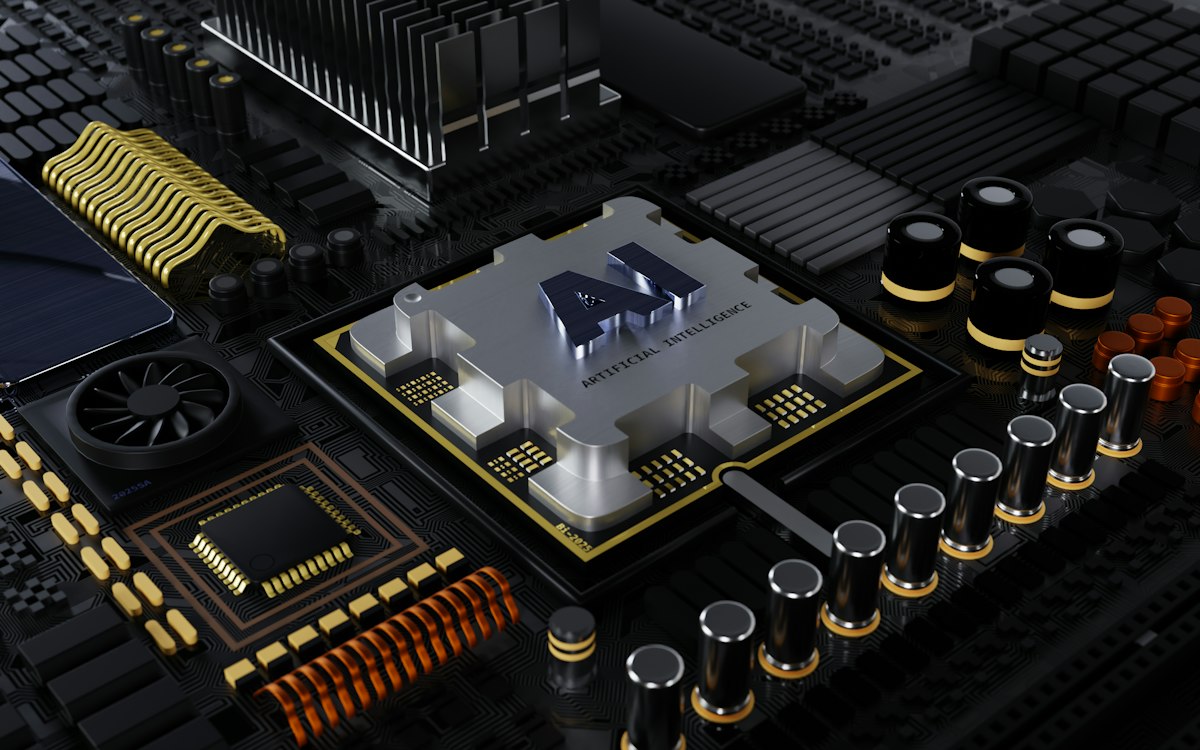
OpenAI is reportedly preparing to buy Google TPUs, pitting the world's most famous AI company against its single biggest supplier. The move would hand Alphabet a formidable new revenue engine and crack the foundation of Nvidia's dominance. For the first time, the customer that defined the AI boom is refusing to depend on one chip.
By Blumefield | October 28, 2026
A Shot Across Nvidia's Bow
OpenAI is preparing to buy Google TPUs, according to a report that landed on the night of October 27, and the implications are difficult to overstate. The company that turned Nvidia into the most valuable business on earth now wants the chips its fiercest cloud rival designs in-house. Neither OpenAI nor Google has confirmed the plan, and no price, volume, or timeline has been disclosed. Yet the direction of travel is unmistakable. The defining customer of the artificial intelligence era is quietly building an escape hatch.
The logic is not hard to follow. OpenAI has spent two years locked into a single hardware vendor, and that dependence has become both its greatest strength and its most obvious vulnerability. Buying Google TPUs would give the company a second credible source of frontier compute, and in a market where every chip is spoken for years in advance, a second source is leverage. It is also a signal. When the largest buyer of AI accelerators starts shopping elsewhere, the entire industry pays attention.
This is not OpenAI's first flirtation with the technology. It began renting Google TPUs in the summer of 2025, a striking turn given that only a year earlier it had said it had no specific plans to use them. A recent job listing seeking engineers with significant experience optimizing real workloads on TPUs for training and inference suggests the relationship is deepening from rental into something closer to ownership.
Inside Ironwood
To understand why OpenAI would want Google TPUs, it helps to look at what Google has actually built. The latest generation, code-named Ironwood, is no hobby project. Each chip delivers 4,614 teraflops of FP8 compute and carries 192 gigabytes of high-bandwidth memory running at roughly 7.4 terabytes per second. Google can lash up to 9,216 of these chips together in a single pod, connected by a custom interconnect that moves data at 1.2 terabytes per second per chip.
Those numbers matter because they put Ironwood in the same conversation as Nvidia's flagship systems rather than a tier beneath them. Google designed the generation, in its own documentation, for large-scale training and inference, with particular strength in the dense and mixture-of-experts models that now define the frontier. For a company like OpenAI, whose models grow hungrier with every release, raw memory bandwidth and pod-level scale are not luxuries. They are the difference between training a model this quarter and training it next year.
The appeal sharpens when cost enters the picture. Google has spent a decade refining silicon it never had to buy at a markup, and it can pass some of that advantage along. Independent estimates of inference economics suggest Google TPUs can undercut comparable Nvidia hardware on a price-per-token basis, and at OpenAI's scale, even a modest discount compounds into billions.
The Nvidia Problem
OpenAI's hardware bill has reached a scale that would have seemed fantastical two years ago. Nvidia's chief executive, Jensen Huang, has said the company committed to spend roughly $600 billion on Nvidia servers through 2030. In August, Nvidia agreed to provide up to $105 billion in credit support for an OpenAI data center in Ohio that begins at 4.25 gigawatts of capacity. The relationship is so large that it has become a worry in its own right, with analysts warning that money now circulates between a handful of firms that each hold stakes in one another.
That circularity is exactly what a move toward Google TPUs begins to unwind. A buyer with only one supplier has no pricing power, and OpenAI has been the most captive buyer in the business. Each credible alternative it secures, whether Google's silicon or its own design, shifts leverage back toward the customer. Huang, for his part, has projected calm, saying he is confident OpenAI will remain a customer and partner for a very long time. Both things can be true at once. OpenAI can keep buying enormous quantities of Nvidia hardware while making sure Nvidia knows it is no longer the only door.
OpenAI is hedging on a third front as well. In the summer it unveiled its first custom chip, and it has partnered with Broadcom on a roughly $10 billion effort to co-develop ten gigawatts of bespoke accelerators, with deployment beginning this year. Seen together, the Broadcom project, the TPU talks, and the continuing Nvidia purchases form a coherent strategy rather than a contradiction. OpenAI is trying to guarantee that it never again has to ask a single company for permission to grow.
Alphabet's Quiet Ascent
If the report proves accurate, the biggest winner may not be OpenAI at all. For years Google treated its tensor processing units as an internal edge, the engine behind its own search and advertising models. This year it began selling Google TPUs more directly to outside customers, and the client list is telling. Anthropic, Apple, and Citadel Securities are already in the fold. Adding OpenAI, the one name synonymous with the AI boom, would transform the TPU from an in-house tool into a genuine merchant business.
The financial backdrop makes the timing pointed. Google Cloud revenue grew 82 percent to $24.77 billion in the most recent quarter, and the division's finance chief has signaled that most of the revenue from direct TPU sales will land in 2027. Alphabet trades at a price-to-earnings ratio of roughly 14, against Nvidia's 44, a gap that suggests investors have given the company almost no credit for becoming the industry's second chip supplier. A confirmed OpenAI deal would force a rethink.
Alphabet reports earnings after the close on October 28, and the questions that matter have shifted overnight. Investors will want to know how fast the TPU business is scaling, how many outside buyers are at the table, and whether the capacity exists to feed a customer as voracious as OpenAI without starving Google's own ambitions. For a stock the market has treated as an also-ran in the chip wars, the answers could mark a turning point.
The Software Moat Still Stands
None of this means Nvidia's position is crumbling. Its true fortress has never been the silicon alone but the software ecosystem around it, a decade of tools and libraries that engineers know by heart. Google TPUs run on JAX and PyTorch rather than that familiar stack, and porting the enormous, finely tuned systems that power frontier models is slow, delicate work. That friction is why a TPU purchase, even a large one, may arrive more gradually than the headlines imply.
Still, the strategic message is already delivered. For the first time, the company most responsible for Nvidia's extraordinary valuation has shown that it will not be held hostage to any single vendor. Whether the first order is large or small, the precedent is set, and other big buyers will study it closely. Readers following the broader reshaping of AI infrastructure can trace the pattern across our ongoing coverage at Blumefield.
The next few days will test how much of this is strategy and how much is signal. Confirmation from either company, or pointed silence on Alphabet's earnings call, will tell the market whether the age of the single supplier is truly ending. What is already clear is that the balance of power in artificial intelligence now runs through more than one set of chips, and the scramble for Google TPUs is the clearest proof yet. For more on the companies racing to break Nvidia's grip, see Blumefield's technology coverage.