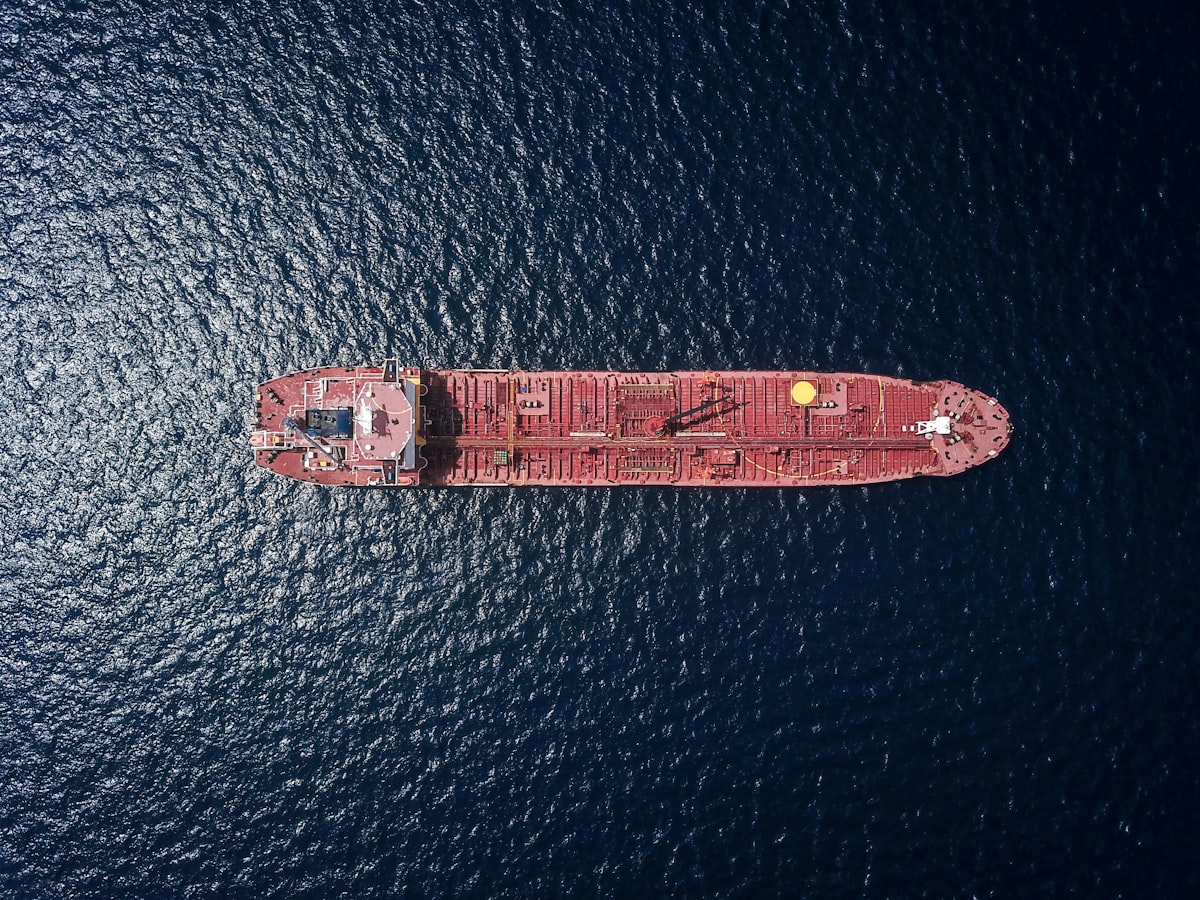
The oil price surge that closed out October has pushed crude to six month highs and dragged a nervous world economy back to a place it hoped it had left behind. Brent settled above $117 and West Texas Intermediate cleared $104 as tankers burned in the Strait of Hormuz and a war with Iran entered its ninth month. For households, central bankers and politicians alike, the bill for geopolitical risk is coming due again.
By Blumefield | October 31, 2026
The return of the oil price shock
For most of this decade the energy market has been a story about too much supply, not too little. That assumption cracked on Friday. The latest oil price surge carried Brent crude to a settlement of $117.64 a barrel, up 2.4 percent on the day, while West Texas Intermediate finished at $104.12. Both benchmarks closed at their highest levels since April, capping a month in which Brent climbed roughly 15 percent. After years in which traders treated Middle East headlines as noise, the market is once again pricing the possibility that barrels simply fail to arrive.
The proximate cause is violence in the world's most important waterway. Over a 24 hour window this week, two tankers were struck in the Strait of Hormuz. Iran's Revolutionary Guard said one vessel hit a naval mine while using what it called an unauthorized route through the strait. The United Kingdom Maritime Trade Operations centre, the Royal Navy run body that monitors regional shipping, reported that another ship was hit by explosives attached to its hull by a small boat rather than by a projectile, as had first been thought. Neither account is reassuring. Both point to a deliberate campaign against commercial shipping in a channel that cannot be rerouted around.
What makes this oil price surge dangerous is not the absolute level of crude, which remains below the panic peaks of earlier energy crises, but its direction and its cause. Prices are rising because the market has lost confidence that the supply running through a single chokepoint is safe. That is a harder problem to solve than a temporary production cut, and it explains why a relatively modest daily move has unsettled everything from equity futures to the price of gold.
Why the Strait of Hormuz still decides the price
No piece of water matters more to the oil market than the Strait of Hormuz. The narrow passage between Iran and Oman is, in the words of the United States Energy Information Administration, the world's most important oil transit chokepoint. Roughly a fifth of global petroleum liquids consumption, on the order of 20 million barrels a day, is loaded onto tankers and squeezed through a lane only a few miles wide at its tightest. There is no meaningful bypass. The pipelines that could carry crude overland from the Gulf move a fraction of the volume, and they cannot be scaled up in the space of a crisis.
That geography turns every attack near Hormuz into a market event. The UK Maritime Trade Operations centre logged 43 security incidents involving commercial shipping in the Gulf region during October, 30 of them direct strikes on tankers, the highest monthly concentration since hostilities flared earlier in the year. United States Central Command said it had cleared the primary shipping channels, an assurance the Revolutionary Guard promptly disputed, warning that alternative southern routes near the Omani coast remain heavily mined. When the two sides cannot even agree on whether the water is safe, shipowners price in the worst case, and insurance premiums follow.
The result is a risk premium that sits on top of every barrel regardless of whether a single cargo is actually lost. Ryan McDaniel, president of Duncan Oil Company, captured the mood when he said fears of American strikes on Iran were keeping supply risk premiums elevated even as diplomats shuttled between capitals. In other words, the oil price surge is being driven less by a confirmed shortage than by the credible fear of one. As Blumefield has argued through this year's run of supply scares, markets will always pay more to insure against a closure of Hormuz than the raw probability of that closure might justify, because the consequences of being wrong are catastrophic.
A war that will not end on schedule
Underneath the shipping attacks sits the larger and more intractable problem of the war itself, now grinding through its ninth month. President Donald Trump said on Friday that he believed the conflict with Iran would end soon, without offering detail, and he has previously indicated that Washington would hold off on any fresh strikes until after the November 3 midterm elections. Markets have learned not to take the calendar as a guarantee. Traders are repositioning precisely because they cannot rule out another joint operation on the scale of the 40 day air campaign that ran through the early spring, and because American naval forces, including an additional carrier strike group, are expected in the region by late November.
Diplomacy has not stopped, which is the thin thread of hope in an otherwise grim picture. Qatari mediators returned to Tehran on Friday, and United States Vice President JD Vance has outlined parameters for direct negotiations. An Iranian official, speaking carefully, said Tehran welcomed any effort aimed at talks or collective consultation. The trouble is that negotiation and escalation are running in parallel, and the energy market is forced to hedge against both. Every signal of a possible deal pulls prices down, and every mine in the strait pushes them back up.
This is the environment in which the current oil price surge has taken hold. It is not a clean supply shock with a known end date. It is a slow bleed of confidence in a region the global economy depends on and cannot police. For an administration heading into a contentious election, the politics are acute. A war that keeps petrol prices high is the kind of kitchen table issue that moves votes, and the timing of any American military decision will be read as much through a political lens as a strategic one.
The damage radiating outward
The reach of an oil price surge is what makes it such a feared macroeconomic event. Crude is an input to almost everything, from the diesel that moves freight to the fertiliser that grows food to the jet fuel that underwrites global travel. When it jumps, the increase works its way into headline inflation within weeks, and it does so at the worst possible moment for central banks that have spent two years trying to wrestle price growth back toward target. A fresh energy shock threatens to undo that work and to force an uncomfortable choice between fighting inflation and supporting growth.
The cross asset reaction on Friday told the story. Even as crude climbed, gold tumbled 3.6 percent to around $3,875 an ounce, a one year low, as investors reached for cash and pared back crowded trades rather than piling into the traditional haven. The dollar index drifted lower, and equity futures pointed sharply down, with technology heavy indices leading the retreat. That combination, higher energy costs alongside falling risk assets, is the signature of a market worried about stagflation, the toxic mix of weak growth and stubborn prices that policymakers have no clean tool to address.
Emerging economies are the most exposed. Countries that import most of their energy and borrow in dollars face a double squeeze when crude rises and financial conditions tighten at the same time. A sustained oil price surge would widen current account deficits, pressure currencies and raise the cost of the subsidies many governments use to shield citizens from pump prices. The countries least able to absorb the shock are often the ones with the least room to respond.
What the market is really pricing
Strip away the daily noise and the message of this oil price surge is a reassessment of risk that has been building all year. For a long stretch, abundant American shale output and a cautious OPEC convinced the market that spare capacity would always be there to cushion a disruption. The attacks in and around Hormuz have reminded everyone that spare capacity is useless if the barrels cannot physically reach the sea. The International Energy Agency and other institutional forecasters can model supply and demand with precision, but they cannot model the decision of a small boat crew to attach explosives to a hull.
That is why the premium is likely to prove sticky even if a ceasefire is announced. Rebuilding confidence in a shipping lane takes far longer than destroying it. Insurers will keep charging for the risk, owners will keep routing cautiously, and the market will keep a buffer priced in until the pattern of attacks clearly stops. The lesson of previous Gulf crises is that the fear outlasts the fighting, and the fear is what shows up in the price at the pump.
For readers trying to gauge where this goes, the variables to watch are concrete. Watch the tempo of incidents reported by the UK Maritime Trade Operations centre, watch whether American carriers arrive and what posture they take, and watch the signals out of the Qatari mediation channel. If the attacks ease and talks advance, the current oil price surge could unwind as quickly as it built. If a single tanker is sunk or the strait is formally contested, the move so far will look like a prologue. Either way, as Blumefield has noted repeatedly, the era in which the world could treat Gulf security as a settled background condition is over, and the oil price is the clearest barometer of that uncomfortable new reality.
Primary sources: U.S. Energy Information Administration, UK Maritime Trade Operations, U.S. Central Command, and the International Energy Agency.