The Microsoft Maia 300 Wants to Unseat Nvidia
Microsoft has spent the better part of a decade as Nvidia's single most important customer. At the Open Compute Project Global Summit this week, it made the clearest move yet to change that. The Microsoft Maia 300, the third generation of the company's in-house AI accelerator, is not a research curiosity or a slide in a keynote. It is a production part, destined for multi-gigawatt deployments beginning in 2027, and it is built to take over the one job that matters most to the economics of artificial intelligence, which is inference.
"We will scale our Azure Maia family to multi-gigawatt deployments starting in 2027," said Scott Guthrie, the executive vice president who runs Microsoft's Cloud and AI group. The language is deliberately industrial. Guthrie is not talking about a pilot. He is talking about gigawatts, the unit by which the AI era now measures ambition, and about a chip that Microsoft intends to manufacture in quantities that would have seemed absurd two years ago.
That strategy has a simple logic. Every token generated by Microsoft Copilot, by GitHub Copilot, and by the models running inside Microsoft Foundry costs money, and almost all of that money has flowed, directly or indirectly, to Nvidia. Custom silicon is how a hyperscaler stops paying rent on its own future.
Inside the Silicon
The specifications explain why Microsoft thinks this generation is different. The Microsoft Maia 300 carries 288 gigabytes of HBM4 memory across eight stacks, delivering 18 terabytes per second of bandwidth. That is a leap from the 216 gigabytes and 7.1 terabytes per second of the Maia 200 that shipped in January. Microsoft frames it as roughly 2.5 times the bandwidth and about twice the bandwidth per watt, and in inference, where models must be held in fast memory and fed constantly, bandwidth is destiny.
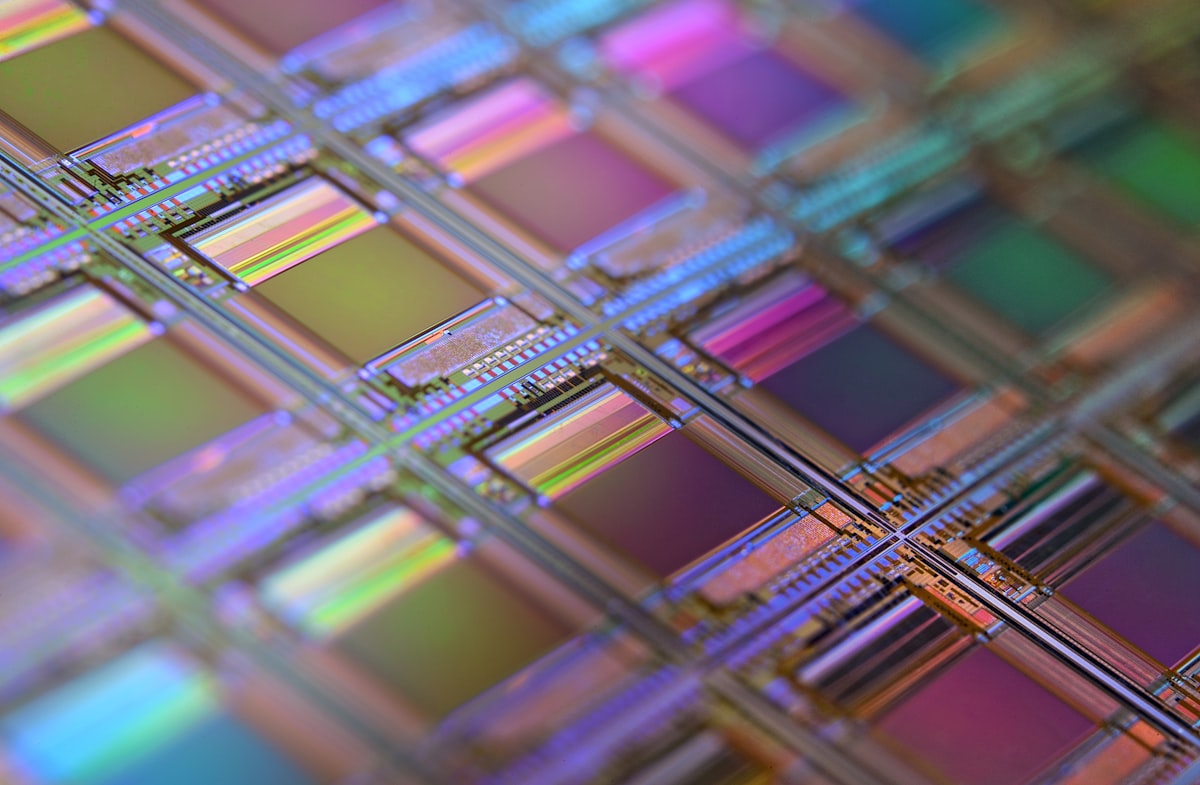
The architecture is a bigger break than the memory. Where Maia 200 was a single monolithic die built on TSMC's N3P process, the new part is Microsoft's first multi-chiplet design, pairing a compute die on the more advanced N2P node with two input and output dies and four memory dies. It reaches 13.8 peta-operations per second in FP4 and 6.9 in FP8, connects to hosts over PCIe Gen6, and scales out through 32 ports of 400-gigabit Ethernet baked into the chip itself. Power draw climbs to 950 watts per accelerator, up from 750, a reminder that none of this comes free.
The rack is where the numbers turn vivid. Microsoft packs 96 accelerators into a single rack drawing 167 kilowatts, double the chip count and more than double the power of the previous generation. A full rack holds 27.6 terabytes of memory, pushes 1,728 terabytes per second of aggregate bandwidth, and reaches a scale-up domain of roughly 12,288 accelerators wired to behave as one machine. These are the dimensions of a system designed to serve the largest frontier models at the lowest possible cost per answer.
The Economics of Escaping Nvidia
Cost is the real story behind the Microsoft Maia 300. The company now spends around 35.8 billion dollars every quarter on infrastructure, a figure that has turned compute from an engineering concern into a board-level one. Internally, Microsoft has reportedly told staff to stop "tokenmaxxing," the habit of throwing ever more model calls at every problem, and has imposed division-level AI budgets. When a company that profitable starts rationing its own tokens, the pressure to lower the unit cost of intelligence becomes existential.
Microsoft's headline claim is that the new accelerator delivers 40 percent more tokens per megawatt than leading GPU-based systems. That is a bold number, and it deserves scrutiny, because Microsoft has not named the GPU, the model, or the serving configuration behind it, and no outside party can yet test it. The company also claims up to seven times the rack-scale throughput of Maia 200 and more than 2.5 times the performance per watt. Even discounted heavily, a move of that magnitude in efficiency would reshape the arithmetic of running a cloud.
The volumes underline how serious this is. Microsoft is in talks with TSMC for capacity to build more than 300,000 of the chips for delivery in 2027, with a longer-term ambition, limited mainly by component supply, of more than a million units. One manager described the goal as producing "gigawatts' worth" of accelerators. That is not a hedge against Nvidia. It is an attempt to build a second supply chain large enough to matter.
A Hyperscaler Arms Race
Microsoft is late, and it knows it. Google has been shipping its Tensor Processing Units for years and now runs an enormous share of its own workloads on them. Amazon has pushed Trainium and Inferentia into the heart of its AWS inference business. The Microsoft Maia 300 is Redmond's bid to close a gap that its rivals opened while it leaned on merchant silicon. The same summit that hosted the Maia reveal also saw AMD unveil Helios, an open rack-scale reference design packing up to 32,768 Zen 6 cores, a sign that the entire industry is reorganizing around custom and semi-custom infrastructure.
For Nvidia, the near-term threat is modest and the long-term threat is real. Microsoft was careful to say that Nvidia and AMD GPUs remain in its training fleet, and that Maia is not sold as a rentable Azure instance. Training, where flexibility and raw performance still favor general-purpose GPUs, stays in Nvidia's camp for now. But inference is the larger and faster-growing half of the market, and it is exactly the half that custom accelerators are built to dominate. If the biggest buyers move their inference in-house, Nvidia's extraordinary margins face a slow, structural squeeze rather than a sudden collapse.
The deeper shift is about control. A hyperscaler that designs its own chip controls its roadmap, its costs, and its supply, and is no longer forced to wait in line for whatever Nvidia chooses to allocate. That is why the Microsoft Maia 300 matters beyond its spec sheet. It is a statement that the cloud giants intend to own the full stack, from the data center shell down to the transistor.
What Comes Next
The caution signs are genuine. Production does not begin until 2027, the efficiency claims remain unverified, and Microsoft's own history with Maia has featured delays and recalibrated expectations. Maia 200 only reached broad production this year, and GitHub Copilot and Microsoft Foundry are expected to migrate onto it across the United States, Europe, and Australia by the end of 2026. The Microsoft Maia 300 is a promise about the future, not a product anyone can rent today.
Still, the direction of travel is unmistakable. More detail is expected at Microsoft's Ignite conference in November, where the company will try to turn a specification into a credible roadmap. The question for the industry is no longer whether hyperscalers will build their own silicon, but how fast, and at what point the economics tip decisively away from buying Nvidia for everything. For deeper coverage of the capital flooding into AI infrastructure, see our ongoing reporting at Blumefield, and our running analysis of the global AI chip race.
For readers tracking the money, the Microsoft Maia 300 is the moment the largest spender in the industry decided that the cheapest chip is the one you design yourself. The full technical disclosures sit with Microsoft Azure, the manufacturing with TSMC, and the open hardware standards with the Open Compute Project.