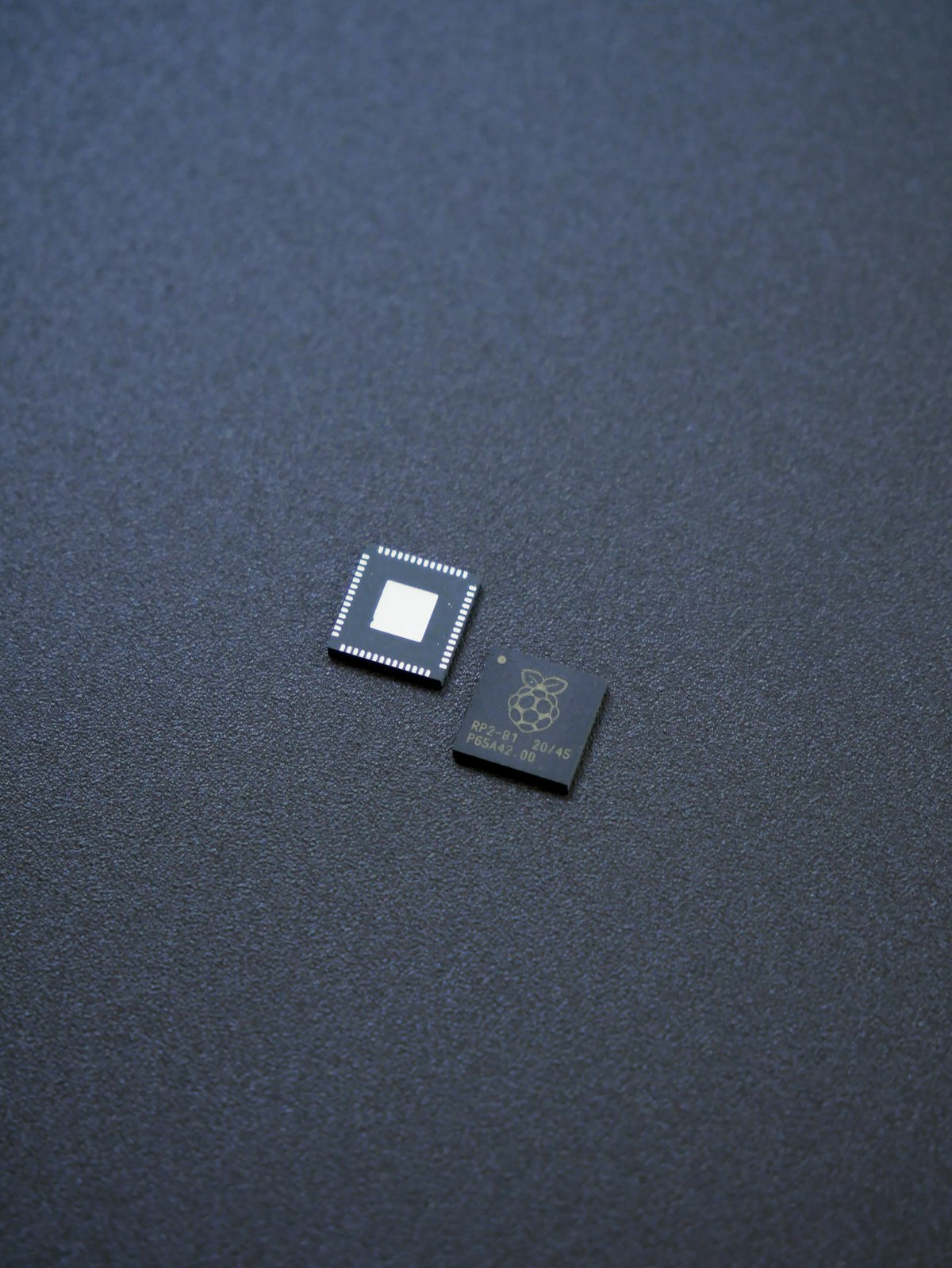
The Meta AI chip has arrived. For years Meta bought its way into the artificial intelligence race, writing enormous cheques to Nvidia for the graphics processors that train and run its models. That posture is now changing, and the Meta AI chip is the clearest signal yet.
By Blumefield | July 14, 2026
The Chip That Took Six Weeks to Pass
According to an internal memo reviewed by several outlets, the company will move its custom Meta AI chip, known internally as Iris, into mass production in September. Engineers reportedly completed testing in roughly six weeks and flagged no major defects, an unusually clean run for first-generation silicon of this complexity.
Iris is not a science project. It is the latest node in a four-generation roadmap for the Meta Training and Inference Accelerator, or MTIA, that the company has been quietly refining since 2023. The new Meta AI chip is co-designed with Broadcom and fabricated by Taiwan Semiconductor Manufacturing Company on a two-nanometer process, placing it at the frontier of what contract foundries can currently deliver. Meta has already deployed more than a gigawatt of earlier MTIA accelerators, but Iris is the first part built to shoulder serious frontier workloads rather than narrow recommendation tasks.
The timing is deliberate. Custom silicon takes years to mature, and Meta wants Iris in racks before the next training cycle for its Muse model family begins in earnest. A working Meta AI chip at scale would give the company something it has never had: leverage over its most important and most expensive supplier.
Why Meta Wants Out From Under Nvidia
The financial logic is stark. Meta raised its 2026 capital expenditure guidance to between 125 and 145 billion dollars, up from an earlier range of 115 to 135 billion, and signed roughly 107 billion dollars in new multi-year infrastructure commitments in a single quarter. A large share of that money flows to Nvidia, whose data-center margins remain the envy of the industry. Every dollar Meta can redirect from purchased GPUs to its own accelerators is a dollar that stays inside the company.
Control matters as much as cost. When a handful of buyers compete for the same scarce Nvidia parts, delivery schedules and pricing sit outside the customer's hands. A credible in-house Meta AI chip changes that negotiation. It lets the company tune hardware precisely to its own models, guarantee supply for its own roadmap, and avoid bidding wars for allocation that have defined the past two years of the AI buildout.
Meta is careful to say Iris supplements rather than replaces the GPUs it buys from Nvidia and AMD. That framing is both accurate and diplomatic, since Meta will keep buying Nvidia hardware for years. But the direction of travel is unmistakable. Amazon has Trainium, Google has its Tensor Processing Units, and now Meta intends to join the club of hyperscalers that design the brains of their own data centers. You can read Meta's own account of this strategy in its investor materials.
Fourteen Gigawatts and the Physics of Ambition
The Meta AI chip is only one piece of a far larger infrastructure gamble. The same memo lays out a target to deploy seven gigawatts of computing capacity in 2026 and double that to 14 gigawatts in 2027. Those numbers are easy to skim past and hard to overstate. Fourteen gigawatts is roughly the electricity demand of a mid-sized country, marshalled to feed a single company's pursuit of what Mark Zuckerberg now openly calls superintelligence.
Two projects anchor the plan. Prometheus, a one-gigawatt supercluster in Ohio, is scheduled to come online this year. Hyperion, rising across four thousand acres of rural Louisiana, has seen its estimated cost balloon toward 50 billion dollars as it targets as much as five gigawatts over several years. Building at this scale means securing not just chips but land, transformers, gas turbines and skilled construction labor, all of which Meta cites as sources of cost inflation. The Meta AI chip helps only with the first of those constraints.
Power is becoming the binding limit of the AI era, and Meta's willingness to build its own generation alongside its own silicon signals how vertically integrated the largest players intend to become. The company that once defined itself by software now measures ambition in gigawatts and fabrication nodes.
The Custom Silicon Arms Race Widens
Meta's move lands in a market already tilting toward custom accelerators. OpenAI is developing an inference chip with Broadcom. Anthropic has been in talks to run its models on custom silicon from Samsung and Microsoft. Amazon's Trainium backlog runs into the hundreds of billions of dollars. Each of these efforts chips away, slowly, at the assumption that Nvidia's platform is the only viable path to frontier compute.
Broadcom is the quiet winner across much of this shift. By supplying design expertise to Meta, OpenAI and others, it has positioned itself as the arms dealer of the custom-silicon boom, capturing value whether or not any single Meta AI chip succeeds. TSMC benefits too, since nearly every advanced accelerator on earth, Nvidia's included, still runs through its fabs. The foundry reports quarterly earnings this week, and investors will parse them for signs of how much custom-chip demand is accelerating. Broadcom's role is detailed on its corporate site, and TSMC's process technology is documented at tsmc.com.
None of this guarantees success. First-generation silicon often disappoints, software ecosystems are hard to replicate, and Nvidia is not standing still. But the Meta AI chip represents a structural bet that the economics of renting someone else's hardware cannot hold at 14 gigawatts of scale.
What to Watch Next
The immediate test is production yield. A clean six-week validation is encouraging, but volume manufacturing on a two-nanometer node is where ambitious silicon roadmaps tend to stumble. If Iris ramps smoothly, expect Meta to accelerate later MTIA generations and quietly trim its Nvidia orders at the margin. If it stumbles, the company's dependence on external GPUs will persist well into 2027.
The second test is disclosure. Meta's next earnings call will force Zuckerberg to defend a capital budget that has unsettled investors, and the Meta AI chip is his clearest argument that the spending will eventually bend the cost curve. For a market increasingly nervous about AI returns, tangible progress on custom silicon may matter more than another model benchmark.
For readers tracking how the compute wars reshape the technology sector, Blumefield will continue to follow the buildout as it moves from memos to megawatts. The Meta AI chip is one data point in a much larger story, but it is among the clearest signs yet that the biggest buyers of AI hardware no longer want to remain only buyers.