How Chinese AI Chips Embarrassed Silicon Valley
Chinese AI chips just did something Washington spent three years trying to prevent. The bet was that cutting China off from Nvidia's best silicon would keep its labs a generation behind. This week a food delivery company blew a hole in that assumption. Meituan open-sourced a 1.6-trillion-parameter model trained end to end on Chinese AI chips, and the numbers say it is beating the West at its own game.
The model, called LongCat-2.0, landed on June 30 with benchmark numbers that would be remarkable from any lab and are startling from a company best known for ferrying dumplings across Beijing. On SWE-bench Pro, the hardest public test of real software engineering, it scored 59.5, edging out GPT-5.5, Claude Opus 4.6 and Google's Gemini 3.1 Pro. What makes those numbers land differently is the hardware underneath them. Not a single Nvidia H100 touched this model. Every stage of training ran on Chinese AI chips, and the result is now sitting on Hugging Face for anyone on earth to download.
What Meituan actually shipped
LongCat-2.0 is a sparse mixture-of-experts model, the same broad architecture that powers DeepSeek and Mistral's Mixtral. Of its 1.6 trillion total parameters, only 33 billion to 56 billion fire for any given token, which keeps inference costs closer to a mid-sized model than a giant one. Meituan pairs that with what it calls zero-computation experts, so a trivial token like a variable name burns almost no compute while a gnarly recursive function pulls in the full expert stack.
The headline capability is context length. Through a technique the company brands LongCat Sparse Attention, the model natively handles one million tokens, roughly an entire codebase in a single window. Most frontier systems still cap out at 128,000 tokens and start forgetting details well before that. An agent that can hold a whole repository in working memory behaves very differently from one that keeps paging context in and out, and that is precisely the workload Meituan optimized for. The company describes the model as a "brain" for coding harnesses like Claude Code and other agent frameworks, built for repository-level edits, tool use and long-horizon task execution rather than chat.
The benchmarks back the pitch. Beyond the SWE-bench Pro result, LongCat-2.0 posted 70.8 on Terminal-Bench, 79.9 on BrowseComp for complex web retrieval, and 77.3 on SWE-bench Multilingual, essentially level with Claude Opus. You can read the full technical breakdown on the project's own LongCat model page, and a preview version has quietly been available for weeks through OpenRouter, where it climbed into the top three models worldwide by call volume before most people knew who built it.
The Chinese AI chips story is the real story
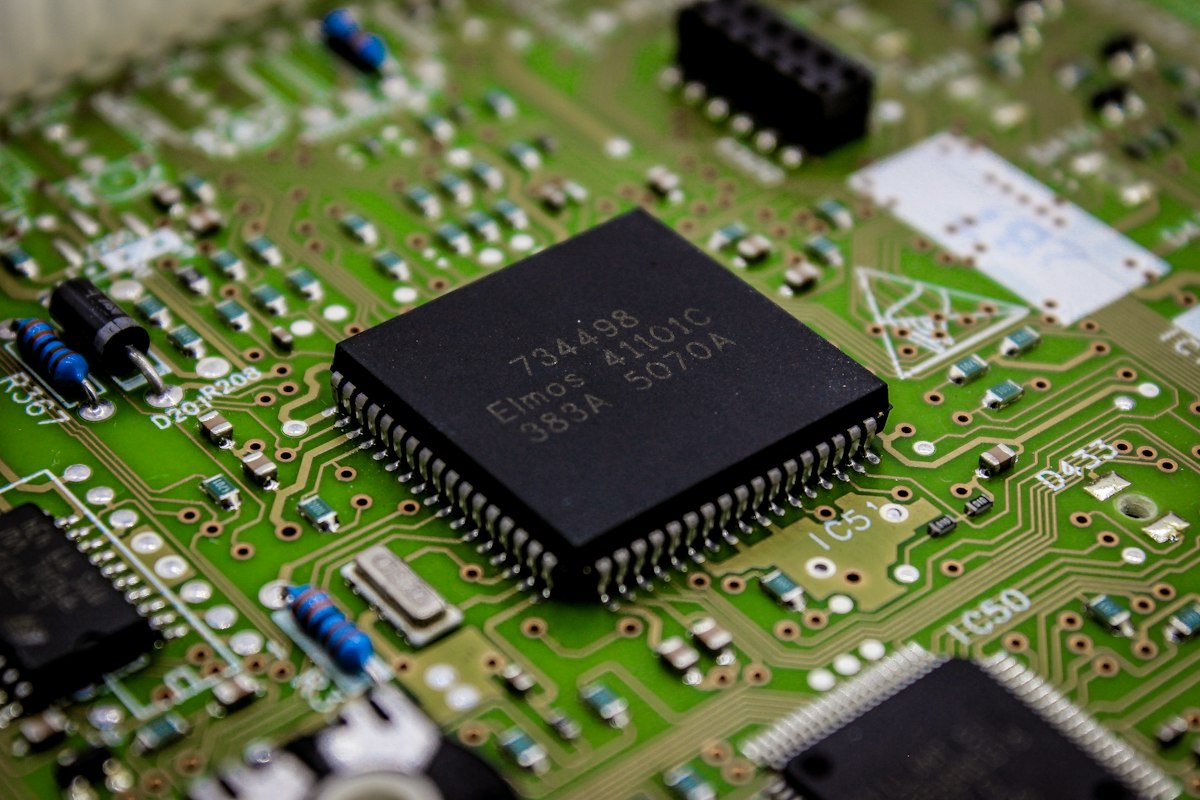
Strip away the leaderboard bragging and the durable news here is industrial. Meituan says it trained LongCat-2.0 on a cluster of 50,000 domestic accelerators, sustaining throughput above one trillion tokens per day. That is not a lab curiosity. That is a production-scale run on Chinese AI chips, the kind of feat US export controls were specifically designed to prevent.
Getting there was not free. The company has been grinding on domestic compute since 2023, scaling from thousands of cards to fifty thousand while solving the unglamorous problems that usually break large runs: fault recovery, deterministic operators, bitwise consistency and communication overhead across the cluster. Meituan claims a 70 percent reduction in daily fault rates and a 1.5x improvement in model FLOPs utilization along the way. Those are the engineering scars that separate a demo from a repeatable capability, and they suggest the next model will come faster.
The geopolitical read is hard to miss. Bernstein estimated that Nvidia held around 40 percent of China's AI chip market in 2025, roughly matched by Huawei, and projected Nvidia's share would slide another eight points this year as Chinese AI chips absorb the demand that export rules keep redirecting home. Every trillion-token training run that succeeds on domestic silicon makes the American software moat, the CUDA ecosystem that locks developers to Nvidia, a little shallower. Meituan effectively demonstrated that a Chinese firm can now design, train and serve a frontier-class model without ever touching the American stack.
Why a food delivery company, and why open source
The obvious question is why Meituan, of all firms, is the one landing these punches. The answer is that food delivery at Chinese scale is an optimization and logistics problem, which means the company already runs enormous compute, employs a deep bench of systems engineers, and has a concrete internal use for coding agents. It bought its way into model building in 2023 by acquiring the startup Light Year Beyond for 281 million dollars, then spent two years quietly turning a delivery backend into an AI operation.
Releasing the weights for free is the sharper strategic choice. Open-sourcing a frontier-class model is the same playbook DeepSeek and Alibaba have run, and it works on several fronts at once. It pressures the pricing of closed Western labs, seeds the global developer community with Chinese tooling, and turns a domestic engineering achievement into international soft power. When a model trained on Chinese AI chips tops OpenRouter's usage charts, the message to every startup weighing a 20-dollar-per-million-token API bill is unambiguous: the cheaper option is now also, on some tasks, the better one. For more on how open weights are reshaping the AI economy, see Blumefield's ongoing coverage.
There are caveats worth stating plainly. Benchmarks are self-reported, and vendor-run evaluations flatter their authors more often than not. A 1.6-trillion-parameter model will not run on a laptop or most on-premises servers; it lives in a data center, which limits who can actually deploy it despite the open license. And "trained on domestic chips" still leaves open questions about yields, cost per token and how much the underlying accelerators themselves depend on foreign manufacturing tools. The claim is significant, not sacred.
What breaks next
For US policymakers, LongCat-2.0 is an awkward data point in an increasingly awkward argument. The theory behind export controls was that denying China cutting-edge hardware would translate into denying it cutting-edge models. What the last eighteen months keep showing is that constraint breeds efficiency: forced onto weaker Chinese AI chips, Chinese labs got very good at squeezing more capability out of less, and the capability gap narrowed anyway. You can download the weights yourself from the meituan-longcat organization on Hugging Face and watch the argument dissolve in real time.
For Western AI labs, the pressure is commercial before it is strategic. If a free, near-frontier coding model runs at a fraction of the cost and holds a full codebase in context, the premium that OpenAI, Anthropic and Google charge for agentic coding starts to look negotiable. Enterprises that spent 2025 anxious about vendor lock-in now have a credible open alternative, and it happens to carry a Chinese flag.
The deeper signal is about who sets the pace. For most of the modern AI era the assumption was that frontier capability flowed from Silicon Valley outward, gated by American chips and American capital. A trillion-parameter model trained on Chinese AI chips by a delivery company, given away for free, and topping global usage charts is a different picture entirely. The moat was supposed to be the hardware. Meituan just proved you can win without it.