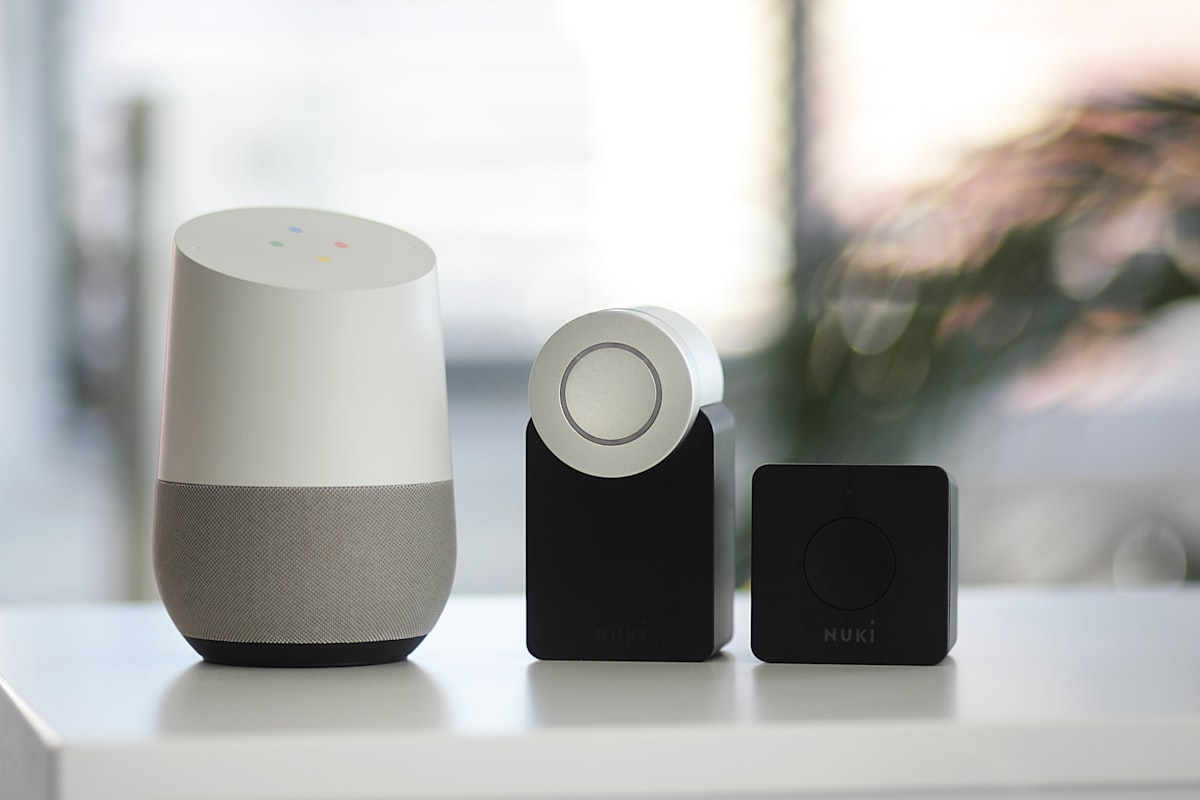
The Google Home Speaker is Google's boldest consumer hardware move in years, and it lands with Gemini, not Assistant, at its core.
A Six-Year Silence Ends
The Google Home Speaker ends a six-year silence in Google's hardware lineup. The company has not shipped a new own-brand smart speaker since the Nest Audio landed in 2020. That drought breaks on June 25, when the Google Home Speaker reaches shelves at $99.99, with pre-orders already live. The hardware is modest on paper, a compact unit with a 360-degree driver and a soft light ring that pulses while it listens. What matters is what Google stripped out. This is the first audio device the company has built with no Google Assistant at its core. In its place sits Gemini for Home, the reasoning model Google has spent two years pushing into search, Android and Workspace.
The symbolism is hard to overstate. Assistant defined Google's voice ambitions for nearly a decade, and its quiet retirement from the company's flagship speaker signals that the old command-and-response era is over. The Google Home Speaker is positioned not as an incremental refresh but as a reset, the device that finally gives Gemini a permanent seat in the home. Google confirmed the launch and pricing through its official Keyword blog, framing the product as the opening act of a broader Gemini-for-Home portfolio teased last autumn.
For a company that effectively ceded momentum in smart speakers to Amazon over the past five years, the timing is deliberate. Generative AI has reset consumer expectations of what a voice assistant should do, and Google is betting the new device can convert that expectation into hardware sales before rivals lock in their own upgrades. Pre-orders run through the Google Store.
Why Gemini Changes the Home
The pitch rests on natural language. Earlier assistants forced users to memorize rigid phrasing, and a single misremembered word would break the interaction. Gemini for Home is built to absorb the way people actually talk. Ask it to "turn off all the lights except my bedside lamp," and it parses the logic rather than rejecting the request. String three commands into one breath, dim the kitchen, start some music, set a twenty-minute timer, and it executes all of them. Correct yourself mid-sentence and it follows the revision instead of the error.
Two capabilities push it past novelty. The first is multi-step reasoning. Google's example has the speaker answer "what's the weather going to be like for the next baseball game," which requires the model to identify the fixture, locate the venue and pull the forecast for that moment before replying. The second is conversational memory. Gemini holds short-term context, so follow-up questions no longer need to restate the subject, and a feature called Continued Conversation keeps the microphone open briefly after a reply so users can keep talking without repeating a wake word. That feature is now available across all supported languages for the first time, a detail Google documented separately.
This is the gap Google is trying to exploit. Voice assistants have long been trapped in a loop of timers, weather and music because their underlying systems could not reason. By wiring a frontier model into an always-on device, the Google Home Speaker aims to make the home interface feel less like a remote control and more like a competent assistant that listens and adapts.
The Assistant Wars Move Into the Living Room
Google is not moving into an empty field. Amazon, which seized the volume crown while Google idled, is rebuilding Alexa around its own Nova models, and Apple is preparing a Gemini-assisted overhaul of Siri that will eventually reach the HomePod. For the first time since roughly 2017, all three major smart-home platforms are upgrading their voice AI in the same cycle, and the Google Home Speaker is Google's opening salvo in that renewed contest.
The competitive logic is about more than speaker sales. Whoever owns the ambient voice layer owns a privileged channel into shopping lists, media choices, calendar entries and smart-home routines. A capable assistant in the kitchen is a daily touchpoint that no app icon can match, and the company that makes its assistant indispensable gains a defensive moat around the rest of its ecosystem. That is why a $99 speaker carries strategic weight far above its price, and why the device matters more than its spec sheet suggests.
Google also holds a structural advantage its rivals lack: real-time search grounding. Because Gemini can reach the live web, it can answer current-events questions that older assistants fumbled, a strength that plays directly to the short, spoken queries a speaker invites. Readers tracking how this voice contest reshapes Big Tech can follow the continuing coverage at Blumefield.
Privacy, Premium, and the Subscription Play
The most revealing part of the launch is what sits behind a paywall. The Google Home Speaker is cheap, but its sharpest features require a Google Home Premium subscription. Gemini Live, the free-flowing chat mode invoked with "let's chat," sits inside the tier. So does Camera History Search, which lets the speaker describe what Nest cameras recorded, answering questions like whether the back gate is open or whether the dog climbed onto the couch. Home Briefs, which summarize household activity while you were out, live there too.
That design tells you where Google sees the margin. The hardware is a loss-leader entry point, and the recurring revenue comes from the AI layer stacked on top. Every pre-order bundles a six-month trial of Google Home Premium and three months of YouTube Premium, a classic funnel built to convert curiosity into a paid habit before the trial lapses. The Google Home Speaker, in other words, is as much a subscription vehicle as a piece of audio equipment, and that recurring revenue is the real prize.
Privacy is the counterweight Google has to manage carefully. An always-listening device that can search camera footage on command invites obvious anxiety, so the speaker includes a physical microphone mute switch and the light-ring underglow that signals when it is listening, thinking or responding. Whether those assurances satisfy regulators and households remains an open question, and it is one the entire category, not just this launch, will have to answer as ambient AI spreads.
The Stakes for Google's Ambient Computing Bet
Strip away the marketing and the launch is a referendum on Google's hardware credibility. The company has a long record of entering categories with promise and retreating when momentum stalls, and the six-year speaker gap is itself evidence of that pattern. Re-entering now, with a model that genuinely outclasses the assistants of the last cycle, is Google's attempt to prove it can still build consumer hardware people keep on their counters.
The economics are favorable if execution holds. A $99 device backed by a subscription engine and tied into a Gemini ecosystem that already spans phones, TVs and search creates compounding lock-in. Pair two Google Home Speaker units with a Google TV Streamer and the living room becomes a spatial-audio hub, deepening the household's dependence on Google's stack. The more rooms the assistant occupies, the harder it becomes for a family to switch platforms.
The risk is equally clear. Consumers have been promised smarter assistants before and learned to distrust the hype, and a single round of clumsy misunderstandings could blunt the launch. Amazon and Apple are moving in parallel, so any stumble hands rivals an opening in a market Google once led and then let slip. The Google Home Speaker is a confident bet that this time the technology has caught up to the promise. Whether households agree, when units reach shelves on June 25, will shape the next decade of how we talk to the machines around us.