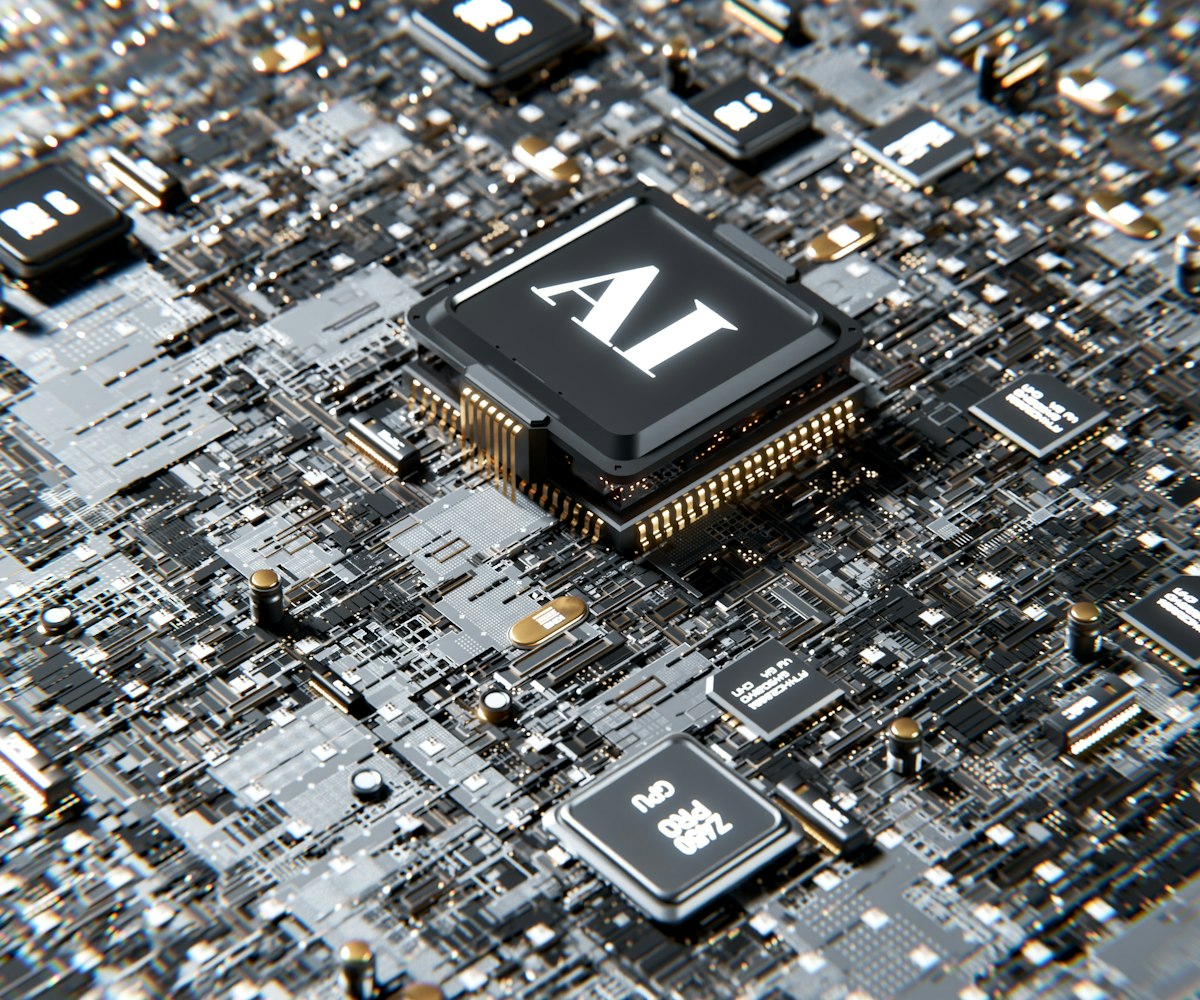
Google is hardwiring its Gemini model architecture straight into silicon. If Google Frozen v2 delivers the six to tenfold efficiency gain its engineers project, the economics of serving frontier AI change for everyone. Alphabet shares jumped 3.7% intraday on the report before settling up 1.5%.
By Blumefield | 21 July 2026
The Chip That Only Runs One Family of Models
Google Frozen v2 is the internal codename for a server chip that abandons the central premise of the last decade of AI hardware. Accelerators have been built to be general. A GPU or a tensor processing unit is a flexible slab of matrix multiplication that will run whatever architecture a researcher throws at it, and that flexibility is precisely what has made Nvidia's position so durable. Frozen v2 gives that up. According to sources cited by The Information, parts of the Gemini model architecture are etched directly into the silicon, which means the chip is fast at exactly one thing and useless at everything else.
The name borrows from the practice of freezing parameters during training, where a set of values is locked so it stops updating. Here the freezing happens one layer further down, in the physical circuit. Google's engineers project six to ten times better performance per watt than the company's current TPUs, which is not a generational improvement so much as a different curve entirely. Deployment is targeted for 2028, and Google reportedly views the programme as a test run rather than a TPU replacement, with production volumes well below its main custom silicon line.
Investors reacted immediately. Alphabet's Class A shares climbed as much as 3.7% intraday on Monday before closing at $351.99, up 1.5%. That is a meaningful move for a company of Alphabet's size, triggered by a report about a chip that will not ship for another two years.
Why the First Version of Frozen Never Shipped
The original idea came from Jeff Dean, chief scientist at Google DeepMind, and it was considerably more aggressive. Dean's first Frozen design called for embedding the model weights themselves into the hardware, not just the architecture. Weights are the tuned numerical parameters that encode what a model has actually learned, and hardwiring them would collapse the distinction between a chip and a model entirely. The performance ceiling would have been extraordinary.
It was also unworkable, and Google killed it. A chip carrying frozen weights serves exactly one version of one model. Gemini ships new checkpoints on a cadence measured in months, while a fabrication cycle is measured in years. By the time the silicon arrived it would already be obsolete, an expensive monument to a model nobody wanted to use.
Google Frozen v2 is the compromise that survives that objection. Architecture is the blueprint: how attention is arranged, how mixture-of-experts routing works, how data moves between layers. Weights are what gets poured into the blueprint. Freeze the former and new versions of the latter can still be loaded, which buys the design a usable lifespan. How much of the architecture ends up hardcoded has apparently not been settled, which tells you the trade-off between speed and flexibility is still being argued inside Google.
The Compute Crunch That Made This Necessary
Google Frozen v2 is not a research curiosity. It is a response to a shortage. Google has been rationing internal compute for months, and the consequences have been visible from the outside: Google Cloud has turned away enterprise deals it could not serve, the Gemini 3.5 Pro flagship has missed its target three times, and the company has resorted to leasing data centre capacity from SpaceX. For a firm that has spent a decade building custom accelerators, running short of compute is an uncomfortable place to be.
The efficiency levers this design pulls are the ones that matter most for inference cost. Fewer calculations per token, achieved through what looks like aggressive operator fusion, where several separate mathematical steps collapse into a single computation. And less data movement, the quieter of the two problems. When a model does not fit in on-chip memory, the accelerator spends much of its time shuttling parameters back and forth from external storage, burning power and stalling its own logic. A chip designed around one architecture can be sized to hold that architecture, and the shuttling largely stops.
Google's newest general-purpose parts, the TPU 8t and TPUi, already split training and inference workloads between separate designs, as Blumefield has tracked through this year's custom silicon race. Frozen v2 pushes specialisation one step further along the same road the company has walked since the first tensor processing units went into production.
Why Rivals Should Be Worried
The competitive logic of Google Frozen v2 is simpler than the engineering. Training a frontier model is a capital expense you amortise. Serving it is a recurring cost that scales with every single query, and as the industry shifts from demos to production agents chewing through millions of tokens per task, inference cost has quietly become the variable that decides who has a business at all.
OpenAI and Anthropic both buy their compute. OpenAI has commissioned custom inference silicon through Broadcom, and Anthropic has explored arrangements with Samsung and Microsoft, but neither owns the model, the chip, the data centre and the distribution channel the way Google does. If Google Frozen v2 delivers even the low end of its projected range, the company can price Gemini inference at a level competitors cannot match without selling below cost, and it can do so during a quarter when its flagship model is late. Structural cost advantages outlast benchmark wins, which is the genuinely uncomfortable part for everyone else.
There is a reason the chip will probably never become a product for external customers. A Gemini-shaped accelerator is worth nothing to a company running Llama or Claude. Google keeps it in house, and keeps the margin.
The Bet Underneath the Silicon
Every claim here comes from internal sources rather than a Google announcement, and efficiency figures quoted before a chip physically exists deserve the scepticism they usually get. A six to ten times range is wide enough to contain both a triumph and a disappointment, and performance per watt is intensely workload dependent. Nothing has been confirmed by the company, though Alphabet's second-quarter earnings call hands management an obvious opportunity to address it.
The deeper risk is not manufacturing. It is architectural. Google Frozen v2 only pays off if Gemini's fundamental structure stays roughly where it is until at least 2028, and the last four years of AI research offer no assurance of that. Transformers have proved durable, but mixture-of-experts routing, attention variants and long-context handling have each been rewritten more than once. Google is betting that the era of architectural churn is ending, and that the field is settling into something stable enough to commit to metal.
That is a real prediction about the shape of the technology, made with several billion dollars behind it. If Google is right, Google Frozen v2 hands the company the cheapest inference in the industry for years. If the next breakthrough looks nothing like Gemini, it owns a very fast chip for a model nobody runs.