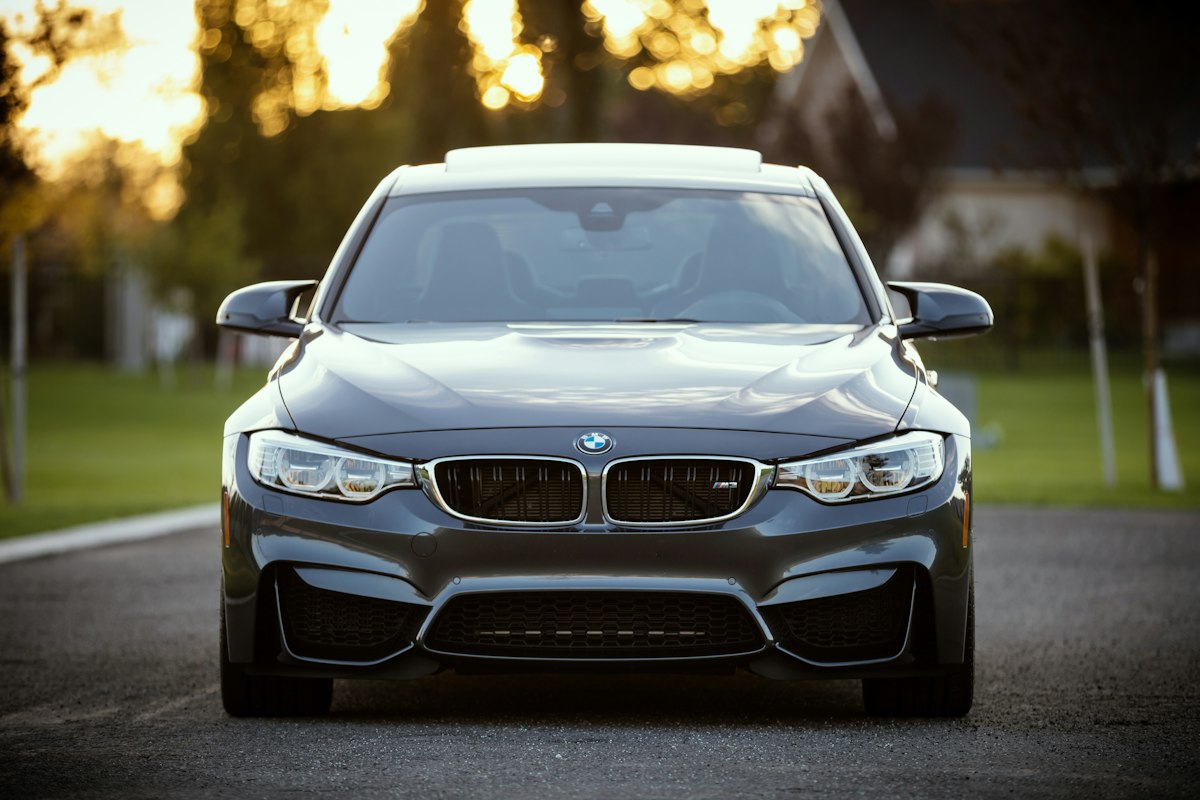
The German auto industry just delivered its starkest warning yet, with BMW slashing its 2026 profit outlook as its most important market collapses beneath it. A slump in China, an energy shock from the Iran war, and a wave of cheaper Chinese rivals are now hitting all at once. The country's industrial crown jewel is running out of road.
By Blumefield | June 18, 2026
The Profit Warning Heard Across Bavaria
When a company as conservative as BMW tears up its own guidance, the rest of the German auto industry should worry. On June 16 the Munich carmaker cut its 2026 forecast for the operating margin in its core automotive division to a range of just 1 to 3 percent, down sharply from the 4 to 6 percent it had promised investors only months earlier. Group profit before tax is now expected to fall by more than 15 percent on the year, a decline BMW had previously described as merely moderate. The shares dropped to their lowest level in more than five years on the news.
This is not a rounding error. A premium manufacturer that has long prided itself on protecting margins through downturns is now signalling that its profitability could shrink to a sliver. BMW management blamed an accelerated downturn in China alongside the fallout from the Iran war, which it said had dented consumer confidence and pushed up energy costs across its operations. Gains in Europe and the United States, the company conceded, came nowhere close to offsetting the damage done in Asia.
For an industry that employs hundreds of thousands of workers and underpins Germany's export economy, the warning lands like a thunderclap. BMW is supposed to be the strong one. If the strongest player in the German auto industry is bracing for margins near 1 percent, the weaker names face a far more brutal reckoning.
China, the Market That Made Them
For two decades, China was the engine room of German motoring profits. Wealthy Chinese buyers wanted the badge, the engineering, and the status, and they paid handsomely for all three. That era is ending with startling speed. BMW said the downturn in China's passenger car market intensified during the second quarter, with combustion-engine models hit especially hard. The problem is structural, not cyclical.
Domestic Chinese brands have rewritten the rules. Volkswagen, once the undisputed leader in China, was overtaken by electric-vehicle champion BYD in 2024 and pushed into third place by Geely in 2025. Across a five-year stretch, the combined China sales of Germany's big carmakers fell by roughly a quarter to about 3.9 million vehicles. Local manufacturers now offer software-rich, competitively priced electric cars that increasingly outclass European rivals on the features younger Chinese buyers actually want.
What makes the latest data so alarming is that Chinese brands are no longer confined to the budget end. They are pushing aggressively into the premium tier that German marques treated as untouchable, courting exactly the affluent customers who once queued for a 5 Series or an S-Class. The moat that protected the German auto industry in China has been drained, and there is no obvious way to refill it.
The Iran War Premium
Layered on top of the China shock is a geopolitical one. The conflict involving Iran has rattled energy markets and consumer sentiment across Europe, and carmakers are unusually exposed to both. Vehicle assembly is enormously energy intensive, from stamping and welding to the paint shops that run around the clock. When power and input costs jump, margins that were already thin get squeezed harder still.
The demand side is just as fragile. Big-ticket purchases like a new car are the first thing households defer when headlines turn frightening and budgets tighten. BMW explicitly cited weaker consumer sentiment tied to the war as a drag on sales, a reminder that the German auto industry cannot insulate itself from events in the Middle East. A manufacturer can hedge currencies and renegotiate supplier contracts, but it cannot hedge away a war that makes buyers nervous and energy expensive at the same time.
A Home Market Under Siege
The most uncomfortable truth for executives in Munich, Stuttgart, and Wolfsburg is that the threat is no longer thousands of miles away. It has arrived on home soil. Chinese brands such as BYD and MG are expanding rapidly across Europe, and early figures suggest that much of the benefit from Germany's own electric-vehicle subsidy program is flowing to these newcomers rather than to domestic champions. In the first quarter, Chinese marques accounted for well over half of the new registrations attributed to Chinese-owned brands in Germany itself.
The broader numbers tell a story of a continent ceding ground. China's share of global vehicle production climbed to 34 percent in 2024 from 28 percent in 2019, while Europe's slipped by four points to around 19 percent. Germany's national auto association, the VDA, expects domestic car production to edge down again in 2026 from the 4.15 million units built the year before. Each lost percentage point represents factories running below capacity, suppliers under pressure, and a skilled workforce whose future is suddenly uncertain.
This is the existential question now facing the German auto industry. For a century its competitive edge rested on precision engineering and combustion mastery. In an electric, software-defined market, those advantages count for less, and the rivals who do hold the new advantages are moving faster and pricing lower. Industry bodies such as the European manufacturers group ACEA have warned for months that without a coherent response on cost, energy, and trade policy, Europe risks watching its automotive base hollow out.
The Reckoning Ahead
BMW's response is to cut deeper. The company said it would accelerate and intensify existing cost-reduction efforts through additional structural and efficiency measures, work that will carry a one-time hit to earnings in the second half of 2026 before any benefit shows up. Translated from corporate language, that means harder decisions on plants, headcount, and product lines are coming, and not only at BMW. When the bellwether of the German auto industry resorts to emergency restructuring, peers rarely sit still for long.
The strategic dilemma is genuine. Carmakers must keep pouring money into electric platforms and software to stay relevant, yet they are being asked to do so precisely as the profits that fund such investment evaporate. Cutting too aggressively risks falling further behind on technology. Investing too freely risks burning cash the business can no longer spare. There is no comfortable path, only a choice between difficult ones, and management at every German marque is now being forced to pick.
What unfolds over the coming quarters will shape the German economy for a generation. The automotive sector is not just another industry in Germany. It is woven into the country's identity, its trade balance, and its political stability. The warning from Munich is a signal that the comfortable assumptions of the past no longer hold. For deeper analysis of how this story develops, readers can follow the ongoing coverage at Blumefield, and watch closely as the official numbers land. Investors and policymakers will be studying BMW's full disclosures through BMW Group investor relations for the first hard evidence of just how steep the climb back will be.
The German auto industry has weathered oil shocks, recessions, and emissions scandals before. This time the pressure is coming from every direction at once, and the machine that powered Europe's largest economy is, for the first time in living memory, struggling to find another gear.