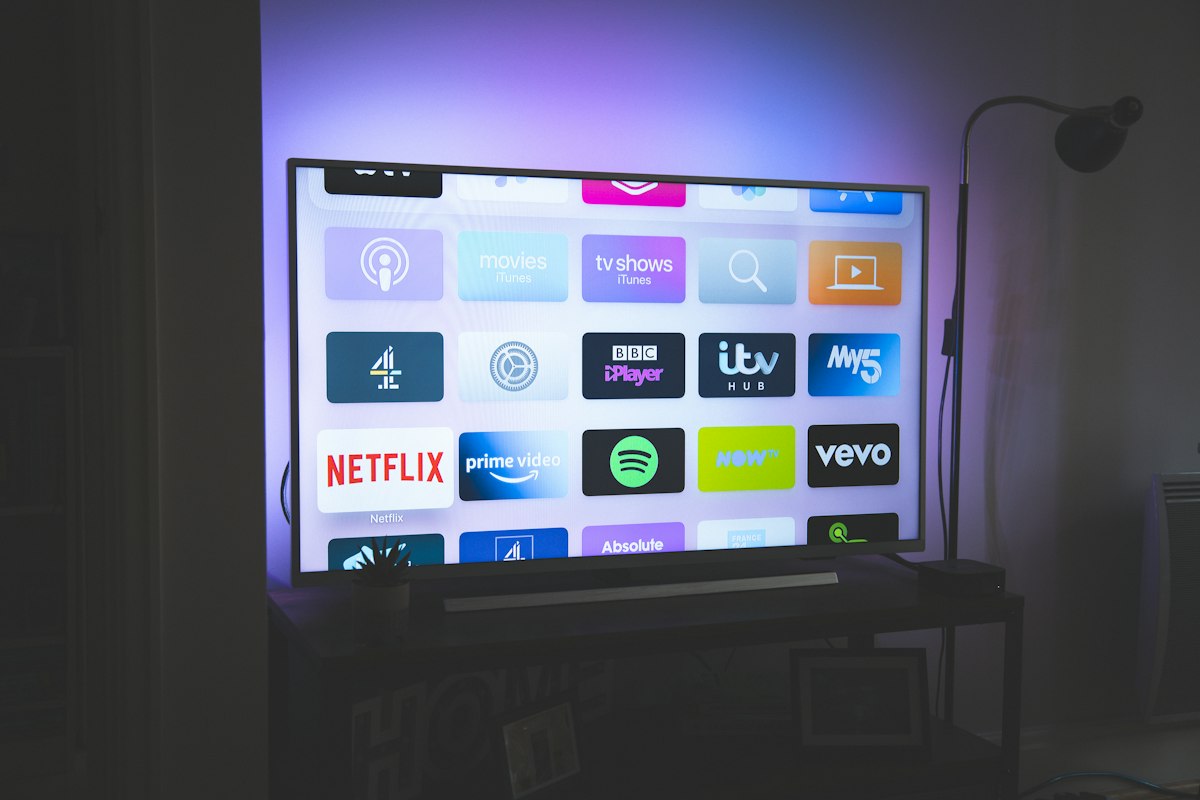
The Fox Roku deal has redrawn the map of American television in a single stroke.
By Blumefield | June 17, 2026
A Broadcaster Buys the Front Door
For years the conventional wisdom held that the value in television was migrating away from networks and toward platforms. The Fox Roku deal is Lachlan Murdoch's wager that he can own both. On June 15, Fox Corporation agreed to acquire Roku for $160.00 per share in cash and stock, valuing the streaming pioneer at roughly $22 billion in enterprise value and creating, on paper, the third-largest player in U.S. television by share of viewing.
The logic is not subtle. Fox sits at the top of live news and sports, with the NFL, MLB, NASCAR, the Big Ten, the FIFA World Cup, Fox News and Fox Business in its portfolio. Roku sits at the bottom of the funnel, controlling the home screen, the remote and the first-party data for more than half of all U.S. broadband households. By stitching the two together, Fox is no longer just renting attention from distributors. It owns the front door. As the company put it in its official announcement, the combination unites premium live content with the platform through which America actually watches it.
Lachlan Murdoch framed the move as the next logical step in a strategy that began with the 2019 reorientation around live news and sports and the 2020 acquisition of Tubi. Tubi has since become one of the more quietly successful free streaming services in the market, and folding it into Roku's distribution gives Fox a free, ad-supported empire with genuine scale.
The Numbers Behind the Bet
The structure of the transaction tells you how confident Fox is. Shareholders will receive $96.00 in cash and 0.9693 Fox Class A shares for each Roku share, with existing Fox investors holding roughly 73 percent of the combined company and Roku holders the remaining 27 percent. Fox has lined up $12 billion of committed bridge financing from Morgan Stanley and expects pro forma net leverage of about 2.8 times at closing, while promising to maintain its investment grade rating and its uninterrupted buyback and dividend program.
What makes the Fox Roku deal defensible rather than reckless is timing. Roku spent years burning cash to win the platform, and only recently turned the corner. The company reached positive operating income for the first time since 2021, crossed $1 billion in quarterly platform revenue, and guided to full-year operating profitability. Details are available through Roku's investor relations site. Fox is buying a business at the exact moment its economics flip from growth-at-all-costs to durable margin.
Management projects roughly $400 million in run-rate cost synergies, accretion to free cash flow per share by the second full year after closing, and additional revenue upside that the two sides were careful not to overpromise. The full terms sit in the companies' SEC filing, which is worth reading for the financing detail alone.
Connected TV Is the Real Prize
Strip away the content talk and the Fox Roku deal is, at its core, an advertising play. The money in television is moving toward connected TV, where streaming subscription and CTV ad spend in the United States is projected to reach roughly $85 billion and $60 billion respectively by the end of the decade. Fox's own deal presentation pointed to a combined ad business of around $9 billion, or close to 14 percent of all spending on U.S. television.
Roku's value here is not the hardware. It is the data and the inventory. The platform sees what households watch across every app, controls the home screen real estate that services pay to appear on, and operates automatic content recognition that turns the television itself into a measurement device. Pairing that with Fox's premium live audiences gives advertisers something neither company could offer alone: appointment viewing at scale, matched to addressable, data-rich targeting. That is the combination Madison Avenue has wanted and rarely been able to buy.
It also explains why MoffettNathanson and others see the combined Tubi and Roku viewership edging past Disney's bundle of Disney+, Hulu and ESPN. The deal does not just add subscribers. It assembles a closed loop of content, distribution and measurement inside a single company.
The Antitrust Shadow
None of this clears regulators automatically. The most obvious tension is Roku's role as a neutral platform. Streaming services from Netflix to Disney depend on Roku for placement, search ranking and ad inventory, and those same services now find their gatekeeper owned by a direct competitor in Fox. The Fox Roku deal therefore hands a broadcaster control over the home screen, the search results and the ad slots that rivals rely on, while Tubi and the Roku Channel compete head to head for the same free, ad-supported viewers.
Fox has tried to defuse this in advance, pledging to keep Roku open and partner-friendly and to maintain ubiquitous distribution of its content. Whether that promise survives contact with the Department of Justice or the Federal Trade Commission is the central question hanging over the transaction. Regulators have grown noticeably more skeptical of vertical media tie-ups, and the control-of-the-screen argument is exactly the kind of theory antitrust enforcers have signaled they want to test.
The timeline reflects that uncertainty. The companies expect the deal to close in the first half of 2027, leaving a long runway for shareholder votes, U.S. and international clearances, and the inevitable lobbying war from rival platforms who would prefer their gatekeeper stay independent.
What It Means for the Rest of the Industry
If the Fox Roku deal closes, it sets a template that competitors cannot ignore. The independent streaming aggregator, the supposedly neutral layer between content and consumer, may turn out to be a transitional species rather than a permanent fixture. Once one major broadcaster owns a platform, the pressure on others to vertically integrate becomes hard to resist. Expect renewed speculation about who pairs off next, and which device makers and smart-TV operating systems suddenly look strategically essential.
For creators and smaller networks, the near-term picture is more stable than the headlines suggest. Fox has every incentive to keep Roku's ecosystem open in the early years, both to satisfy regulators and to preserve the advertising network effects that make the platform valuable. The longer-term risk is subtler: a gatekeeper that also owns content has a permanent thumb to press on the scale, however gently.
For investors and audiences alike, the takeaway is that the streaming era's second act is consolidation, not expansion. The companies that win will be the ones that own the pipe, the screen and the data, not just the shows. Anthony Wood, who built Roku over two decades and will join the Fox board, framed the sale as a chance to scale faster and innovate harder. He may be right. But the Fox Roku deal is also an admission that in modern television, independence is a luxury that even the platform that pioneered streaming could no longer afford. For ongoing coverage of how this reshapes the market, follow Blumefield.