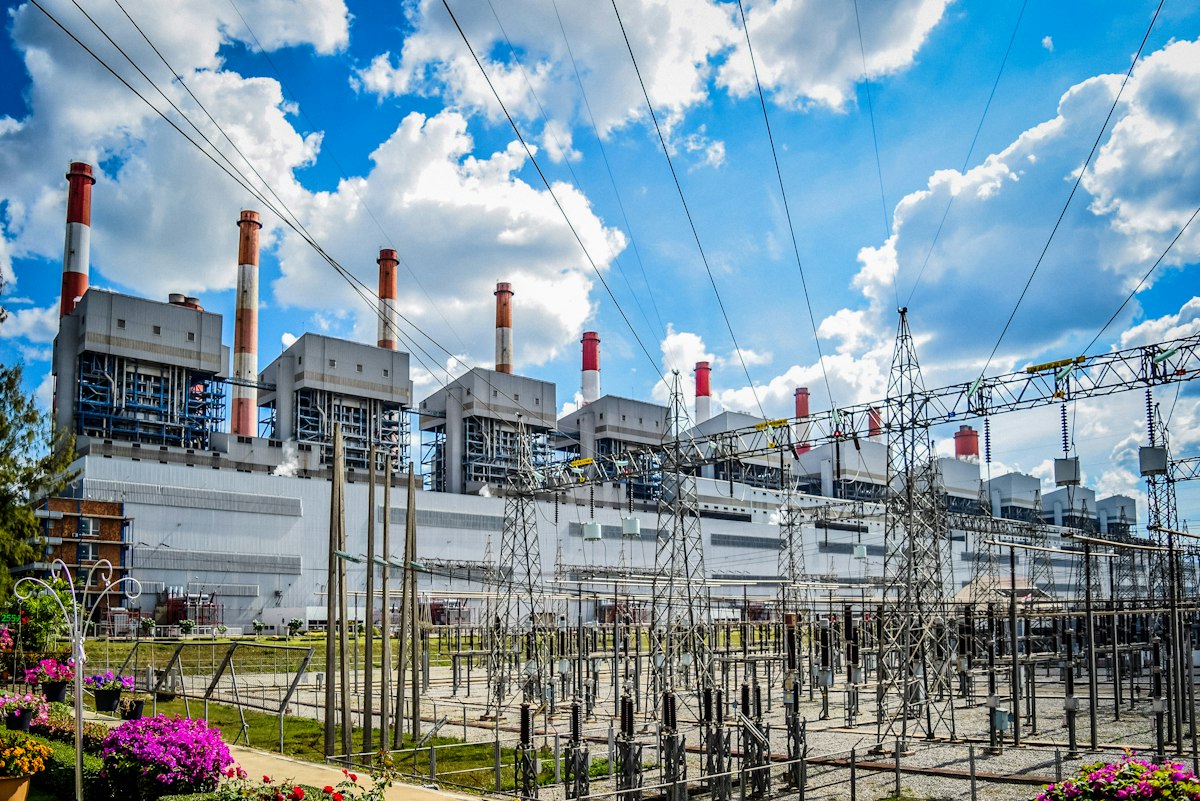
An AI data centre on the scale of a small city is taking shape on an unlikely site: the estate of Drax, the Yorkshire power station best known for burning wood pellets. The energy company wants to build more than a gigawatt of artificial intelligence computing capacity there, a project that could redraw Britain's place in the global compute race and anchor the country's push for sovereign AI.
A Power Station Reborn
On the morning of 3 November, Drax Group did something few people expected of a company best known for burning wood pellets. It announced plans to turn its vast North Yorkshire power station into one of the largest AI data centre campuses in the United Kingdom. The partnership unites Drax with Brookfield, the Canadian asset manager, its UK compute platform Radiant, and Qai, a Qatar-headquartered technology company investing through a joint venture with Brookfield.
The numbers are deliberately eye-catching. Brookfield estimates that total potential investment, including the semiconductor chips that will eventually fill the halls, could exceed £20 billion. An initial £2.5 billion is earmarked for the first phase alone. The ambition is a site of more than one gigawatt of capacity, built in stages: up to 100 megawatts operational from early 2028, a further 500 megawatts between 2028 and 2031, and the possibility of still more after that.
For a company that has spent a decade defending the environmental credentials of its biomass plant, the pivot is striking. Drax will lead on land, power integration and planning. Radiant will handle design, customer engagement and the hard task of persuading a hyperscaler or AI lab to commit. If it all comes together, this project would rank among the most consequential pieces of digital infrastructure Britain has ever attempted.
Why a Power Station Is the Prize
Understanding this deal means understanding the single most important fact about the AI boom: the binding constraint is no longer chips, land or money. It is power. Training and serving frontier models consumes electricity on an industrial scale, and grid connections have become the rarest commodity in technology. Developers across Europe and North America now wait years for the right to plug in.
This is where Drax holds a remarkably strong hand. The estate sits on more than 1,000 acres next to one of the country's largest substations, with roughly four gigawatts of grid access and 2.6 gigawatts of active, dispatchable generation. In other words, the hardest part of building an AI data centre, securing reliable power at scale, is already solved. "Drax Power Station is one of the few UK sites that can provide large-scale reliable power directly to data centre customers by utilising existing and underutilised generation capacity," said chief executive Will Gardiner.
The phasing reflects this. The first 100 megawatts will simply import power from the grid, managed by Drax. The second phase is more ambitious and more contentious. It would use Drax's own generation to supply the site directly, behind the meter, under a long-term power purchase agreement. That plan leans on a contract signed in late 2025 that underwrites around six terawatt-hours of biomass generation a year through to 2031, with a mechanism to divert up to 500 megawatts toward an AI data centre, subject to government and regulator sign-off. An AI data centre powered by burning wood will not please everyone, but it would deliver something hyperscalers crave above almost all else: around-the-clock baseload electricity.
Britain's Sovereign AI Gambit
The deal arrives loaded with political meaning. For months, ministers have talked about "sovereign AI", the idea that a serious economy needs its own compute capacity rather than renting everything from American cloud giants. The Drax project is being pitched squarely into that narrative. Brookfield's head of AI infrastructure, Sikander Rashid, said the group's capital and operating muscle would "accelerate the construction of a critical piece of sovereign AI, delivered by Radiant, our UK-headquartered compute infrastructure platform."
There is also a message about where the money comes from. Qai's involvement means Qatari capital is helping to fund British AI infrastructure, a reminder that the Gulf's sovereign wealth has become one of the most important forces in the global compute race. The government welcomed it without hesitation. Chris McDonald, the minister for science, innovation and investment, called the deal "a strong vote of confidence in the UK." Drax and its partners say the project aligns with the government's new Data Centre Covenant, the voluntary framework meant to tie large facilities to local benefit.
The regional dimension matters too. Gardiner framed the AI data centre as a way to "secure the long-term future of the site and protect hundreds of jobs" while supporting the north's reindustrialisation. Radiant's chief executive, Mahdi Yahya, reached for history. "Drax has powered Britain for more than fifty years," he said. "Together we can power its AI economy for the next fifty."
The Catch: No Tenant, No Decision
For all the ambition, this remains a plan rather than a project. No anchor customer has been secured, and the partners are explicit that acceptable tenant commitments must come before construction begins in earnest. A planning application for the first phase is still being prepared, with public consultation only expected to start in November. Regulatory and network approvals, commercial agreements and a final investment decision all lie ahead.
Each of those hurdles is real. Behind-the-meter power for phase two depends on consents from the government and the body that administers Drax's generation contract. The biomass economics that make the baseload case attractive are themselves scheduled to shift after 2031, when the current support regime changes. And the anchor-tenant question is not trivial. The hyperscalers and AI labs that could fill a gigawatt of capacity are the same companies now under intense scrutiny over whether their vast spending on AI data centre capacity will ever earn a return.
That scrutiny forms the uncomfortable backdrop to this announcement. Global markets have spent recent weeks fretting about an AI spending bubble, with hundreds of billions in capital commitments and growing questions about demand, a theme we have tracked closely at Blumefield. A speculative AI data centre with no signed customer is exactly the kind of project investors are learning to interrogate. Drax's shares rose on the news, but the market's enthusiasm will be tested by execution, not press releases.
What It Means
Strip away the politics and the Drax deal tells a simple story about the shape of the AI economy. Compute is being built where the power already is. The winners of the next phase may not be the companies with the best models or the deepest pockets, but those sitting on gigawatts of connected, dispatchable electricity. A fifty-year-old power station in Yorkshire suddenly looks like prime real estate precisely because it can keep the lights on.
For Britain, the project is a test of whether sovereign AI is a genuine industrial strategy or a slogan. Turning a biomass plant into a world-class AI data centre would be a formidable achievement, proof that the country can host frontier compute without surrendering control to overseas clouds. Fail to land a tenant, or stumble over planning and power consents, and it becomes another ambitious announcement that never quite escaped the drawing board.
Either way, the direction of travel is clear. The race for artificial intelligence is becoming a race for electricity, and the companies that control power will increasingly shape the future of computing. Drax has decided it would rather be a landlord to the AI age than a relic of the fossil-fuel one. Readers can follow our ongoing coverage of the AI data centre boom at Blumefield.