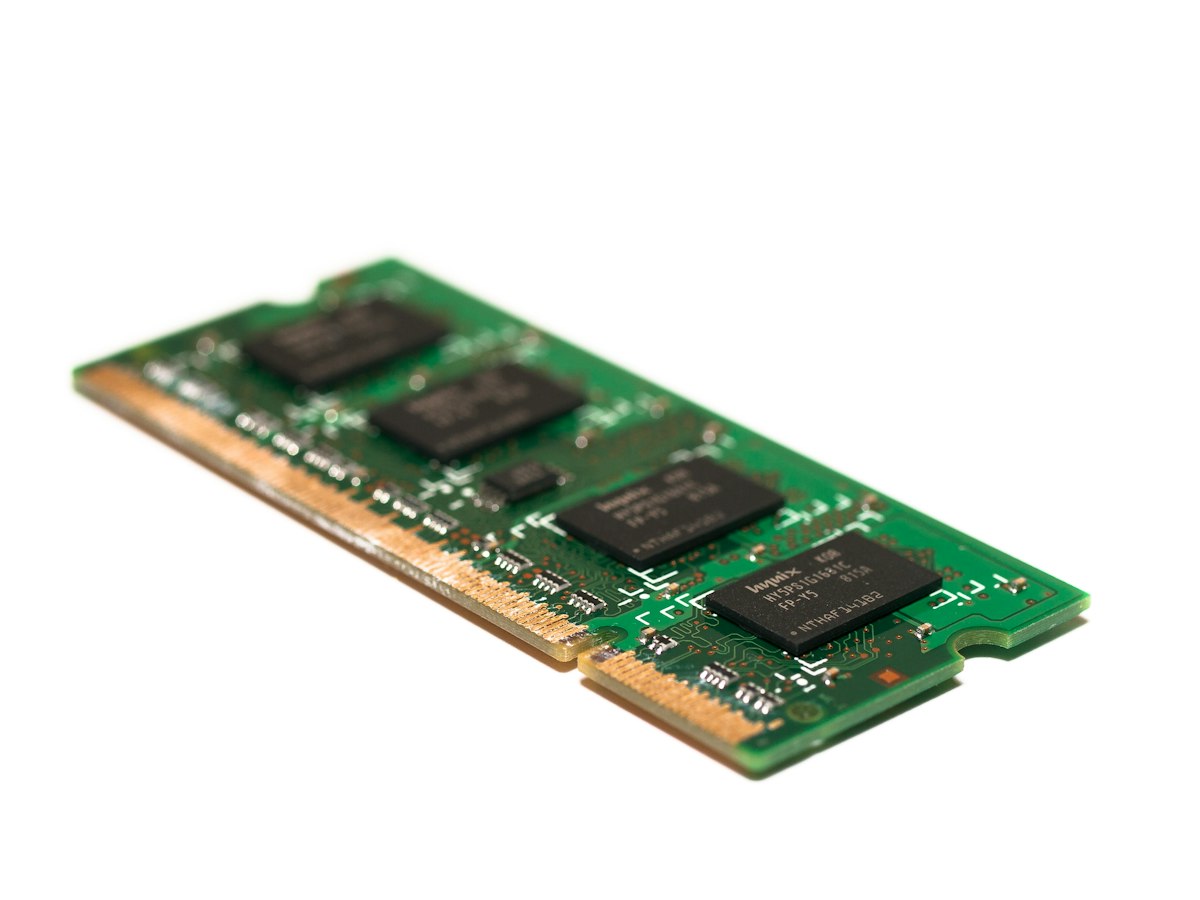
Inside the DRAM Price Fixing Complaint
The three companies that control almost all of the world's computer memory are now at the center of a DRAM price fixing case, and the language of the federal antitrust filing is unusually blunt. On June 25, a group of seventeen plaintiffs, fourteen individual consumers and three small PC-building and distribution businesses, sued Samsung, SK hynix and Micron in the U.S. District Court for the Northern District of California. The case, Garciaguirre v. Samsung Electronics, accuses the trio of running a coordinated scheme to keep chips scarce and prices high. This DRAM price fixing complaint arrives at the exact moment when memory has become the most expensive bottleneck in the entire artificial intelligence economy.
The stakes are enormous because the defendants are not marginal players. Together they hold roughly 90 percent of the global market for dynamic random access memory, the standard chips that sit inside laptops, servers, phones and game consoles. The complaint invokes Section 1 of the Sherman Act, the century-old statute that makes concerted restraint of trade illegal, and it asks a jury to treat the world's memory supply as the product of an oligopoly rather than an accident of the AI boom. Assigned to Judge Noel Wise, the case could become the most consequential hardware antitrust fight in two decades.
How a 700 Percent Surge Happened
To understand why a DRAM price fixing case landed now, look at what happened to memory costs. The complaint cites a roughly 700 percent increase in the price of conventional DRAM over four years, a move so severe that PC builders coined the term RAMpocalypse to describe it. A memory kit that once cost a hobbyist forty dollars began commanding several hundred. Server operators, cloud providers and consumer electronics makers all absorbed the same shock, and much of it flowed straight through to the prices ordinary buyers pay.
Ordinarily a price spike of that magnitude triggers a flood of new supply. Chipmakers expand fabrication capacity, competitors undercut each other, and prices fall back toward the cost of production. That self-correcting mechanism is exactly what the plaintiffs say did not happen. Instead of racing to satisfy demand, the three manufacturers allegedly held output tight and watched margins balloon. When a market with only three meaningful suppliers behaves like this, antitrust lawyers start asking whether the restraint is coincidence or coordination.
The financial results give the DRAM price fixing argument teeth. Micron recently approached a trillion-dollar market capitalization on the strength of the memory supercycle, and all three firms have posted record or near-record profits. The plaintiffs argue that such synchronized prosperity, achieved while consumers faced historic scarcity, is precisely the pattern that the Sherman Act was written to police.
The HBM Pretext at the Heart of the Case
The most striking allegation is not simply that prices rose, but why. The complaint contends that the manufacturers used the industry-wide shift toward high bandwidth memory, the specialized stacked chips that feed data to AI accelerators, as cover to deliberately curtail production of older DDR3 and DDR4 modules. In this telling, the AI gold rush became a convenient story that justified starving the mainstream market.
There is real economic logic behind the accusation. High bandwidth memory carries fatter margins and sells out instantly to buyers building AI data centers, so any rational chipmaker would want to tilt its factories toward it. The legal question is whether that tilt was an independent business decision made by each firm or a jointly understood plan to reduce competition across the board. Producing less of a commodity while three rivals do the same thing at the same time is where legitimate strategy and illegal collusion can blur. The DRAM price fixing suit asks the court to decide which side of that line the memory makers stand on.
For the broader technology sector, the framing matters far beyond this one courtroom. If a jury accepts that the HBM transition was weaponized to inflate legacy chip prices, it would recast the memory shortage as a governance failure rather than an unavoidable consequence of AI demand. Every company that has blamed rising hardware costs on the AI supercycle, from smartphone vendors to hyperscalers, would suddenly have a very different explanation to consider. Readers following the memory crunch can find continuing coverage at Blumefield.
A History That Haunts the Defendants
The plaintiffs are not writing on a blank slate, and that is what makes this DRAM price fixing case genuinely dangerous for the defendants. Samsung and SK hynix have already pleaded guilty to criminal price-fixing charges brought by the U.S. Department of Justice in the 2000s. That earlier conspiracy produced more than 731 million dollars in fines and sent several executives to prison. The industry has been here before, and courts tend to view repeat conduct with far less patience than first offenses.
That history changes the legal temperature in two ways. It undercuts any argument that these companies do not understand where the line sits, and it gives the plaintiffs a documented template for how memory collusion has actually operated in the past. Micron, notably, was a cooperator in the earlier investigation, which complicates any simple story of three identical bad actors and hints at the kind of internal fractures that antitrust discovery is designed to expose. Corporate governance teams at all three firms, whose investor filings can be tracked through pages like Micron's investor relations portal, will be acutely aware that a paper trail already exists.
None of this proves the current allegations. The companies have not yet responded in court, and the claims remain unproven. But a defendant facing a DRAM price fixing claim with a prior guilty plea confronts a jury that may be primed to believe the pattern repeated, and plaintiffs' lawyers know it.
What Comes Next
The immediate path runs through routine but decisive procedural steps. The defendants will almost certainly move to dismiss, arguing that parallel pricing by three firms in a concentrated market reflects rational competition rather than agreement. If Judge Wise lets the DRAM price fixing case proceed, discovery becomes the main event. Internal emails, pricing models and capacity-planning documents are where modern antitrust cases are won or lost, and the mere threat of that exposure often pushes defendants toward settlement.
The ripple effects could reach well beyond three companies. A serious DRAM price fixing verdict would embolden regulators in Brussels, Seoul and Washington who are already scrutinizing the memory market, and it would hand ammunition to every downstream manufacturer that has quietly seethed over four years of rising costs. It might also force a broader reckoning with how much of the AI infrastructure story rests on a supply chain controlled by a mere handful of firms. When three companies own ninety percent of a critical input, the line between market power and market abuse is always going to be contested.
For now the memory giants keep booking record profits while the case winds through its earliest stages. The plaintiffs are betting that a jury, shown the numbers and the history, will conclude that the RAMpocalypse was engineered rather than endured. Whether they are right will take years to resolve, but the question itself has already changed how the technology industry talks about the true cost of its favorite boom. Ongoing analysis of the semiconductor supply chain will continue at Blumefield.