The DeepSeek IPO Moment Arrives
The prospective DeepSeek IPO is moving faster than almost anyone expected. DeepSeek, the Hangzhou lab that upended assumptions about the cost of building frontier models, is seeking a fresh funding round at a valuation of roughly 500 billion yuan, or about 74 billion dollars. Behind that raise sits a bigger prize, a listing on Shanghai's STAR Market, with an internal target to file this year and go public in 2027. For a company that spent most of its short life refusing outside money, the pace of the past month has been startling.
The timing tells the story. DeepSeek closed its first external financing only in June, taking in around 50 billion yuan at a post-money valuation near 450 billion yuan. Weeks later it is back in the market seeking up to another 50 billion yuan at a higher price. Companies rarely raise twice in a single quarter because capital is easy to find. They do it because the road ahead is costly, and because a public listing hands early backers a visible way out.
For most of its existence DeepSeek did neither. Founder Liang Wenfeng bankrolled the lab through proceeds from High-Flyer, the quantitative hedge fund he built before the models made him famous. That self-reliance was part of the myth. The prospect of a DeepSeek IPO signals that the myth has run into the arithmetic of frontier AI, where compute, talent, and silicon now cost more than any single fortune can carry.
The Numbers Behind the Round
The figures are worth sitting with. A 74 billion dollar valuation would place DeepSeek among the most valuable privately held AI companies on the planet, and it would do so barely a year after the lab first rattled global markets with models that matched leading American systems at a fraction of the expected training bill. The June round drew a striking cast of backers. Liang personally put in 20 billion yuan. Tencent added 10 billion. Battery giant CATL contributed 5 billion, joining China's state-backed national AI fund, NetEase, JD.com, and a cluster of domestic investors including IDG Capital and Loyal Valley Capital.
What changed is the burn rate. Soon after the June raise, DeepSeek said it planned to double headcount across several teams, with a particular focus on data centers and on AI agents that can carry out tasks with little human oversight. Both ambitions swallow capital. The lab, whose models are published on its own official site, is also developing an inference chip and has been quietly hiring for chip design roles, a move meant to loosen its dependence on Nvidia and Huawei alike. None of that comes cheap, and a DeepSeek IPO would provide a durable source of funding that private rounds, however large, cannot match.
There is a competitive edge to the urgency too. DeepSeek no longer enjoys the element of surprise. It faces ByteDance and Alibaba, both spending freely, alongside a crowded field of well-financed startups such as Moonshot, MiniMax, and Z.ai. In this environment, access to capital has become nearly as decisive as any research breakthrough, and the firm with the deepest and most patient balance sheet often wins the next model cycle rather than the cleverest one.
Why Shanghai, Not New York
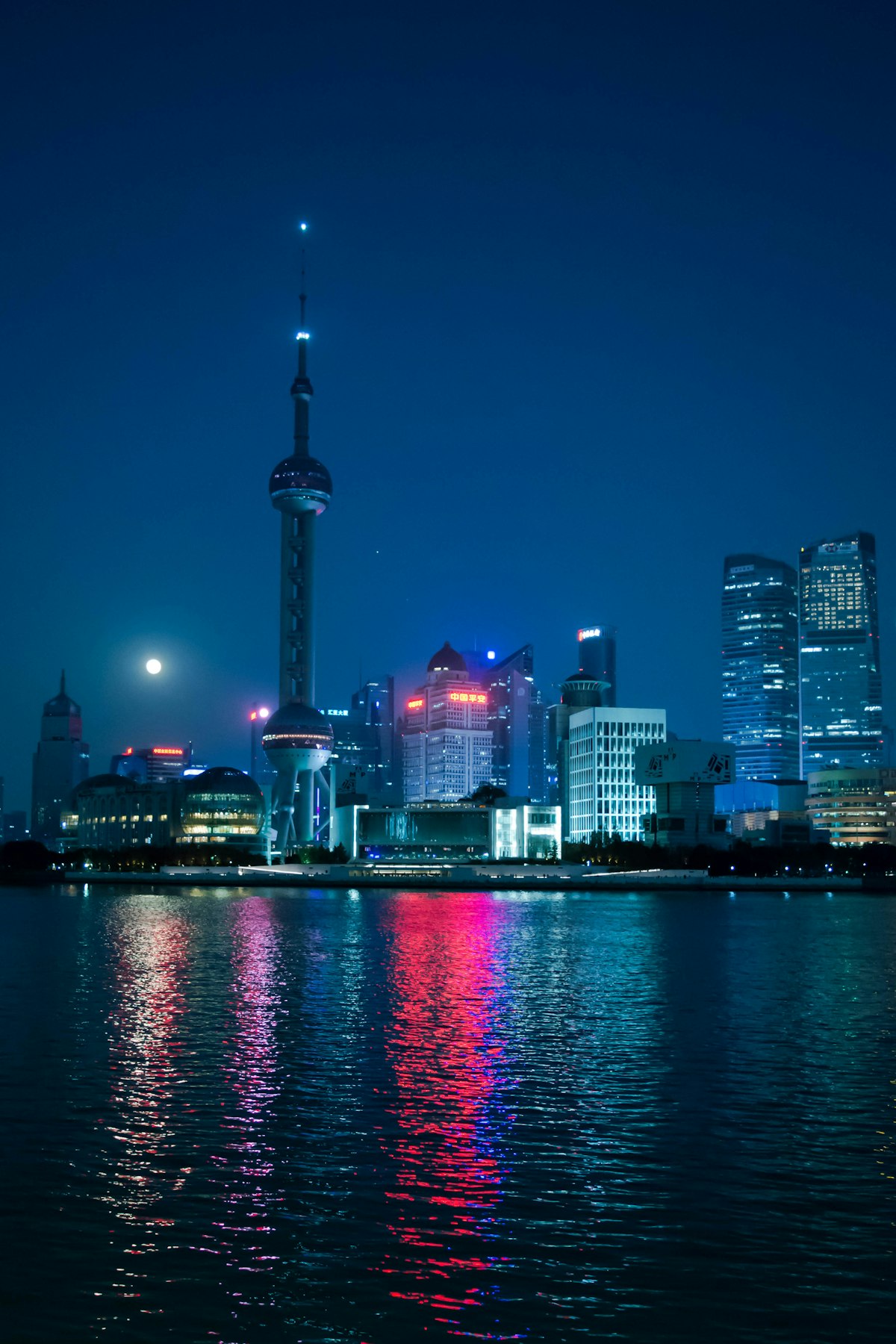
A generation of Chinese technology champions chose New York or Hong Kong when they went public. DeepSeek is choosing Shanghai, and the choice is deliberate. In June, regulators extended the STAR Market's fifth listing standard to cover loss-making developers of large AI models, along with quantum, robotics, and other frontier fields. The rule requires a market capitalization of roughly 591 million dollars and, crucially, state approval of a company's core technology. Profits are not required. For a lab that pours everything back into research, that pathway is close to purpose-built.
Listing at home also sidesteps a minefield. A New York debut would expose DeepSeek to American audit demands, delisting threats, and the political scrutiny that now shadows any Chinese firm touching sensitive technology. Shanghai offers a friendlier venue, a domestic investor base hungry for exposure to homegrown AI, and a regulator eager to showcase a national champion. The details of the STAR Market framework are set out by the Shanghai Stock Exchange and overseen by the China Securities Regulatory Commission, both of which have spent the past year reshaping the board to welcome exactly this kind of company.
The message to the wider market is hard to miss. Beijing wants its most celebrated AI lab funded by Chinese savers, listed on a Chinese exchange, and insulated from the reach of Washington. A successful DeepSeek IPO would validate that model and likely pull a wave of other domestic AI firms toward the same board.
Beijing's Fingerprints
It would be a mistake to read this as a purely commercial event. The presence of China's national AI fund in the June round is a signal in itself, part of a broader state effort to strengthen domestic leaders and cut reliance on foreign technology. The revised STAR Market standard, which conditions eligibility on official approval of a company's core technology, folds industrial policy directly into the listing process. In effect, the state helps decide which frontier firms reach the public markets.
That alignment cuts both ways. It gives DeepSeek a smoother path to capital and a measure of political cover, but it also ties the company's fortunes to the priorities of the state. The same official interest that lifts a DeepSeek IPO onto the STAR Market can, in a different climate, redirect it. For now the interests line up neatly. China wants a credible answer to OpenAI and Anthropic, and DeepSeek wants the money and the platform that only Beijing's blessing can guarantee. You can read more of our coverage of the global AI capital race at Blumefield.
For Western investors watching from the outside, the structure is a reminder that the two AI ecosystems are drifting apart. Capital, chips, exchanges, and regulators are increasingly national. The idea of a single global market for artificial intelligence, where the best model wins regardless of passport, looks less plausible with each of these moves.
What a Listing Means for the AI Race
A DeepSeek IPO, if it lands, would be more than a financing event. It would be a statement that China can build frontier AI and fund it without leaning on American capital markets. That is a genuine shift. For two decades the ambition of most Chinese technology firms ran through Wall Street, and the flow of dollars into Chinese innovation was a quiet form of interdependence. This listing points the other way, toward two self-contained systems that trade less and trust each other less.
The competitive stakes are just as real. Fresh capital would let DeepSeek press its cost advantage, expand its data centers, and push forward on custom silicon, all while its American rivals wrestle with their own enormous compute bills. If the lab that once shocked the market with cheap, capable models can now match its Western peers on funding as well, the pricing pressure it has already exerted on the global model market will only intensify. That is the scenario that should give Silicon Valley pause, and it is why the terms of any DeepSeek IPO will be studied far beyond Shanghai. For readers tracking how these threads connect, our ongoing analysis lives at Blumefield.
None of this is settled. The fundraising terms could shift, the filing could slip, and a 2027 debut leaves ample room for the macro backdrop to sour. Chinese listings have stumbled before under the weight of policy reversals and market nerves. But the direction of travel is clear. DeepSeek is done being the scrappy outsider financed by one man's hedge fund, and it is stepping into the role Beijing has been preparing for it, that of a state-backed national champion carrying China's flag in the most consequential technology race of the decade.
By Blumefield | July 17, 2026