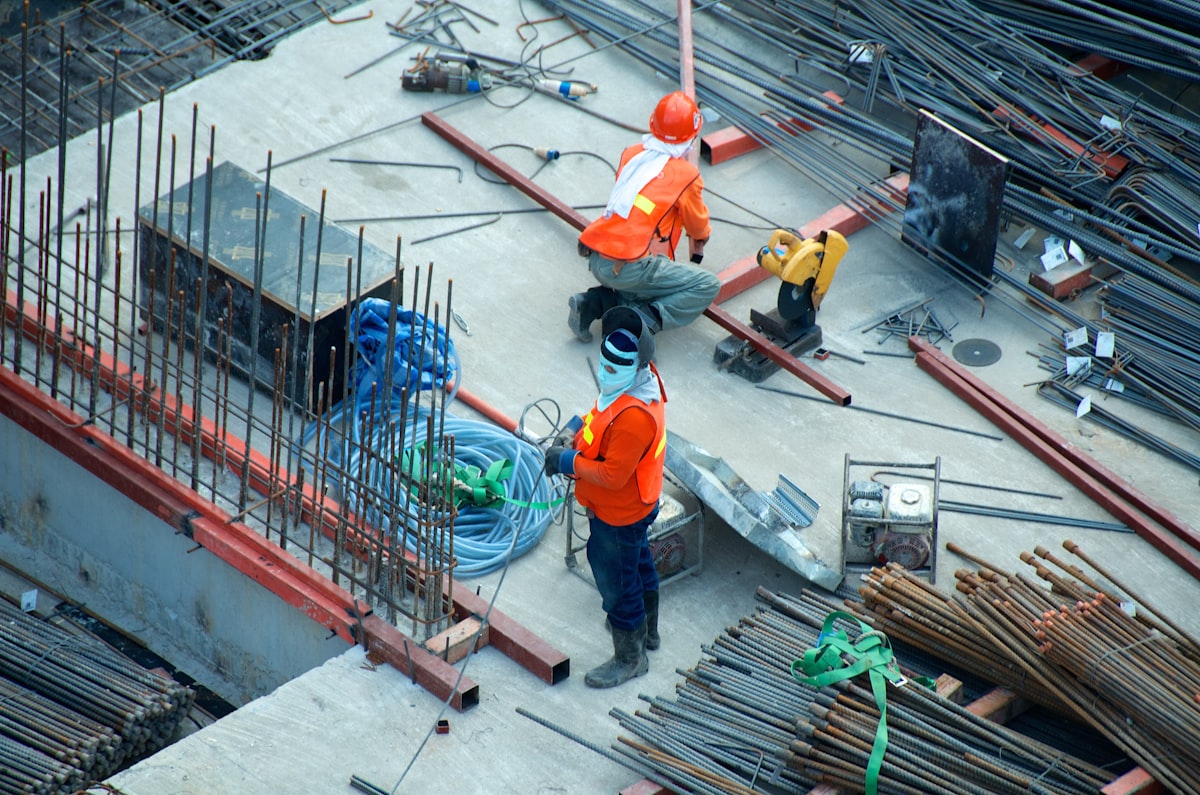
The price of a late server hall has exploded. Data center delays that cost tenants about one million dollars a day last spring now trigger penalties of five million or more, and insurers are scrambling to build products around the risk. It is the clearest signal yet that the physical world cannot keep pace with the AI boom.
By Blumefield | October 25, 2026
The New Price of Being Late
Somewhere in the fine print of the leases now being signed for artificial intelligence infrastructure, a single number has quietly quintupled. Data center delays, the kind that push a finished facility past its contracted delivery date, used to cost developers roughly one million dollars a day in penalties. In the latest round of hyperscale lease negotiations, tenants are demanding five million dollars or more for every day a building shows up late. The jump happened in a matter of months, and it tells a story that no amount of optimistic capital-expenditure guidance can hide.
The logic is brutally simple. A hyperscaler that has committed tens of billions of dollars to train and serve frontier models cannot afford an empty quarter. Every day a server hall sits uncommissioned is a day of stranded chips, idle engineers, and lost ground against rivals. So the buyers of capacity have started pricing that pain directly into their contracts, turning data center delays from a developer headache into an existential financial event.
Penalties of this size do not appear in a healthy, well-supplied market. They appear when demand has so thoroughly outrun supply that the party holding the scarce asset can dictate terms. That is precisely where the AI buildout now sits, and the numbers underneath the headline are even more striking than the penalty itself.
A Market With Nowhere to Put the Demand
The clearest picture of the squeeze comes from commercial real estate research. CBRE's assessment of North American data center trends for the first half of 2026 shows a market running at the absolute edge of its capacity. Vacancy across primary markets fell to 1.4 percent, a record low, while the volume under construction climbed to more than 7,480 megawatts, itself a record. The catch is that roughly 80 percent of that pipeline is already preleased, leaving less than 1,500 megawatts of genuinely available space, about six months of demand at the current pace of absorption. You can read the full breakdown in CBRE's global data center trends report.
Northern Virginia, the densest data center cluster on the planet, is tighter still. Vacancy there sits near a quarter of one percent, and asking rates for large requirements have pushed toward 185 dollars per kilowatt each month. When a market is 99.76 percent full, the handful of operators who can actually deliver space on time hold enormous leverage, and they are using it.
This is the backdrop that makes punishing data center delays rational rather than vindictive. A tenant who signs a lease today and loses the building to a slipped deadline may not find replacement capacity anywhere near the same price, if at all. The penalty is less a punishment than an insurance policy written into the contract, compensating the tenant for a scarcity that money alone can no longer solve quickly.
The Bottlenecks Are Physical, Not Financial
The uncomfortable truth for investors is that capital is now the easy part. What is scarce is everything in the physical world that a data center needs: electricity, transformers, turbines, skilled labor, and grid interconnection. The United States Department of Energy has warned that data center electricity demand could roughly triple by 2028, a trajectory the current grid was never designed to absorb. That projection is laid out in the Department of Energy's report on data center power demand.
The equipment math is just as unforgiving. Risk advisers at Marsh McLennan report that transformers, generators, and gas turbines now carry lead times of twelve to forty-eight months, while grid interconnection can stretch years beyond the construction schedule itself. A developer can pour concrete on time and still miss a delivery date by a year because a single switchgear order slipped or a utility pushed back an energization window. In Northern Virginia, Dominion Energy's batching process for new connections has become its own source of data center delays, independent of anything a builder controls.
Labor compounds the problem. The specialized commissioning engineers who bring a facility online are in short supply, and their scarcity drives up both cost and the risk of error at the most delicate stage of a project. When a market has this little slack, small disruptions do not get absorbed, and data center delays become almost inevitable. They cascade straight into the penalty clauses.
How the Insurance Industry Is Repricing the Boom
Where data center delays create a new and quantifiable risk, the insurance industry eventually arrives, and it has. Brokers including Marsh are now rolling out so-called delay-in-delivery coverage, products built specifically to respond to late completion rather than the physical loss that traditional construction insurance was designed around. In its guidance to clients, Marsh stresses that modern coverage has to answer for delay scenarios tied to power availability, not merely fire or flood, and it urges developers to match their risk transfer to actual contractual exposure rather than defaulting to blanket limits. The firm's framework is detailed in its data center risk management guidance.
The lending side is watching the same risk from the other direction. Data center financings have been climbing steeply, and specialist underwriters now warn that termination clauses and liquidated damages tied to missed milestones are often non-negotiable in tenant contracts. A single late facility can leave a developer with an empty building and no income to service its debt, a danger sharpened by the cross-collateralized structures common in the sector. In early 2025, Microsoft walked away from leases equivalent to two entire data centers over facility and power delays, and Meta made similar moves. Those cancellations were a preview of the leverage that is now written explicitly into pricing.
What It Signals for the AI Trade
It would be easy to read the five-million-dollar penalties for data center delays as a sign of strength, proof that demand for AI compute is insatiable. In part it is. But runaway penalty clauses are also a stress indicator, the market's way of admitting that the timetable everyone is underwriting has become fragile. When the cost of being late rises fivefold in two quarters, it means the probability of being late is rising too.
For the hyperscalers, the exposure is manageable in isolation, a rounding error against hundred-billion-dollar capital budgets. The systemic question is what happens to the long chain of developers, lenders, and contractors who sit between the chipmakers and the cloud giants. Many of them financed their ambitions on the assumption that buildings would deliver on schedule and leases would stabilize. Data center delays that trigger abatement, termination, or ruinous penalties could expose exactly which balance sheets were built for a world that no longer exists. Blumefield has tracked how this same scarcity is reshaping power markets and municipal politics across its coverage of the AI infrastructure boom.
The deeper signal is that the AI industry has reached the point where its constraints are made of steel and copper, not code. For two years the limiting factor was models and the chips to train them. Now it is the mundane, slow-moving machinery of the physical grid, and the financial system is only beginning to price what that shift really costs. The penalty clauses are the first honest number. More will follow. For ongoing analysis of where the buildout bends next, keep watching Blumefield.