Cisco just posted its fastest growth in years and raised guidance well past Wall Street forecasts. The quarter turns the AI networking supercycle from a slogan into booked revenue, and it changes the story for a company long written off as a slow dividend play.
By Blumefield | November 13, 2026
A Quarter That Rewrote the Old Networking Playbook
Cisco spent a decade being treated as a value stock with a dividend and a slow-growth story bolted on. On Thursday the company detonated that reputation. Fiscal first quarter revenue hit $18.5 billion, up 24 percent from a year earlier, the fastest top-line expansion the networking giant has posted in memory. Non-GAAP earnings came in at $1.40 a share, seven cents ahead of Wall Street, while GAAP earnings landed at $1.14. For a 40-year-old infrastructure company, those are not the numbers of a business in managed decline. They are the numbers of a business riding a networking supercycle that the market is only beginning to understand.
The reaction was immediate because the guidance was even louder than the quarter. Cisco lifted its full-year fiscal 2027 outlook to between $74.8 billion and $75.8 billion in revenue, comfortably above the roughly $73.2 billion analysts had modeled. It raised non-GAAP earnings guidance to a range of $5.47 to $5.53, against a consensus near $5.15. Second-quarter guidance told the same story, with projected revenue of $18 billion to $18.2 billion and earnings of $1.34 to $1.36, each well above where the Street had parked its estimates. When a company this size beats and raises in the same breath, it is signaling conviction, not hope.
Chief executive Chuck Robbins framed it in language that will define the next several quarters of commentary. The company, he said, is in the very early stages of a multi-year networking supercycle, and it is confident in its ability to keep capturing what he called a multi-billion-dollar opportunity. That is a remarkable claim from a management team historically allergic to hype, and it reframes Cisco from an AI bystander into one of the cycle's primary beneficiaries.
Inside the Networking Supercycle
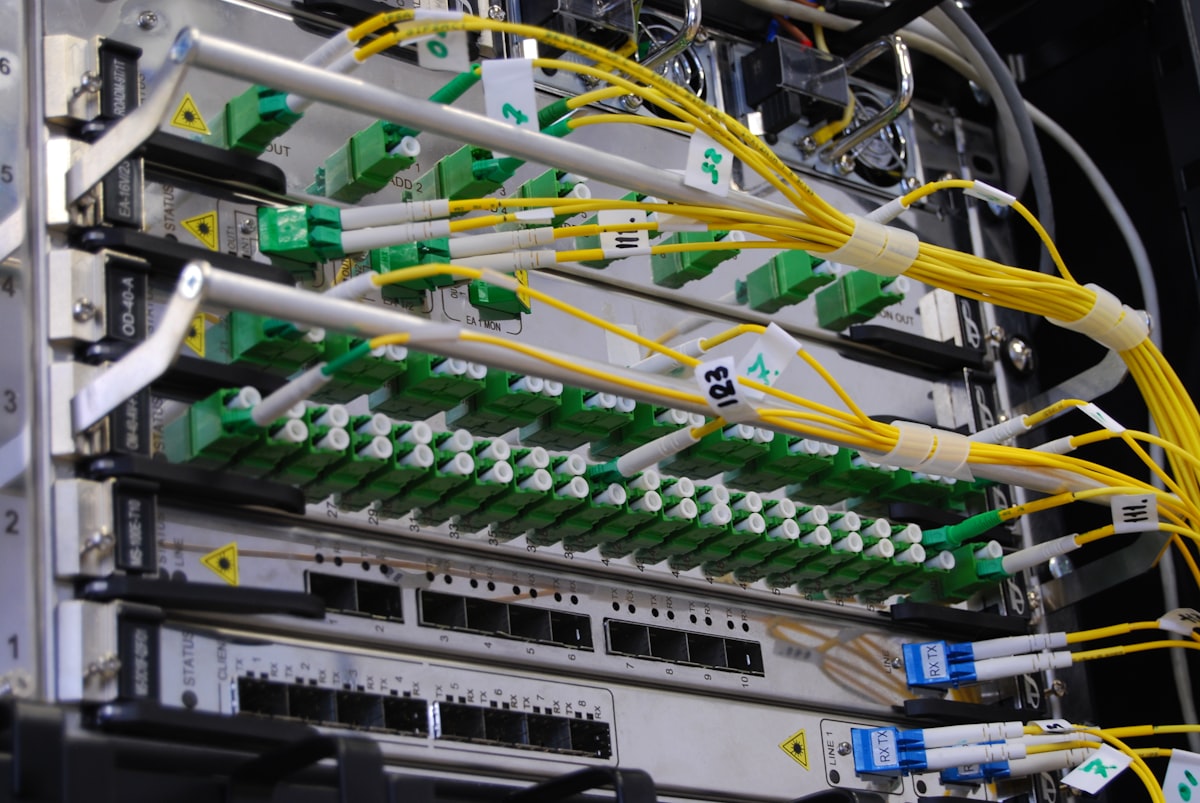
The engine behind the quarter is artificial intelligence, but not in the way most headlines assume. Cisco does not sell the accelerators everyone fixates on. It sells the data center switches, optics, silicon and systems that stitch tens of thousands of those accelerators into a functioning cluster. Every graphics processor a hyperscaler installs needs to talk to thousands of others at punishing speed and low latency, and that traffic runs across exactly the kind of high-performance fabric Cisco builds. The networking supercycle is, in essence, the plumbing bill for the AI boom coming due.
The scale of that bill is becoming visible in Cisco's order book. The company closed fiscal 2026 with roughly $9.3 billion in cumulative AI infrastructure orders from cloud hyperscalers, a figure that climbed quarter after quarter through the year. Management has guided to approximately $7.5 billion in AI infrastructure revenue for fiscal 2027 as those orders convert to shipped and recognized product. Product revenue, the leading indicator analysts watch most closely, grew 32 percent in the quarter, with networking revenue alone surging 43 percent. For context, this is the same networking segment that was growing in the low single digits only two years ago.
What makes the networking supercycle durable, in Cisco's telling, is that it is no longer confined to a handful of mega-cap cloud buyers. Demand showed up across every region, with the Americas up 28 percent, Asia Pacific and Japan up 21 percent, and Europe, the Middle East and Africa up 18 percent. Breadth matters. A boom concentrated in three customers can reverse in a single procurement cycle. A boom spread across geographies and customer types is a different and sturdier animal, and it is the breadth of this one that gives Cisco the confidence to raise guidance rather than simply reaffirm it.
The Enterprise Pivot Nobody Priced In
The more interesting part of the story sits one layer below the hyperscalers. For two years the assumption was that AI compute would live almost entirely in a few giant public clouds. Cisco's quarter complicates that assumption. Robbins pointed to accelerating demand for on-premise and edge AI infrastructure, the kind of private deployments enterprises build when latency, data sovereignty or cost make renting someone else's cloud unattractive. As corporate adoption of AI agents moves from pilots to production, those agents need somewhere to run, and a growing number of companies are choosing to run them inside their own walls.
That shift plays directly to Cisco's traditional strength. The company already sits inside the data centers, campuses and branch networks of most large enterprises on earth. Selling those same customers a GPU-ready fabric is a far shorter path than a cloud-native rival starting from zero. It also helps explain why the networking supercycle looks different from past Cisco upswings. Previous cycles were refresh cycles, customers swapping aging gear for newer gear at roughly flat budgets. This one is additive. Enterprises are standing up entirely new AI infrastructure alongside what they already own, and that is new money entering Cisco's addressable market rather than recycled money.
The security and software pieces rounded out the picture, though less dramatically. Security revenue rose 7 percent and collaboration climbed 8 percent, while observability edged up 2 percent. None of those matches the networking number, and management was candid that it has not yet seen a large revenue lift from AI-specific security anxiety. But the mix tells you where the center of gravity has moved. For the foreseeable future, the story at Cisco is hardware again, and specifically the hardware that moves AI traffic.
Operating Leverage and the Guidance Raise
Revenue growth is only half of why the stock narrative is changing. The other half is what that growth does to profitability. Chief financial officer Mark Patterson told analysts the current demand environment is unlocking significant operating leverage, allowing earnings to grow much faster than revenue. That is the phrase every long-term shareholder wants to hear, because it means the incremental dollar of sales is dropping to the bottom line at an attractive rate rather than being eaten by rising costs.
The arithmetic in the guidance bears that out. Cisco is pointing to roughly 15 percent revenue growth at the midpoint of its full-year range, but its earnings guidance implies faster growth still. A business that can expand margins while it scales is a fundamentally more valuable business than one that has to spend a dollar to earn a dollar, and the market has historically paid a premium multiple for that combination. If Cisco can sustain this profile through the networking supercycle, the case for a rerating of the entire stock becomes hard to dismiss.
There is a strategic logic here too. Unlike the hyperscalers pouring hundreds of billions into capital expenditure with uncertain payback, Cisco is on the receiving end of that spending. It captures the upside of the AI buildout without carrying the balance-sheet risk of owning the data centers. That picks-and-shovels position is the quiet advantage behind the quarter. The accelerator makers may grab the headlines, but the companies selling the surrounding infrastructure often keep more of the profit with less of the volatility, as readers following the broader AI capital cycle on Blumefield have seen play out across the supply chain this year.
The Risk Beneath the Supercycle
None of this means the path is clear. The most obvious risk is that the networking supercycle is, by Cisco's own framing, tied to AI capital spending, and that spending has started to draw scrutiny. A wave of hyperscaler capex is still climbing, but investors spent much of the autumn questioning whether the returns justify the outlays, a debate Blumefield has tracked closely, and any sharp pullback in cloud infrastructure budgets would reach Cisco's order book with a lag. An order book built on AI enthusiasm can soften as quickly as it firmed.
Competition is the second risk. The AI networking opportunity is lucrative enough to attract everyone. Specialist rivals in high-speed switching and custom silicon are chasing the same hyperscaler dollars, and some of Cisco's largest customers are designing their own networking hardware in-house. Cisco's installed base and systems approach are real moats, but moats erode when the prize is this large and the competitors this well-funded. The 43 percent networking growth rate will also eventually lap tougher comparisons, and the law of large numbers is unforgiving even in a supercycle.
For now, though, the quarter speaks for itself. Cisco has turned the AI infrastructure boom from a story it talked about into revenue it can book, and it has done so while raising guidance and promising expanding margins. Investors who want the full detail can read the company's results directly through Cisco Investor Relations and review its broader strategy on the Cisco artificial intelligence solutions pages. The networking supercycle may yet disappoint, as every cycle eventually does. But after a quarter like this one, the burden of proof has shifted onto the skeptics, and that is a position Cisco has not enjoyed in a very long time.