China AI exports did exactly what Beijing needed them to do. When the National Bureau of Statistics published its third-quarter report over the weekend, gross domestic product had climbed 4.5 percent year on year, a shade faster than the 4.3 percent recorded in the spring and comfortably ahead of the 4.4 percent that economists had penciled in. On a quarter-on-quarter basis the economy expanded 1.2 percent, again beating consensus. For a government that set an annual target of "around 5 percent," landing at 4.5 percent with one quarter still to run counts as a quiet win.
The Number Beijing Wanted
Markets had braced for worse. The property sector is still shrinking, local governments are still straining under debt, and household confidence has barely budged. Yet the top-line figure accelerated, and it did so for a reason that would have sounded implausible two years ago. China's growth is now carried almost entirely by what it sells to the rest of the world, and increasingly by the high-technology end of that trade. The National Bureau of Statistics described an economy that "sustained steady development against pressure," with "momentum from new growth drivers and an improving structure." Translated out of official language, the message is simpler: the factories saved the quarter. The surge in China AI exports is now the single clearest driver of that shift.
A Factory Boom, Not a Building Boom
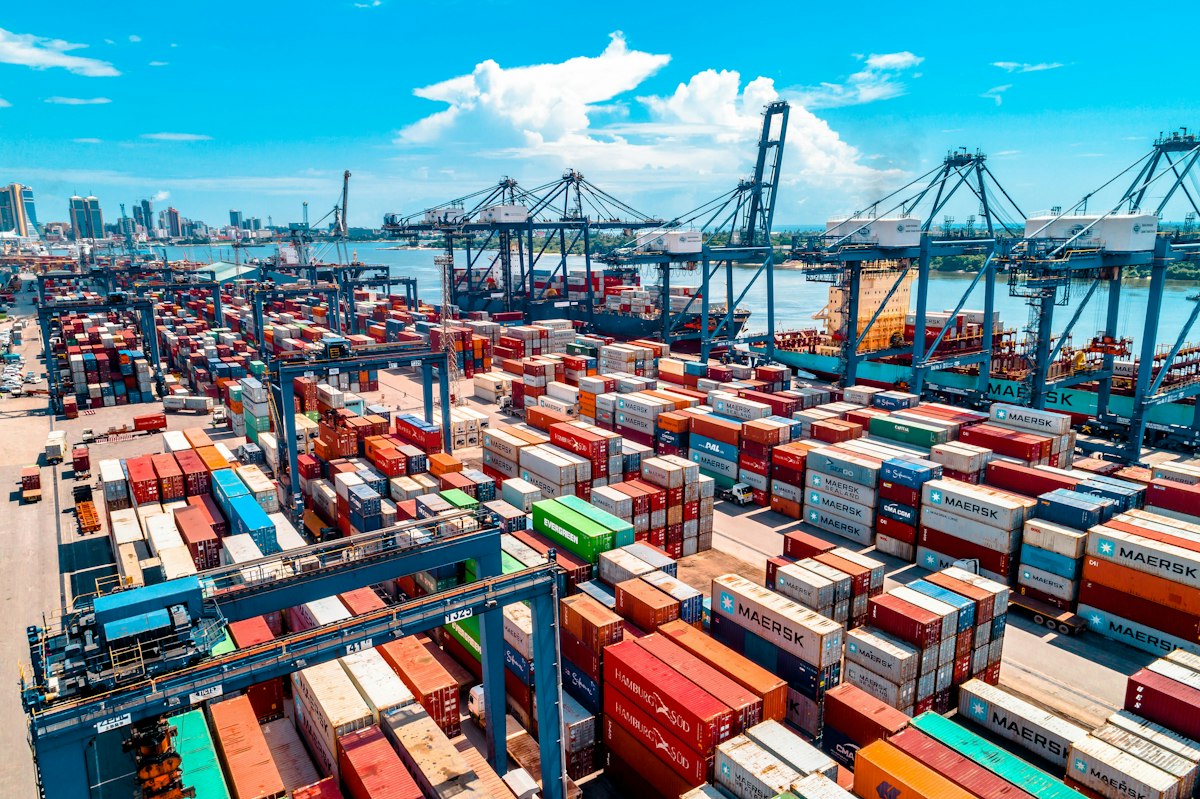
The scale of the export engine is hard to overstate. Chinese exports jumped more than 36 percent year on year in September, and secondary data suggests high-technology goods accounted for roughly 43 percent of that increase. Chips, computers, data-center hardware, batteries and electric vehicles are leaving Chinese ports at a pace the country has not seen since the pandemic-era rush. Cargo departures from major ports rose more than 43 percent in the quarter. Industrial value added climbed 5.5 percent. The official manufacturing purchasing managers index nudged back above the waterline to 50.1.
Behind the shipments sits a wave of investment that explains why China AI exports have become the defining economic story of 2026. Capital spending on frontier sectors, a category that bundles artificial intelligence, advanced computing and humanoid robots, rose more than 180 percent year on year, according to state media. That is not a typo. Beijing has spent two years steering credit away from apartment towers and toward semiconductor lines, server assembly and factory automation, and the output is now washing up on foreign shores. The trade surplus is on track to top last year's $1.2 trillion, a number already reshaping how governments from Washington to Brussels think about Chinese industrial policy.
One subtlety is worth flagging. On a net basis, the rush of China AI exports is not padding the surplus as much as the raw shipment figures imply, because many of those products lean on imported components and carry thin margins. The cleaner surplus growth is coming from cars. Even so, as a signal of where the economy is heading, the direction is unmistakable, and China AI exports have become the lever Beijing reaches for first.
The Hole Where Property Used to Be
Now the other half of the ledger. Property investment fell almost 20 percent over the first nine months of the year, extending a contraction that has already erased trillions of dollars of paper wealth from household balance sheets. New-home prices were down 3 percent year on year in the latest monthly reading. For an economy where real estate once drove a quarter of all activity, a decline of that depth is not a soft patch. It is a structural rewiring, and it is nowhere near finished.
The damage shows up in the way ordinary people spend. Retail sales rose just 2.6 percent through September, and spending on goods crept up only 1 percent. Offline consumption payments improved slightly from the second quarter, but the gain was marginal. Chinese households, watching the value of their homes slide and unsure about their jobs, are saving rather than spending. That is rational behavior for a family and a serious problem for a leadership that has spent a decade promising to rebalance the economy toward domestic demand.
This is the tension at the heart of the quarter. The headline says acceleration. The internals say a country running on a single cylinder. The factories and the shipping lanes are booming while the shopping malls and construction sites are not, and no run of strong trade data changes the fact that the home economy remains fragile.
One Engine, Growing Headwinds
Leaning on one engine is dangerous when that engine runs on the goodwill of your biggest customers. The surge in China AI exports is already generating pushback. Manufacturers in the United States and the European Union have complained for months about a flood of low-cost Chinese goods, and the political answer is hardening into tariffs, anti-dumping probes and tighter scrutiny of Chinese technology. Capital Economics put the worry plainly, writing that "the export surge is impressive" and that "the question is whether one engine can keep carrying the economy." The World Bank expects export growth to moderate as foreign resistance builds.
The timing is awkward. Finance ministers from across the Asia-Pacific gather in Hong Kong on 20 and 21 October under the APEC banner, and Chinese trade policy will be the uncomfortable subtext of nearly every conversation. A second risk sits closer to home for the technology sector itself. Much of the present export strength rides on global demand for AI hardware, and if that investment cycle cools, as several forecasters now expect, the very products carrying Chinese growth could see orders soften at the worst possible moment.
Commodity markets are flashing the same two-speed signal. Copper, the metal that tracks electronics, batteries and data-center construction, traded near $14,600 a tonne at the end of September and is up almost 18 percent on the year. Iron ore imports, the raw material of the old construction economy, set records by volume yet futures stayed soft. Demand is migrating from concrete to circuitry in real time, and China AI exports are the clearest expression of that shift.
What Comes After the Boom
Beijing is not standing still. In September the central bank trimmed some business lending rates and rolled out fresh subsidies for home buyers, and officials have signaled that fiscal policy, rather than deeper monetary easing, will do the heavy lifting from here. The broader strategy is already baked into the leadership's language around "new quality productive forces," the doctrine that frames advanced manufacturing and China AI exports as the country's route out of the property trap. For readers tracking that shift, Blumefield has followed how Beijing is turning its industrial base into a strategic instrument.
Forecasters are cautiously constructive on the near term and warier about what follows. Goldman Sachs sees full-year 2026 growth near 4.8 percent and 2027 around 4.7 percent, while BBVA Research holds to 4.5 percent for this year. Michelle Lam, greater China economist at Societe Generale, argued that hitting the 2026 target looks manageable but that 2027 will be harder as growth eases and the favorable base effect fades. The consensus, in short, is that the export machine can carry China across this year's finish line. Whether it can do so again, with tariffs climbing and the AI investment wave uncertain, is the question that will define 2027.
For now the numbers tell a story Beijing is glad to broadcast and reluctant to examine too closely. China AI exports have papered over a property collapse that would have sunk a lesser economy, and the analysis at Blumefield suggests that paper is holding for the moment. The crack underneath it has not gone anywhere.