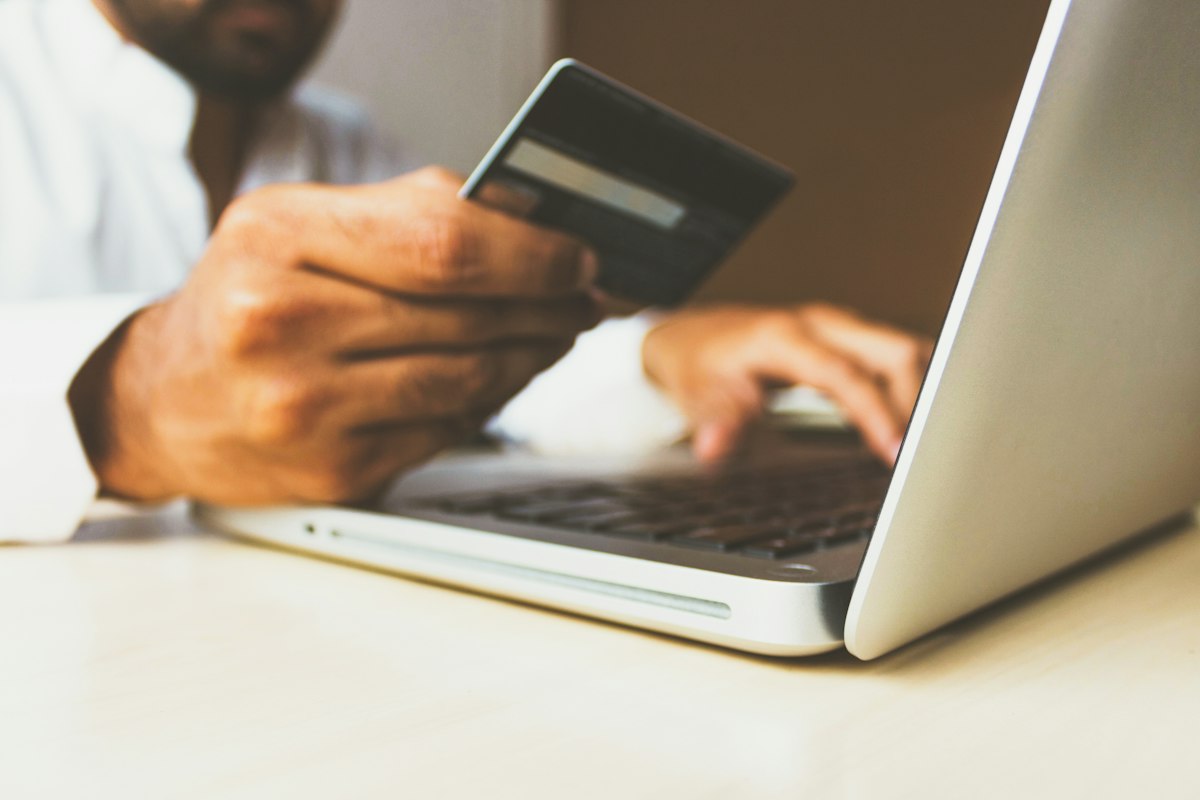
The ChatGPT Wallet has given OpenAI's most popular product something it never had before: the authority to spend your money. Switched on this week, the ChatGPT Wallet lets autonomous agents buy things on your behalf and settle up at checkout, quietly rewiring the relationship between artificial intelligence, retailers and the global payment networks.
The Checkout Button Just Grew a Brain
The ChatGPT Wallet went live on Friday, and with it the two-year-old promise of autonomous AI shopping finally got a payment rail. OpenAI's new feature lets its agents pick products, fill a cart and clear checkout on their own, with nothing more than a glance at your phone to seal the deal. The era of software that merely recommends is giving way to software that buys.
The ChatGPT Wallet arrives quietly, limited at first to United States ChatGPT Pro subscribers over 18 who hold an eligible American-issued Visa, Mastercard or American Express card. Yet the restraint of the rollout should fool no one. This is the moment the world's most widely used AI assistant stopped being a research tool at the mall and started carrying the credit card. Once an agent can transact, every retailer, bank and card network has to decide whether to court it or wall it off.
What makes the launch land harder than a typical product update is where it sits. Payments are the most heavily regulated, most fraud-sensitive corner of the consumer internet, and OpenAI has walked straight into it. The ChatGPT Wallet does not hold cash or crypto. It is a thin layer of trust bolted onto the existing card system, and that design choice tells you exactly how OpenAI intends to win the agentic commerce race: not by replacing Visa and Mastercard, but by riding them.
How ChatGPT Wallet Actually Works
The mechanics are deliberately boring, which is the point. A user adds a card once inside the wallet, then asks one of OpenAI's agents, branded "dots," to make a purchase. The agent proposes the items, the total and the card to be charged. The user reviews that summary and approves it with Face ID or a fingerprint. Only then does money move. Every purchase today requires that explicit biometric sign-off, a design meant to keep a human hand on the final click.
Behind the approval sits the quiet engine of modern payments: tokenization. When a shopper confirms, the card network generates a substitute credential, a one-time token that stands in for the real card number. The agent pushes that token through the merchant's ordinary online checkout, the same form a human would fill, along with the shipping address and contact details. Neither the agent nor the store ever sees the actual card digits. Because the ChatGPT Wallet piggybacks on normal checkout flows, merchants need no special integration to accept a purchase an agent places.
That is the crucial break from OpenAI's earlier commerce effort. Instant Checkout, launched with Stripe in late 2025, required merchants to plug into a dedicated protocol to sell inside ChatGPT. The ChatGPT Wallet flips the model. Instead of asking the world's stores to come to OpenAI, it sends an agent out to shop anywhere a browser can reach. Users keep their card rewards and their dispute protections, and merchants remain responsible for deliveries and returns, preserving the familiar lines of accountability even as a machine does the clicking.
OpenAI has signaled that the leash will lengthen. The company plans to allow pre-authorized purchases within set spending limits, specific categories or defined time windows, so a dot could reorder household supplies or snap up a sale without waking you for a thumbprint. No date has been attached to that step, and it is the one that should give regulators pause, because a standing permission to spend is a very different animal from a one-time approval.
Why Visa and Mastercard Blinked First
The most telling part of the launch is who showed up to endorse it. The card networks, long protective of the trust that underpins their business, are leaning in rather than resisting. "An agent making a purchase should strengthen, not bypass, the trust built into payments," said Sherri Haymond, Mastercard's global head of digital commercialization, in the announcement. That is the sound of an incumbent choosing to shape a disruptive technology from the inside.
Their enthusiasm is rational. Agentic shopping threatens to disintermediate a great deal of the consumer web, but it does not have to threaten the rails themselves. If every AI purchase still clears over a Visa or Mastercard network and still earns interchange, the agents become a new source of volume rather than a competitor. Both networks have been building their own AI-transaction frameworks, and the ChatGPT Wallet gives them a flagship deployment at the scale only OpenAI can supply. Tokenization, the same technology that powers tap-to-pay, becomes the bridge that lets a machine spend without ever touching a card number.
The stakes for the networks run deeper than fees. Whoever defines the trust layer for autonomous spending, the rules for how an agent proves it is authorized, how a disputed charge is unwound, how fraud is caught at machine speed, will hold enormous leverage over the next decade of commerce. By embedding themselves in the ChatGPT Wallet from day one, Visa and Mastercard are betting that the safest place to stand in a revolution is at the center of it.
The Merchants Caught in the Middle
Not everyone is rolling out the welcome mat. The uncomfortable truth lurking inside the ChatGPT Wallet is that many merchants do not want AI agents in their stores at all. Retailers have spent years building defenses against bots, and a shopping agent can look a lot like the thing they were built to block. OpenAI concedes the point, warning that some sites may refuse agent traffic or flag an agent's purchase as potential fraud.
The sharpest example is also the largest. Amazon, the biggest retailer in American e-commerce, has effectively banned third-party AI agents from shopping on its platform, steering customers toward its own Alexa assistant instead. That single stance carves a giant hole in the map of where a dot can actually spend, and it previews the turf war to come. Every major retailer now faces a strategic fork: open the doors to OpenAI's agents and risk ceding the customer relationship to a chatbot, or lock them out and risk being invisible to a generation that increasingly shops by conversation.
This is where the quiet groundwork becomes visible. Days before the wallet launched, OpenAI introduced business profiles that let merchants publish product information and contact details into the ChatGPT ecosystem, and it maintains a commerce partner playbook for sellers who want to be found. The company is building both a buying tool and a marketplace of willing sellers at the same time, trying to ensure its agents have somewhere friendly to shop. The balance of power between the platform that owns the shopper and the merchant that owns the inventory is suddenly, genuinely up for grabs.
A 1.5 Trillion Dollar Bet on Autonomous Spending
Zoom out and the ChatGPT Wallet is a down payment on an enormous wager. Juniper Research projects that agentic commerce, transactions initiated by AI on a user's behalf, will swell to roughly 1.5 trillion dollars by 2030, up from a bare 8 billion dollars this year. If even a fraction of that forecast holds, the company that controls the dominant agent and its wallet will sit astride one of the largest new flows of money on the internet.
OpenAI is not alone in seeing it. Google has been assembling its own rails, including a Universal Commerce Protocol unveiled in January and an earlier agent payments framework, while a cluster of crypto-native players from Coinbase to Circle have built stablecoin wallets aimed at letting agents pay in programmable dollars. OpenAI's bet is pointedly different. By choosing the familiar plastic in a shopper's pocket over tokens on a blockchain, the ChatGPT Wallet trades the frictionless programmability of crypto for the one asset incumbents still own outright: consumer trust. Our continuing coverage of OpenAI has tracked how often that calculation has paid off for the company.
The open questions are the ones that always trail a payments leap. Standing spending permissions, machine-speed fraud, liability when an agent buys the wrong thing, and the thin evidence that consumers truly want to hand a bot their card are all unresolved. Early data suggests agent-placed orders remain a rounding error at services like DoorDash and Uber, a reminder that infrastructure can arrive years before behavior changes. What is no longer in doubt is the direction of travel. With the ChatGPT Wallet, OpenAI has turned the abstract idea of autonomous commerce into a live transaction, and the rest of the economy now has to price in a shopper that never sleeps. For readers tracking where this goes next, Blumefield will keep following the money.