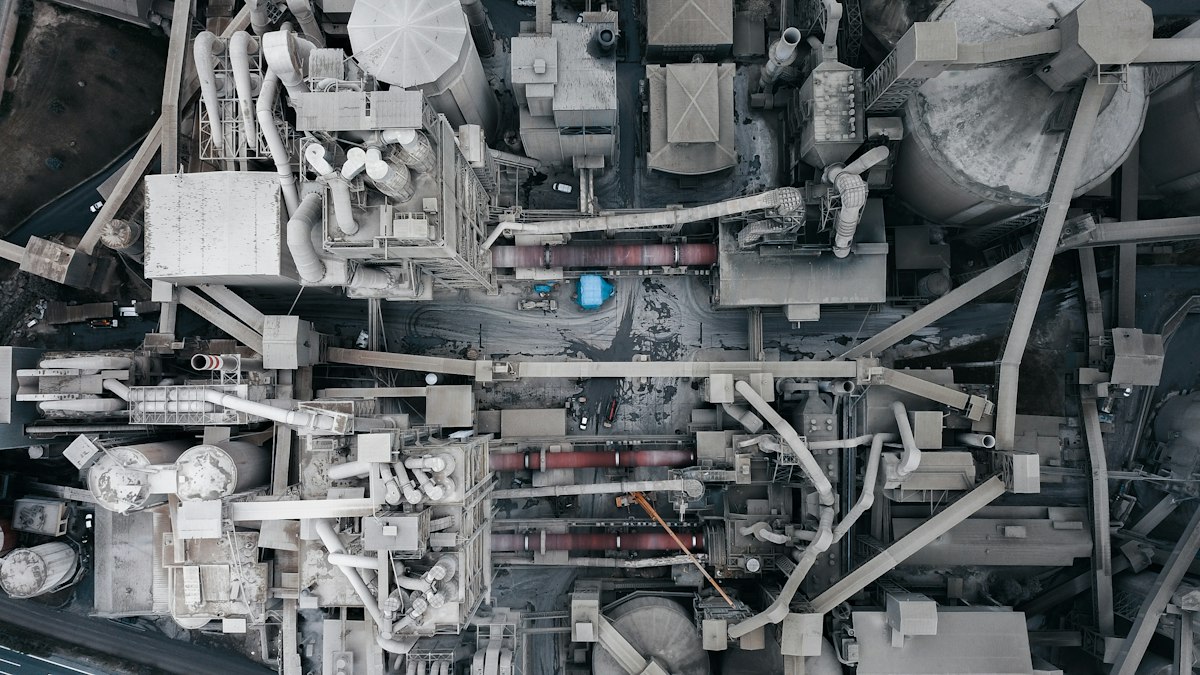
Jeff Bezos has just placed the largest bet yet on physical AI, and it points squarely at the factory floor rather than the chat window. Prometheus, the secretive physical AI startup he co-founded with former Verily executive Vik Bajaj, has raised 12 billion dollars in fresh capital at a 41 billion dollar valuation. The round, anchored by Bezos himself alongside JPMorgan Chase, Goldman Sachs and BlackRock, instantly makes the company one of the richest startups ever funded before shipping a public product.
The Bet That Reframes the AI Race
The signal matters as much as the sum. For three years the AI story has been written almost entirely in software, where models generate text, code and images. Prometheus is a declaration that the next frontier of physical AI runs through steel, turbines and molecules. The company describes its goal as building an "artificial general engineer," a system capable of designing and manufacturing complex physical objects, from jet engines to drug compounds, with a fraction of the human effort those tasks demand today.
That framing puts Bezos in direct competition with a crowded field of software-first labs, and it raises a sharp question for investors who have spent a fortune on chatbots. If the real economic prize sits in the physical world, the companies that learn to engineer it may prove far more valuable than the ones that simply talk about it.
What an Artificial General Engineer Actually Does
The phrase "artificial general engineer" is deliberately grand, and Prometheus has kept the technical specifics under tight wraps. What the company has confirmed is the ambition. Rather than automating a single design task, it wants software that can move across the entire arc of heavy engineering, from initial concept through simulation, materials selection, testing and manufacturing instructions. The target domains are revealing. Jet engines and drug compounds are among the hardest problems in applied science, governed by physics and chemistry that resist the pattern matching that made language models famous.
This is the central technical bet of physical AI. Text models learn from a near infinite corpus of human writing, but a turbine blade that fails at 30,000 feet cannot be fixed with a better next-word prediction. Engineering AI has to reason about real constraints, run accurate simulations and survive contact with the laws of nature. Bezos signaled that a large share of the new capital will go toward compute, a hint that Prometheus intends to brute-force enormous simulation and training workloads rather than rely on clever architecture alone.
The company now employs roughly 150 people across offices in San Francisco, London and Zurich, with Bajaj serving as co-CEO alongside Bezos. Bajaj is a Stanford School of Medicine professor and a veteran of Verily, Alphabet's life sciences arm, and his presence underlines the dual focus on hardware and biology. Prometheus is, in effect, trying to build a single intelligence that an aerospace firm and a pharmaceutical lab could both put to work.
Why Physical AI Suddenly Commands a Premium
The valuation did not appear in a vacuum. Over the past several months venture capital has poured into physical AI at a pace that has surprised even seasoned investors, and the logic is straightforward. Software moats erode quickly when models are commoditized and open weights spread freely. The physical world, by contrast, is messy, regulated and expensive to enter. A system that can reliably design a certified jet engine or a viable drug candidate would sit behind barriers that pure code cannot easily replicate.
That defensibility argument is now reshaping how capital flows through the sector. Founders increasingly pitch physical AI as the durable layer of the boom, the part that competitors cannot clone overnight. Prometheus is the most richly funded expression of that thesis to date, but it is not alone. Robotics groups, industrial simulation startups and materials science labs have all attracted large rounds as investors hunt for ground that holds value once the novelty of generative text fades.
The risk, of course, is that the premium runs ahead of the proof. Prometheus has not demonstrated a shipped product, and a 41 billion dollar valuation on ambition alone invites comparison with earlier cycles where narrative outran results. Yet the appetite is real, and a name as credible as Bezos lends the physical AI category a legitimacy that smaller founders have struggled to manufacture on their own.
Bezos and the Labor Scarcity Thesis
Where many AI leaders warn of mass job losses, Bezos has staked out the opposite position, and he used the funding announcement to make it. He argues that the productivity unleashed by physical AI will create what he calls "labor scarcity," a world in which demand for human workers outpaces supply rather than collapsing under automation. In his telling, soaring productivity lifts living standards, and households that need two incomes today might manage on one tomorrow.
"Significant productivity in the economy is going to raise the standard of living," Bezos said, predicting that some workers would simply stop logging overtime hours. It is an optimistic counterpoint to the anxiety dominating much of the industry, and it carries weight precisely because of who is making it. As executive chairman and largest individual shareholder of Amazon, Bezos presides over a workforce of more than 1.5 million people, even as the company has cut tens of thousands of jobs while pushing harder into automation.
That tension is hard to ignore. The same logic that promises labor scarcity in the aggregate can still wipe out specific roles in the near term, and engineers are precisely the white collar workers Prometheus aims to make dramatically more productive. Whether the displaced find new and better work, or whether the gains concentrate among capital owners, is the defining economic argument of the physical AI era, and Bezos has now put 12 billion dollars behind his side of it.
The Risks Behind the 41 Billion Dollar Number
For all the momentum, Prometheus faces a daunting path. Engineering and drug discovery are unforgiving fields where errors carry physical consequences and regulatory scrutiny is intense. A language model can hallucinate a citation with little cost. A physical AI system that miscalculates a stress tolerance or a molecular interaction can produce failures that are expensive, dangerous and slow to surface. Building trust in such a system will require validation that takes years, not quarters.
There is also the matter of capital intensity. Bezos has been explicit that compute will absorb much of the raise, and the simulation workloads behind physical engineering are punishing. A second 12 billion dollar round so soon after the company's initial 6.2 billion dollar launch suggests the burn rate is already steep, and investors will eventually want evidence that the spending converts into shipping products and paying customers.
Still, the strategic message is unmistakable. The center of gravity in artificial intelligence is shifting toward the physical world, and one of the most successful operators of the internet age has decided that is where the next great company will be built. For readers tracking how this contest unfolds, Blumefield will keep covering the money, the technology and the labor questions that physical AI raises. The chatbots defined the opening act. Prometheus is betting the real story is only now beginning.