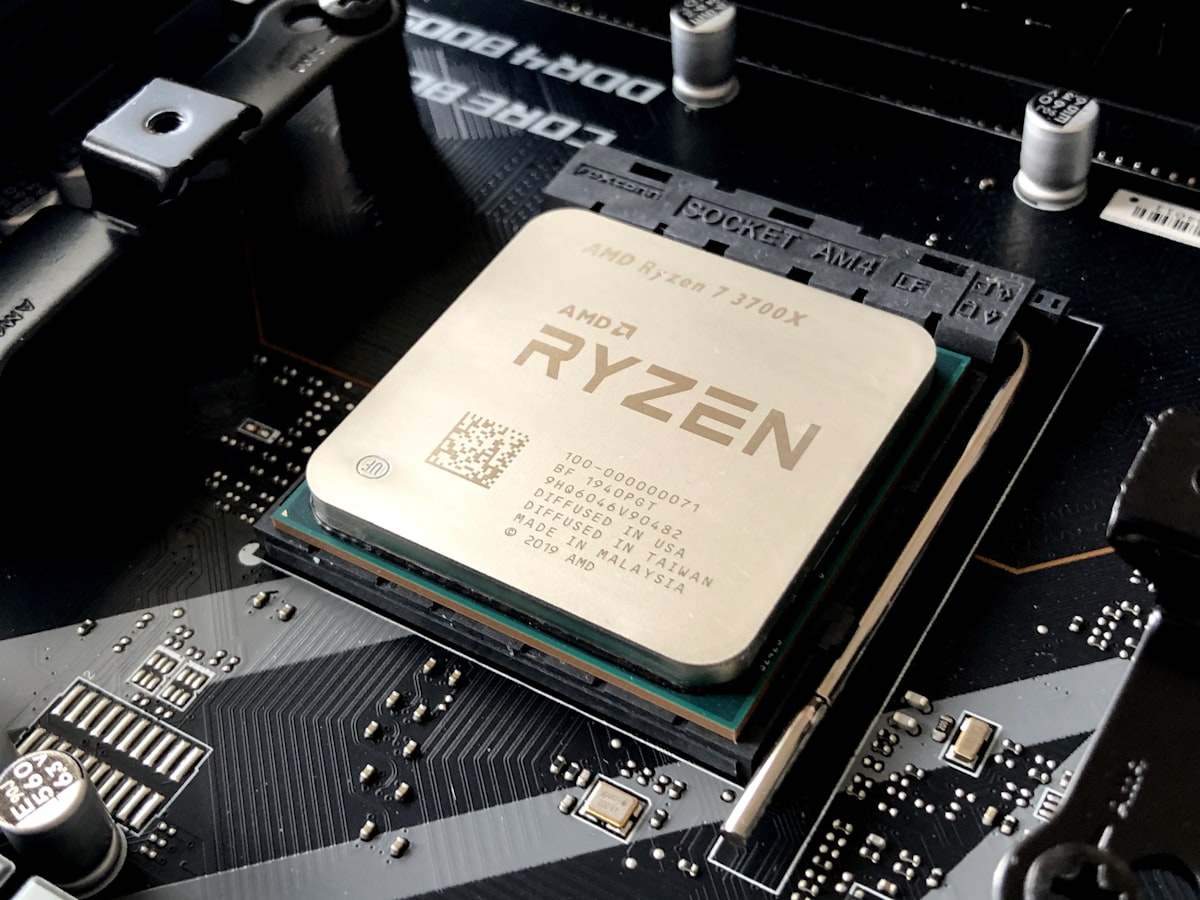
Anthropic is in early talks with Samsung to build its first custom AI chip. The move is a widening bid to escape Nvidia's grip on the AI hardware market. It could reshape how the industry's leading labs control cost and compute.
By Blumefield | July 4, 2026
The Quiet Signal Behind a Preliminary Conversation
Anthropic has begun early talks with Samsung Electronics to manufacture its first custom AI chip, a move that would push the company squarely into a hardware fight it has so far watched from the sidelines. The discussions, first reported this week, are preliminary. Anthropic has not settled on a design, a target workload, or even how powerful the processor needs to be. Yet the mere existence of the talks tells you where the frontier of artificial intelligence is heading, and it is not toward more comfortable dependence on a single supplier.
For a company that has built its reputation on model safety and enterprise trust rather than silicon, the pivot toward a custom AI chip marks a strategic widening. Anthropic was quick to stress that its existing stack, which leans on processors from Amazon, Google, and Nvidia, will remain central to its compute strategy. That caveat matters, but it does not blunt the underlying message. When a leading lab starts sketching its own chip, it is signaling that the economics of renting someone else's are becoming untenable.
Why a Model Company Suddenly Wants Its Own Silicon
The logic behind a custom AI chip is not mysterious. Training and serving frontier models consumes staggering amounts of compute, and the bill for that compute is dominated by one vendor. Nvidia's accelerators remain the industry standard, and their scarcity has translated into pricing power that squeezes every lab racing to ship the next model. Building bespoke silicon lets a company tune the hardware to its own workloads, wring out better performance per watt, and claw back a measure of independence from a supply chain it does not control.
There is also the matter of shortages. Anthropic was reportedly weighing the idea of its own hardware as early as this spring, when chip scarcity was throttling the entire sector. A custom AI chip designed around inference, the act of actually running a model for users rather than training it, could ease that bottleneck considerably. Inference is where the recurring cost lives, and even modest efficiency gains compound across billions of queries. That is the prize, and it explains why the calculus has shifted from theoretical to concrete.
Hiring patterns hint at how serious the effort has become. Reporting notes that Anthropic recently brought on an engineer with experience on a rival lab's custom silicon program, the kind of hire a company makes only when it intends to build rather than merely study. A project like this does not spring from a memo. It requires a team, a foundry partner, and years of patient iteration, and Anthropic appears to be assembling the first pieces.
Samsung's Case for the Contract
Samsung is an intriguing choice, and a revealing one. The Korean giant offers an advanced two nanometer manufacturing process and, crucially, in-house production of the high bandwidth memory that AI accelerators depend on. That vertical integration is rare. Few partners can fabricate the logic and supply the memory under one corporate roof, and for a company designing a custom AI chip from scratch, that coordination can shave months off a punishing timeline. Samsung's foundry business has spent years trying to close the gap with its larger rival, and a marquee AI client would be a powerful validation.
The relationship is layered, though, and not without tension. Samsung is already deeply enmeshed in Nvidia's ecosystem, producing components Nvidia needs and using Nvidia's software to run its own factories. The two are jointly building an AI chip facility in South Korea. Samsung has also held conversations about making silicon for other technology giants. Taking on Anthropic would place Samsung on multiple sides of the same war at once, a position that is lucrative but delicate. For Anthropic, the appeal is straightforward. It gains a manufacturing partner with genuine leading-edge capability and a strategic stake in seeing the project succeed. Samsung participated as an infrastructure partner in Anthropic's most recent funding round, which softens the ground for a deeper collaboration.
The Shadow of OpenAI and the Broader Arms Race
Anthropic is not moving in a vacuum. Its closest competitor recently unveiled a custom inference processor built with Broadcom, a chip the company claims delivers better performance per watt than the alternatives on the market. That announcement reframed the conversation. Owning your own silicon is no longer an exotic ambition reserved for hyperscalers. It is becoming table stakes for any lab that wants to control its cost structure and its destiny. A custom AI chip is now as much a competitive necessity as a technical achievement.
The template already exists. Amazon offers its Trainium accelerators and Google fields its Tensor Processing Units, both designed to reduce reliance on Nvidia and both woven into cloud businesses that serve outside customers. Anthropic sits in an unusual spot, purchasing capacity from those very clouds while now contemplating hardware of its own. That overlap could become awkward, or it could become leverage. Either way, the direction of travel is unmistakable. The labs that define this era increasingly want to own the full stack, from the model weights down to the transistors.
There is a geopolitical undertone as well. Concentrating advanced chip production in South Korea, alongside the enormous investments Samsung and its peers are pouring into domestic fabrication, reshapes where AI power physically resides. A bespoke accelerator built in Korea for an American lab is a small but telling data point in the larger story of how compute, capital, and national strategy are converging. Readers following that thread can trace it across Blumefield, where the semiconductor supply chain has become a recurring theme.
What Could Derail It, and What to Watch
None of this is guaranteed. The talks are early, and the graveyard of custom silicon projects is full of ambitious plans that never reached volume production. Designing a competitive accelerator is brutally hard. It demands not only a working chip but the software ecosystem to make it usable, the area where Nvidia's real moat lies. A processor that runs beautifully in a lab but frustrates the engineers deploying it delivers little value. Anthropic will have to prove it can build both the silicon and the tooling around it, or the effort will stall.
Cost and timing are the other unknowns. Bespoke chips require enormous upfront investment and years of lead time before they pay off, and the AI hardware landscape could look very different by the time a first Anthropic processor ships. Nvidia is not standing still, and its next generations may erode the efficiency gains a custom design promises today. Anthropic's own hedged language, insisting that Nvidia, Amazon, and Google remain pivotal, reads as prudent risk management rather than a full commitment.
Still, the significance of this moment should not be understated. A custom AI chip program signals that Anthropic intends to compete not just on the quality of its models but on the economics of running them. That is a more mature, more capital intensive kind of ambition, and it reflects an industry maturing past the phase where renting Nvidia hardware was simply the cost of doing business. Whether the Samsung talks yield a finished product or fizzle into a footnote, they confirm that the age of hardware neutrality among AI labs is ending. The companies that shape intelligence increasingly want to shape the machines that run it, and Anthropic has just made its intentions known.