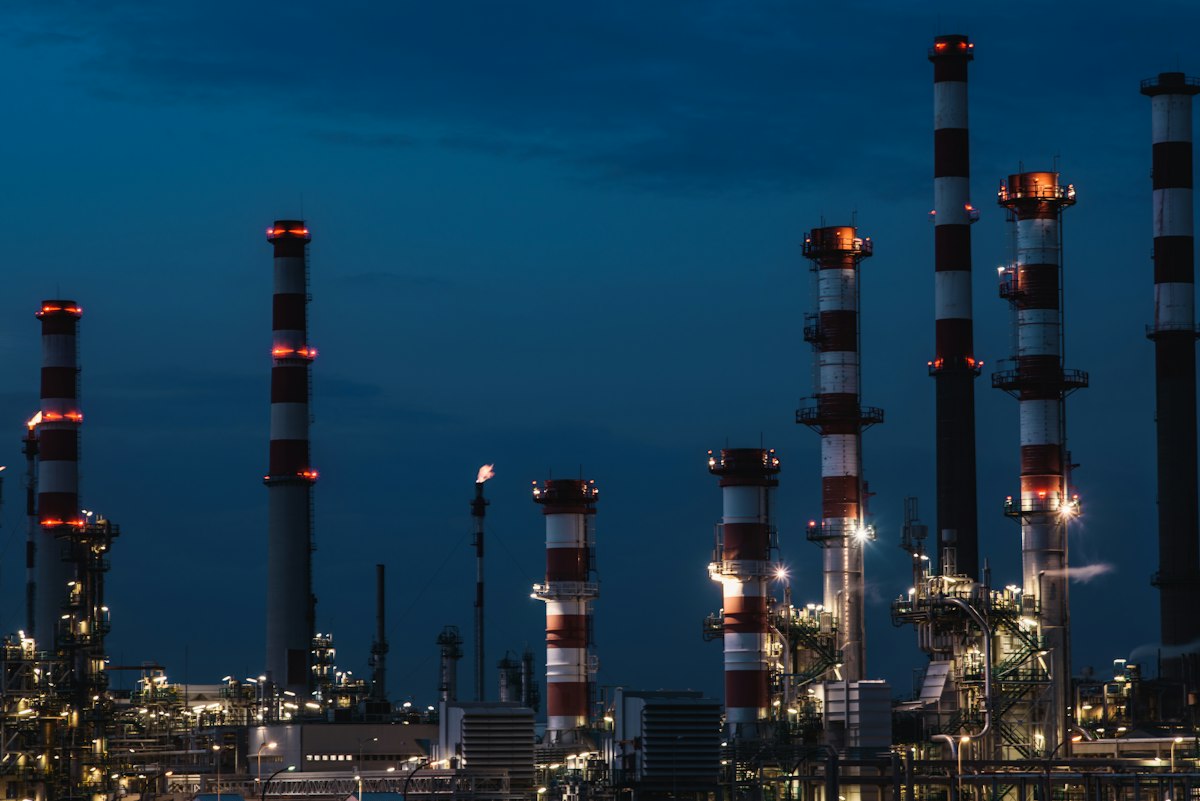
Anthropic's new gas-turbine spree has turned the race for AI data center power into a scramble for electricity itself, not silicon. The world's leading AI labs are discovering that the next phase of the boom will be won on the grid.
The $3.4 Billion Shortcut
The shift just took its most literal turn this weekend. Anthropic has agreed to pay roughly $3.4 billion for 1.7 gigawatts of heavy-duty, gas-fired generators built by Caterpillar, according to reporting that surfaced on November 8. The machines were not ordered by Anthropic at all. They were commissioned about two years ago by OnePWR Solutions, a San Antonio power supplier that placed the order long before the AI boom sent demand for large turbines through the roof, then found it needed outside money to complete the purchase. Rather than simply buying electricity from OnePWR, Anthropic took over the orders outright, along with the engineering and installation work needed to stand the units up. It did not buy OnePWR, and none of the supplier's staff moved across.
The structure of the transaction is the story. Anthropic did not acquire a company or a finished plant. It bought a place near the front of a years-long queue, at prices locked in before the surge, for a scarce industrial product that money alone can no longer summon on demand. People who track the sector describe it as the largest known single purchase of power-generation equipment by an AI lab. For a company that has never publicly run a turbine, that is a remarkable statement about where the fight for AI data center power is heading.
Anthropic and OnePWR both declined to comment. The silence is telling. A deal of this size would once have been announced with fanfare. Instead it leaked out roughly six weeks after the ink dried in late September, a sign of how sensitive the scramble for generation capacity has become.
Why an AI Lab Is Buying Turbines
For most of the past decade, the binding constraint on artificial intelligence was compute. Whoever controlled the most advanced chips controlled the frontier. That assumption is quietly breaking. Graphics processors are still scarce and expensive, but they are useless without electricity to run them, and electricity has become the harder thing to buy. Caterpillar and its rivals now quote lead times that stretch years into the future. A buyer with cash but no queue position can wait longer for a turbine than for a cutting-edge chip. That single inversion has quietly rewritten the economics of AI data center power.
That inversion explains why the biggest names in AI are turning themselves into energy developers. Earlier this year xAI, now folded into SpaceX, spent around $2 billion on mobile gas turbines for its Memphis site. Alphabet bought the energy developer Intersect in late 2025. Anthropic's generator purchase is the most aggressive version of the same logic. By owning the hardware and the know-how to install it, these firms insulate themselves from a supply chain they cannot otherwise control. As one banker who advises on such deals has put it, owning the infrastructure lets companies protect themselves against disruptions beyond their reach.
There is a hard-nosed financial calculation underneath the engineering. OnePWR's order was priced two years ago. Replacing that equipment today, if a slot could even be found, would cost far more and arrive far later. Anthropic is effectively buying a commodity future at a pre-inflation price, then paying a premium for the certainty of receiving it on time. In a market where a stalled data center burns money every day it sits dark waiting for power, speed is worth almost any price.
The Grid Cannot Keep Up
Step back from the single deal and the bigger picture is a grid buckling under a load it was never designed to carry. The US Energy Information Administration expects American electricity demand to hit record highs in 2026 and again in 2027, driven largely by data centers. Anthropic itself has estimated that the American AI sector will need at least 50 gigawatts of new capacity over the next several years. Analysts tracking interconnection queues have warned of a shortfall measured in the hundreds of gigawatts. The hunt for AI data center power is colliding head-on with the physical limits of a system that takes the better part of a decade to expand.
Natural gas has become the default answer, and not because anyone particularly prefers it. Solar and wind are cheaper per unit but intermittent, and new nuclear remains years away from meaningful scale. Gas turbines can be sited quickly, run around the clock, and, crucially, be bought as discrete units rather than waiting on a utility to build a plant. For now, gas is simply the fastest route to AI data center power at scale. The result is a rush into fossil generation that sits awkwardly beside the climate pledges many of these same companies have made. Training a single frontier model, Anthropic has said, will soon demand gigawatts of continuous power, the output of a mid-sized city.
The strain is already visible in local politics. Communities from Nova Scotia to the American Midwest have rallied against new data center approvals, citing higher power bills, water use, and environmental damage. Grid operators are being pushed by governors and federal officials to make developers pay more for the capacity they consume. The frictionless expansion the industry enjoyed two years ago is over.
A $900 Billion Appetite
The generator deal looks enormous in isolation and almost trivial beside Anthropic's broader commitments. The company's amended filing for its stock market listing, submitted in late October under the ticker ANT, disclosed close to $895 billion in purchase and lease obligations, the overwhelming majority of it tied to computing power and the infrastructure to run it, stretching out to 2045. Against that number, $3.4 billion is a rounding error. It is also a down payment on a problem the $895 billion cannot solve on its own, because none of those chips matter without power behind them.
Anthropic has signaled it expects to spend more than $500 billion on AI infrastructure over the next decade. Its monthly compute-lease payments to SpaceX alone are projected to reach $3.1 billion by year end. That spending shapes how markets see the company. One major lender has reportedly warned that Anthropic could end up with a junk credit rating rather than the investment grade once assumed, a reflection of how much cash it is committing against revenue that, while growing fast, has not caught up. A public listing could come as soon as this month.
This is the paradox at the heart of the AI data center power story. The labs are simultaneously the most richly valued companies in the world and among the most capital-hungry, pouring borrowed and invested money into physical assets, turbines, transformers, and transmission lines, that look nothing like the asset-light software businesses investors fell in love with. The market is being asked to fund a buildout whose single largest input is not code but kilowatts.
Who Pays for the Power
The uncomfortable question behind every one of these deals is who ultimately pays. Back in February, Anthropic pledged to cover increases in consumer electricity prices caused by its own data centers, promising to fund grid interconnection upgrades in full and to bring new generation online to match its demand. The argument was simple and politically shrewd: AI companies, it said, should not leave American ratepayers to pick up the tab. The generator purchase is that pledge made concrete, an attempt to generate its own AI data center power rather than crowd ordinary households off an overloaded grid.
Whether the promise holds under pressure is another matter. Anthropic's own commitments draw a quiet distinction between data centers it develops for its own workloads, where it makes the pledge directly, and capacity it merely leases, where its language is noticeably softer. As the buildout accelerates, the share of leased capacity could grow, and with it the risk that costs leak back to the public after all. Regulators in several states are not waiting to find out, with moratoriums and new fee structures already moving through legislatures.
For now, Anthropic has bought itself time and certainty, 1.7 gigawatts of it, while rivals jostle for the same shrinking pool of turbines. The deal will not be the last of its kind. Every serious contender in AI is quietly reaching the same conclusion, that the next decade of the industry will be decided less by who writes the best model than by who can plug it in. The contest for AI data center power has become the contest itself. For more coverage of the infrastructure arms race remaking technology, follow Blumefield, where we track the money and the machines behind the boom at Blumefield.com.