Washington Targets Chinese Data Center Hardware
The Trump administration is drafting a rule that would block imports of new Chinese data center hardware into the United States, according to officials briefed on the plan, marking one of the most consequential expansions of Washington's technology controls in years. For most of the past decade, American restrictions concentrated on the sharp end of the semiconductor supply chain: advanced processors, the software that designs them, and the lithography machines that print them. The new measure aims lower and wider, at the unglamorous but essential gear that keeps a data center running.
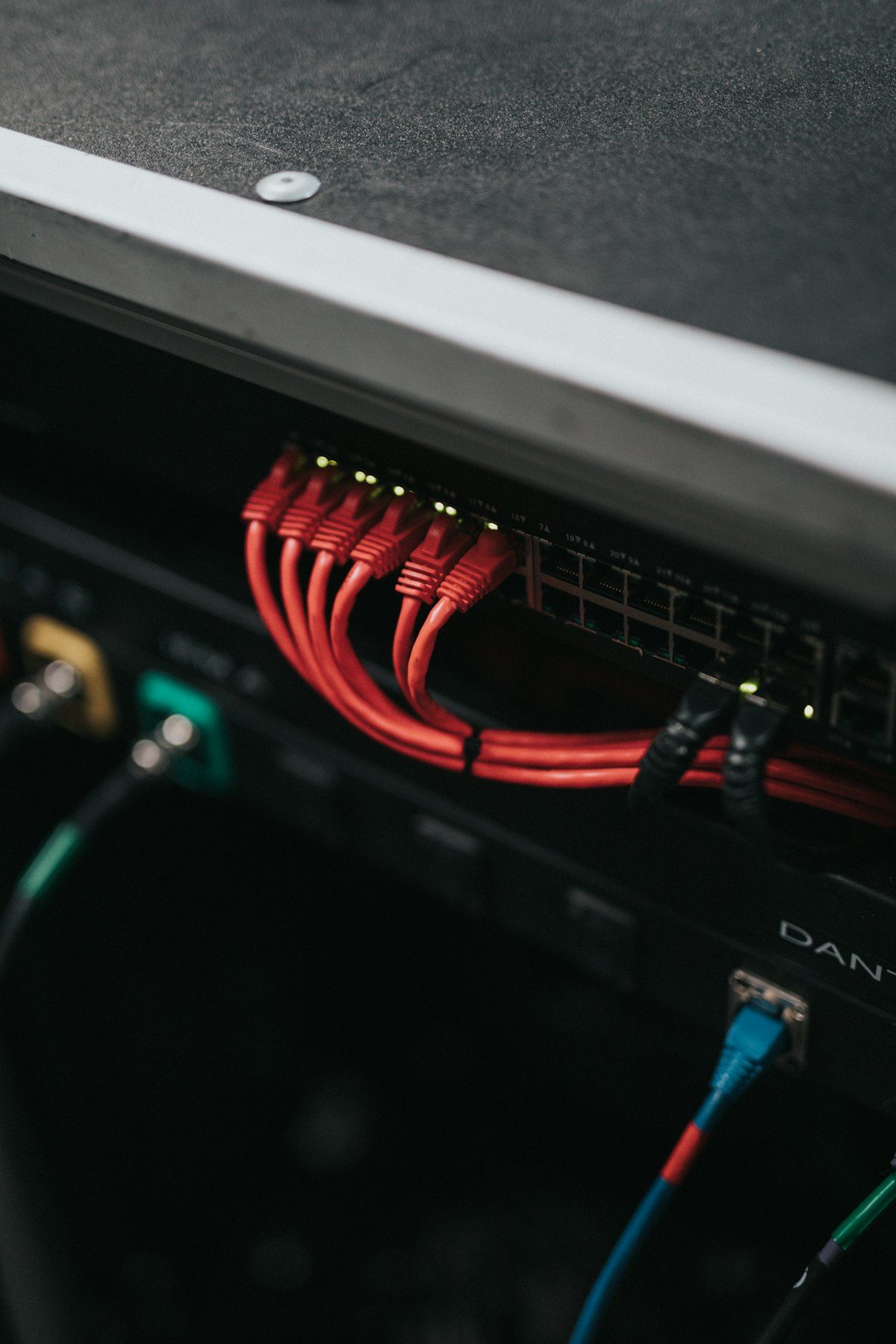
According to people familiar with the draft, the restriction could be issued by the Commerce Department or the Federal Communications Commission and would cover networking equipment, servers, storage devices and, most notably, new models of optical transceivers, the small components that convert electrical signals into light so data can race through fiber inside a facility. Officials want the rule published this year, with enforcement following soon after. The stated goal is blunt: keep Chinese data center hardware out of the infrastructure underpinning the artificial intelligence economy.
The timing is not accidental. American hyperscalers are pouring record sums into new capacity, and every gigawatt of compute depends on thousands of parts that have nothing to do with Nvidia. By pursuing controls at the component level, Washington is signalling that it now views the entire AI stack, not just the chips at its centre, as a matter of national security.
Why Optical Transceivers Became a Security Problem
The focus on optical transceivers surprised some observers, but the logic is straightforward. These devices sit at the seams of a data center, shuttling traffic between servers, switches and storage at enormous speed. A component that touches nearly every packet of data is also, in theory, a component that could be compromised. US officials have long warned that hardware built in China could contain backdoors allowing Beijing to intercept traffic, plant malware, or disrupt operations remotely.
Those fears are not new. They animated the campaign against Huawei networking gear years ago and shaped the FCC's covered list of prohibited equipment. What has changed is the stakes. When the sensitive traffic in question includes proprietary AI model weights, government workloads and the training data of the world's largest companies, the argument for scrubbing this equipment from federal and commercial facilities gains new urgency. The administration is expected to lean on national security authorities to justify the restriction rather than conventional trade tools.
The draft reportedly distinguishes between facilities serving federal contracts and those simply operating on US soil, a scope that could prove decisive. A narrow rule covering only government-linked sites would be manageable. A broad one reaching every commercial data center in the country would ripple through an industry already straining against supply shortages.
The Bill Lands on America's Cloud Builders
Whatever its final shape, the rule will not be free. China remains deeply woven into the supply chains for networking hardware, power management systems, cooling equipment, transformers and the humble optical modules now in the crosshairs. Replacing Chinese data center hardware with domestic or allied alternatives is possible, but it means higher costs and longer lead times at precisely the moment operators are racing to build.
Industry analysts warn of a familiar pattern. When Washington restricts a category of imports, prices climb, procurement slows, and the burden falls on buyers who have few substitutes on hand. Data center developers already contend with a memory shortage that has pushed component costs sharply higher and forced some projects to reserve capacity years in advance. Adding a compliance scramble over these imports on top of that squeeze could delay build-outs and inflate the capital budgets that hyperscalers are struggling to justify to investors. A single large facility can contain tens of thousands of transceivers, so even a modest per-unit premium compounds quickly across a national build-out.
There is a strategic upside for domestic suppliers and allied manufacturers, who stand to capture demand that once flowed to Chinese vendors. Optical component makers in the United States, Japan and Taiwan could benefit, as could the growing roster of firms building alternatives to Chinese networking gear. But capacity cannot be conjured overnight, and a sudden shift risks trading one dependency for a bottleneck somewhere else.
Beijing Readies Its Response
China wasted little time signalling its displeasure. A spokesman for the Ministry of Commerce urged Washington to stop the politicisation of trade and technology and warned that Beijing would take the measures necessary to protect its interests. The language echoed previous rounds of the dispute, and the threat is credible. China dominates the processing of rare earths and controls significant slices of the supply chains for magnets, batteries and other inputs that the American technology sector cannot easily source elsewhere.
That leverage is the uncomfortable subtext of any move against these components. Each new US restriction invites a countermeasure, and Beijing has grown adept at calibrated retaliation that targets American vulnerabilities without triggering a full rupture. Export curbs on critical materials, slower customs clearance, or pressure on US firms operating in China are all within reach. The risk is a tit-for-tat spiral that leaves both AI ecosystems more fragmented and more expensive.
For companies caught in the middle, the uncertainty is its own cost. Procurement teams must now plan around a rule that has not been finalised, whose scope could change, and which could invite retaliation that reshapes the availability of materials far beyond the data center.
What Comes Next for the AI Infrastructure Stack
The proposed crackdown on Chinese data center hardware is best understood as a marker of where the technology contest is heading. Washington has concluded that controlling advanced chips is necessary but not sufficient, and that security now depends on the provenance of the entire physical stack, from the processor down to the fiber-optic module. Expect the definition of strategically sensitive technology to keep widening in the months ahead.
For readers tracking this story, the details will matter more than the headline. The choice of agency, the breadth of the covered facilities, the treatment of existing installations, and the length of any compliance window will determine whether this is a targeted tightening or an industry-wide shock. Blumefield will keep following the rule as it moves from draft to enforcement, alongside our ongoing coverage of the US-China technology war.
What is already clear is that the era of treating data center plumbing as a neutral commodity is over. In an economy where compute is power, every switch, cable and transceiver has become a strategic asset, and Chinese data center hardware has become the newest front in a widening fight.