The Driverless Robotaxi Era Officially Begins
The driverless robotaxi has, for a decade, been a promise dressed up as a product, always one regulator, one city, or one safety report away from real revenue. On July 30 that changed. The National Highway Traffic Safety Administration granted Amazon's Zoox the first commercial exemption in United States history for a purpose-built driverless robotaxi, a vehicle with no steering wheel, no pedals, and no driver's seat. The decision hit the Federal Register the next morning and took effect immediately.
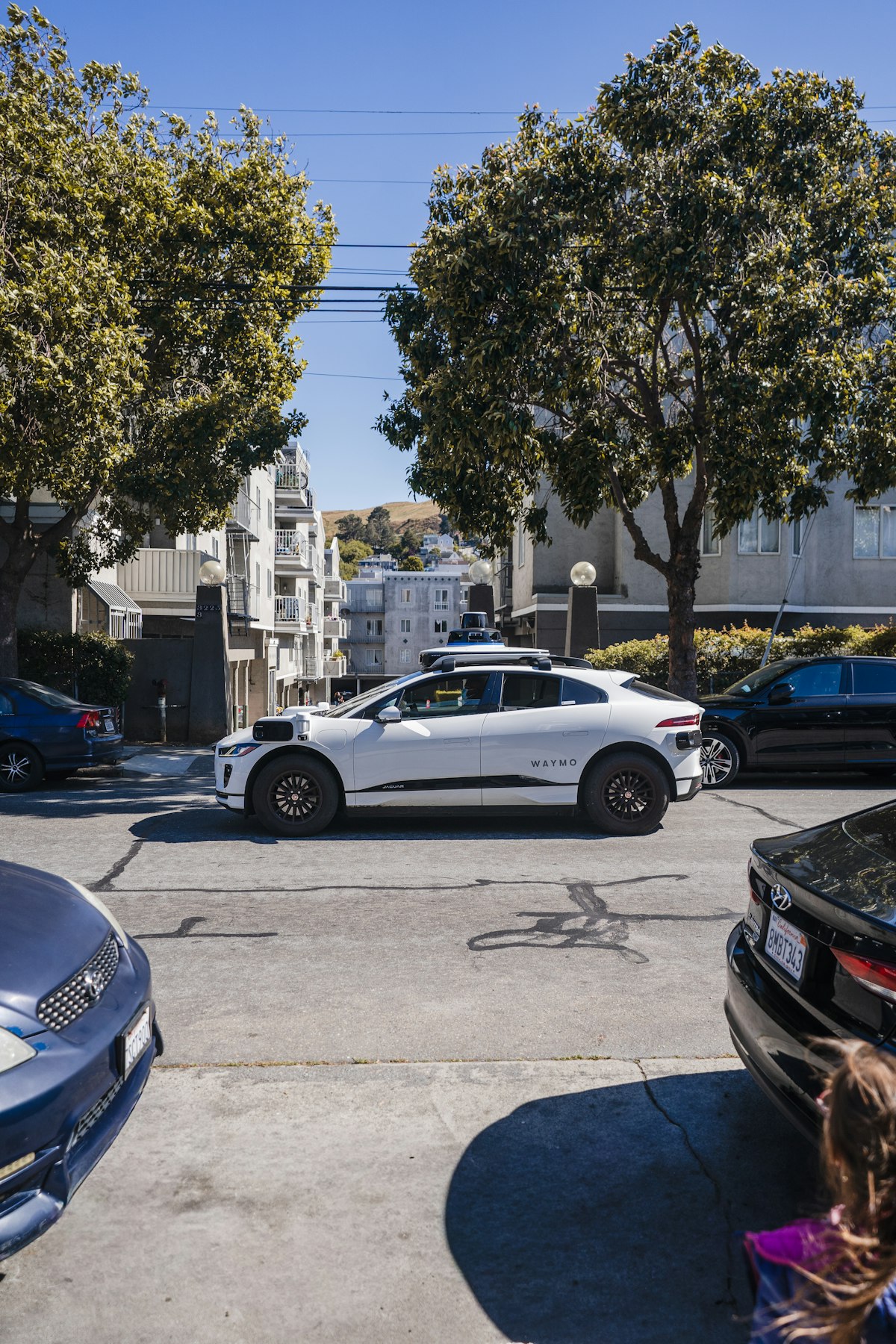
The significance is easy to understate and hard to overstate at the same time. Waymo carries paying passengers today, but it does so in retrofitted Jaguars and Zeekrs that still carry the hardware of human control. Zoox built something else entirely, a four-passenger bidirectional pod designed from a blank sheet with seats that face each other and a cabin that was never meant to be driven. Until this week, federal rules written around a human behind the wheel made charging money for that pod illegal.
By clearing the last federal hurdle, NHTSA effectively blessed a new category of road vehicle. The agency did not merely tolerate the absence of a steering column. It formally exempted Zoox from eight separate Federal Motor Vehicle Safety Standards, conceding that a machine built for autonomy should not be judged by rules authored for drivers who no longer exist inside it.
What the Exemption Actually Grants
The mechanism is a Part 555 exemption, a rarely used provision that lets NHTSA waive specific safety standards when a manufacturer proves its vehicle delivers equivalent overall safety. Zoox had to demonstrate that its pod, guided by more than forty cameras, radars, and lidars, meets or beats the protection a compliant car would offer a passenger. The eight waived standards include requirements as mundane as windshield defrosting and as fundamental as light-vehicle braking controls, provisions that assume a person is present to press a pedal or clear a fogged screen.
Crucially, the exemption is temporary and capped. Zoox may put up to 2,500 driverless robotaxi units into commercial service each year, and the authorization runs from July 31, 2026 through July 31, 2028. NHTSA attached what it called an enhanced, adaptable oversight structure, language that signals the agency wants the freedom to tighten or expand the terms as the technology and its safety record evolve. The full order is public in the Federal Register, and the agency laid out its reasoning in an accompanying NHTSA statement.
This is a sharp break from the demonstration exemption Zoox received in August 2025, which permitted free rider trials but explicitly forbade collecting a fare. The difference between those two documents is the difference between a science project and a business.
From Free Rides to Real Fares
Zoox has been giving away rides for the better part of a year. Free public trips began in Las Vegas in September 2025 and expanded to San Francisco soon after. What the company lacked was permission to turn those trips into transactions. The federal exemption unlocks the meter, and Zoox says paid rides in Las Vegas will begin soon, with the company outlining expansion into Austin and Miami later in 2026. The company detailed the milestone in its own Zoox journal post.
Federal approval is necessary but not sufficient. Zoox still needs state and local sign-off before it can invoice a single passenger, and California, its home turf, remains gated. The company needs driverless deployment permits from the California Public Utilities Commission and the Department of Motor Vehicles before the driverless robotaxi can charge riders in the state where it is headquartered. Nevada moved faster, which is why the first dollar will almost certainly be collected on the Las Vegas Strip rather than in San Francisco.
There is a manufacturing story underneath the regulatory one. Zoox is scaling production at its Hayward, California facility toward a target of up to 100 vehicles per week. Owning the factory and the vehicle design gives Amazon a vertically integrated position that its rivals, dependent on automakers for hardware, cannot easily copy. You can read Blumefield's earlier coverage of the autonomous vehicle land grab for how that vertical integration reshapes the economics of the ride.
The Race Zoox Just Reframed
For years the driverless robotaxi conversation has been a two-horse narrative, Waymo out front on real-world miles and Tesla promising that its camera-only approach would eventually leapfrog everyone. Zoox has now changed the shape of the field. Waymo went fully driverless in Las Vegas earlier in July, meaning Amazon's pod enters that market head to head with Alphabet's most mature service. But Zoox arrives with a regulatory distinction none of its rivals hold, a federal blessing for a car that was never designed to be driven.
Tesla, meanwhile, spent the month struggling to push its Austin robotaxi fleet past roughly 100 vehicles, and it still relies on a conventional car with a steering wheel and a safety operator arrangement that keeps it inside existing rules. That is a legitimate strategy, but it is a fundamentally different bet from the one Zoox and NHTSA just validated. The Amazon subsidiary is wagering that the purpose-built form factor, ugly to some eyes and endearing to others, is the destination and not a detour.
The competitive stakes ripple outward. Uber and Lyft have spent years deciding whether to partner with autonomy developers or be disrupted by them. A driverless robotaxi that Amazon owns end to end, from silicon to seat, is a reminder that the most dangerous competitor in mobility may be the company that already runs the world's largest logistics network.
The Guardrails and the Questions That Remain
NHTSA framed the decision as part of a broader push to accelerate autonomous vehicles without abandoning oversight. The same day, the agency said it would update its exemption process to let automakers sell limited fleets of non-compliant vehicles for testing, and it committed to a three-year, five-million-dollar consortium to build a single national safety standard for autonomous cars. Administrator Jonathan Morrison described it as removing unnecessary barriers while preserving enforcement, a balance the agency insists it can strike.
Skeptics will note that the 2,500-vehicle annual cap is small, that two years is a short leash, and that the hardest problems in autonomy tend to appear at scale rather than in pilots. A separate NHTSA proposal to let robotaxis operate without brake pedals remains pending, a sign that the regulatory frontier is still moving. Every incident involving a driverless robotaxi from any operator will now be read as evidence for or against the category Zoox just legitimized.
Yet the direction is unmistakable. A federal agency has, for the first time, written a paying passenger into a vehicle with no way for a human to take over. That is a philosophical shift as much as a legal one. For more than a century, American car regulation assumed a driver. The driverless robotaxi era begins with the government conceding that the assumption no longer holds. Zoox got there first, and the rest of the industry now has to catch a company that stopped building cars for drivers altogether.