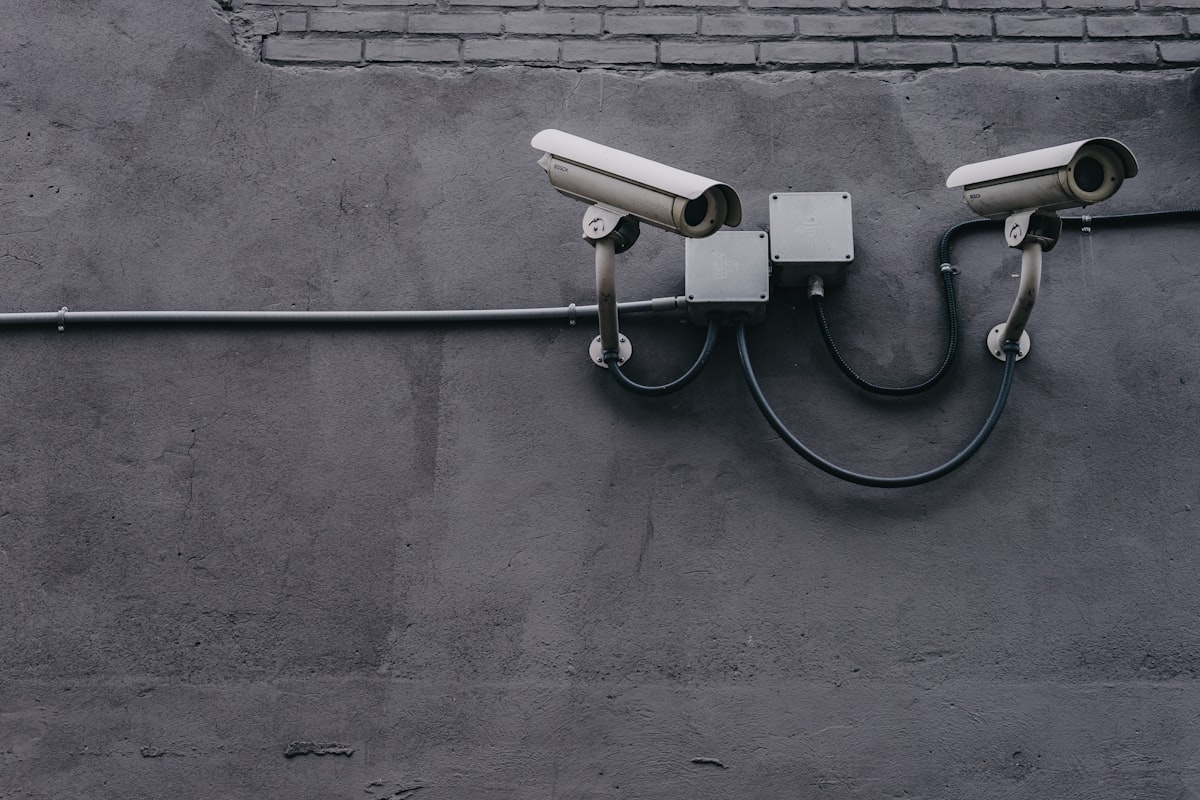
A privacy group just accused one of the AI industry's most important suppliers of spying on the people who make its models work. The complaints push AI worker surveillance to the center of Europe's next big data fight. They could cost Scale AI tens of millions and expose a labor system the industry would rather keep hidden.
By Blumefield | October 28, 2026
The Complaint That Pulled Back The Curtain
The artificial intelligence boom runs on a workforce almost nobody sees. On 27 October, the European privacy group noyb forced that workforce into the open, filing five formal complaints that put AI worker surveillance at the heart of Europe's next major data fight. The target is Scale AI, the American company whose Outlier platform supplies the labeled training data that makes chatbots and frontier models usable. Its clients reportedly include Meta, OpenAI, Google, Anthropic, xAI and the US federal government.
The complaints, lodged with regulators in France, Italy, the Netherlands and Austria, accuse Scale AI of monitoring the contractors who do its data annotation work far beyond anything the job requires. According to noyb's technical analysis, the alleged conduct spans covert tracking, excessive data collection, forced biometric identity checks and a refusal to answer workers' requests to see what the company holds on them. Scale AI calls the claims "unfounded and inaccurate," says its practices are disclosed and consented to, and insists it uses standard tools for fraud prevention and payments.
What makes this case different from the usual privacy skirmish is who is being watched. These are not customers or users. They are the human raters, labelers and judgment-makers whose unglamorous clicks teach machines what a correct answer looks like. For the first time, a well-resourced regulator-facing group is arguing that the labor underneath the AI industry deserves the same protection as everyone else.
Nineteen Trackers And A Camera
The technical core of the allegation is unusually specific. noyb says it found as many as nineteen third-party trackers embedded in the Outlier environment, feeding data out while contractors worked. Named recipients include TikTok, LinkedIn, Facebook, the survey tool Sprig and the analytics firm Datadog. The data, noyb claims, flows out "as often as every few seconds," carrying IP addresses, contact details, unique device identifiers and a record of exactly which task a worker is on.
That last detail is the one privacy lawyers keep circling. "Why should LinkedIn or Facebook know which tasks you're working on?" asked Lisa Steinfeld Leiser, the noyb data protection lawyer behind the filings. Stripped of jargon, the concern is that the invisible plumbing of AI worker surveillance could let outside advertising networks profile a labeler's professional life without consent, building a picture the worker never agreed to share and cannot see.
Then there is the camera. Outlier contractors must repeatedly pass identity checks run by the vendor Persona, which involve recording video of their face and uploading government identification. Scale AI frames this as anti-fraud hygiene and skills verification. noyb frames it as excessive processing of biometric data, a category the law treats as especially sensitive. The group points to an October 2025 breach in which roughly 70,000 government ID photos held by Persona were exposed by hackers, evidence, it argues, that pooling such material is a liability rather than a safeguard. Persona has rejected the idea that it could build a people tracker.
The 900,000 People Who Train The Machines
Behind the legal filing sits a labor story the industry rarely narrates. Outlier runs on more than 900,000 freelance workers, a distributed army paid piecemeal to rank responses, flag unsafe outputs and write the reference answers that fine-tune the models now valued in the trillions. Completion bonuses of 100 to 200 euros dangle for finishing 200 tasks inside 24 hours, an incentive structure that rewards speed and discourages anyone from pausing to question the surveillance built into the workflow.
Thomas Le Bonniec, a sociology researcher at DiPLab who co-authored a study of Outlier's data collection, put the stakes plainly. The system, he said, "only thrives because of its deliberate lack of transparency," and platform work may be enabling a form of workplace monitoring that "would be seen as unacceptable in any other form of employment in the European Union." The point lands because it reframes AI worker surveillance not as a glitch but as a feature of the business model, a way to extract maximum output from a workforce that has almost no bargaining power.
This is the uncomfortable mirror the AI industry keeps turning away from. The same models marketed as autonomous and superhumanly capable are, at the base of the pyramid, propped up by hundreds of thousands of people doing repetitive, closely watched piecework for modest pay. The noyb complaints ask whether that arrangement can survive contact with European law.
Why Europe Is The Battleground
Europe is where this fight has teeth. The General Data Protection Regulation lets authorities impose fines of up to 20 million euros or 4 percent of global annual turnover, whichever is higher. On Scale AI's estimated 2 billion dollars of 2025 revenue, that ceiling sits somewhere around 80 million dollars, enough to concentrate minds in a company reportedly preparing for a public offering. noyb is not asking for a slap on the wrist. It wants a full investigation and a deterrent penalty.
The timing compounds the pressure. Brussels has spent two years building a legal scaffold aimed squarely at exactly this kind of relationship. The EU Platform Work Directive, adopted in 2024, targets algorithmic management and demands transparency about how digital platforms monitor and direct the people who work through them. More than 40 million people across the bloc now have their work organized by digital platforms, according to EU Council data, and AI data labeling is one of the fastest growing corners of that economy. A finding against Scale AI would not just bruise one supplier. It would set a template for how every AI lab's outsourced labor pipeline gets regulated.
There is a corporate shadow over all of it. Meta confirmed a roughly 49 percent stake in Scale AI in June 2025, in a deal that valued the company above 29 billion dollars. That ties one of the world's most scrutinized tech giants to a supplier now accused of the kind of tracking that already landed Meta's own products in regulatory trouble. The question of who ultimately answers for AI worker surveillance in that structure is one lawyers will enjoy for years. For related coverage of the regulatory squeeze on Big Tech, see Blumefield.
A Reckoning The Industry Cannot Outsource
Nothing has been proven. The complaints are allegations, Scale AI denies them, and GDPR cases can grind for years before a decision, let alone a fine. The company may yet show that its disclosures and consent flows meet the legal bar, and that its identity checks are the ordinary cost of running a trusted labeling operation at global scale. Regulators across four countries will now decide.
But the strategic damage may not wait for a verdict. Enterprise buyers increasingly demand clean data provenance and defensible supply chains, and a live surveillance case complicates the pitch to governments and regulated industries that Scale AI has worked hard to win. An IPO prospectus that has to disclose five active GDPR complaints across Europe is a harder document to sell. The reputational cost of AI worker surveillance headlines can move faster than any administrative process.
The deeper signal is for the whole sector. For years the AI industry has treated its human labor layer as an operational afterthought, a cost to be optimized and a detail to be kept offstage. noyb's filings are a bet that the law no longer sees it that way, and that the people who train the machines are about to become impossible to ignore. Whatever the regulators conclude, the curtain has been pulled back, and the question of AI worker surveillance is now one the industry will have to answer in the open. Follow the story as it develops at Blumefield.