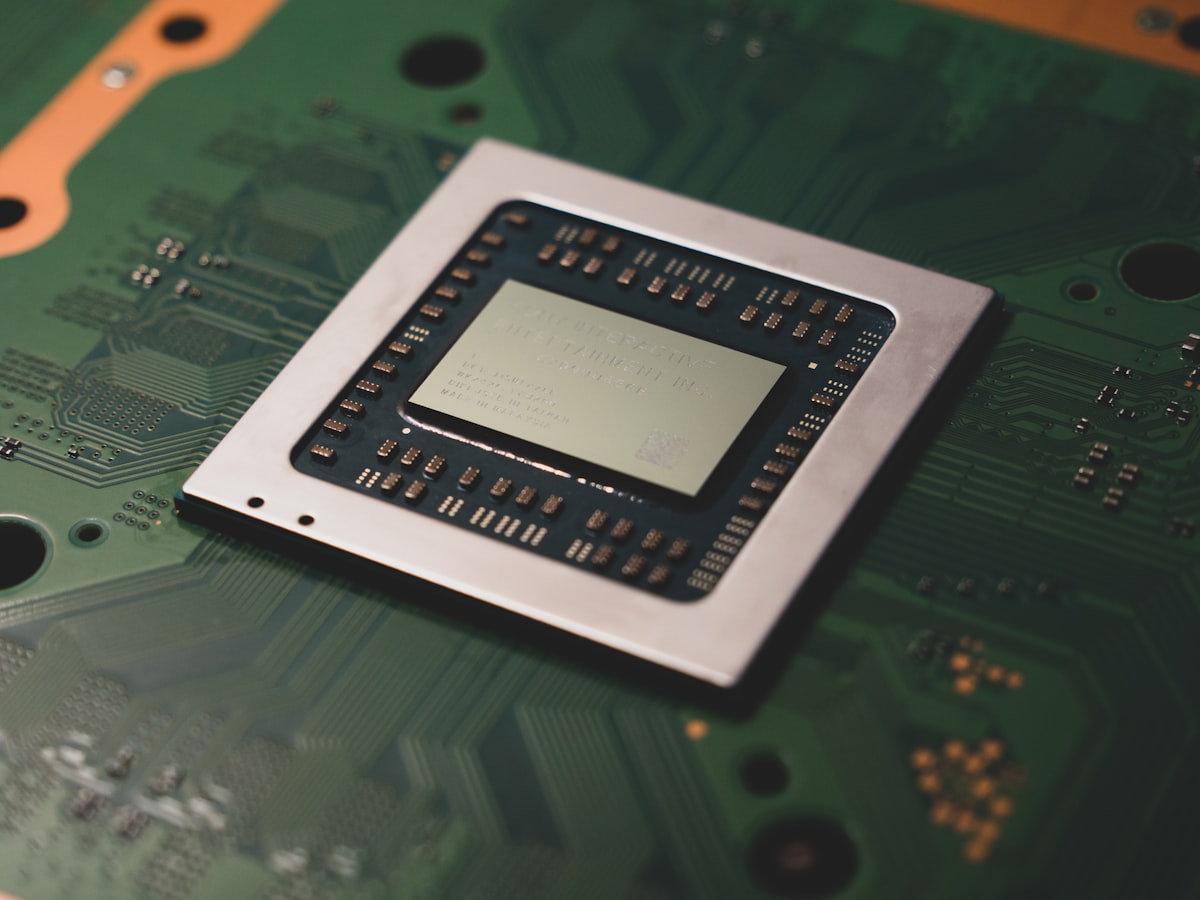
AMD, Arista and Super Micro just delivered blowout AI infrastructure earnings, and the timing could not have been sharper.
By Blumefield | November 4, 2026
A Stress Test Arrives on Election Night
The setup could hardly have been tenser. On Friday, October 30, the Nasdaq suffered its worst session since June. Intel cratered nearly 29 percent on a weak forecast, the Nasdaq-100 slipped into correction territory more than 10 percent below its early-October record, and by Monday the index was still nursing losses. Bill Ackman told CNBC he worried the market had become "broken," with borrowed money driving "massive moves in stocks." The question hanging over every screen was simple. Was the artificial intelligence capital spending wave real demand, or the late innings of a mania?
The answer would come after the closing bell on Tuesday, November 3, the same evening tens of millions of Americans were voting in the midterm elections. Three of the most important suppliers to the AI buildout were due to report at once. For a market desperate for a verdict, these AI infrastructure earnings were less a routine quarter than a referendum on the entire trade.
They did not disappoint. Within minutes of the releases, Advanced Micro Devices jumped more than 8 percent in after-hours trading, Arista Networks leapt as much as 14 percent, and Super Micro climbed more than 8 percent after posting record sales. The broad market had closed mixed, with the Dow down and the Nasdaq up less than 1 percent, but the after-hours tape told a cleaner story. These AI infrastructure earnings showed demand for the picks and shovels of the AI era was not slowing. If anything, it was accelerating.
AMD Nearly Doubles Its Data Center Business
The first of the AI infrastructure earnings came from AMD. The company reported record third-quarter results with revenue of $13.4 billion, up 45 percent from a year earlier and comfortably past the high end of its own guidance. Non-GAAP earnings per share reached $2.09, a 74 percent jump, while GAAP net income rose 95 percent to $2.43 billion. These were not the numbers of a business bracing for a slowdown.
The engine was the data center segment, where revenue nearly doubled to $8.5 billion, a 97 percent increase. AMD credited surging demand for its EPYC server processors and the launch of its Instinct MI450 Series accelerators, the chips it is betting will finally challenge Nvidia at the high end. The customer list it disclosed reads like a roll call of the AI economy. Anthropic, Meta, Microsoft, OpenAI and Oracle Cloud Infrastructure are all running workloads on the first Helios rack-scale systems built around the MI450 and sixth-generation EPYC silicon.
Chief Executive Lisa Su struck a confident tone, saying the company expects "growth to accelerate further in the fourth quarter as we scale Helios and Venice production." The guidance backed her up. AMD told investors to expect roughly $17 billion in fourth-quarter revenue, which at the midpoint implies year-over-year growth near 66 percent. For a chipmaker that spent years as the scrappy underdog, the scale of the acceleration was the story. The data center franchise alone is now far larger than all of AMD was only a few years ago.
Arista and Super Micro Pile On
If AMD supplied the processors, Arista Networks supplied the plumbing, and its quarter was arguably even more striking. Revenue rose 58.5 percent to $3.66 billion, which Chairperson and Chief Executive Jayshree Ullal called the fastest year-over-year growth in the company's history as a public firm. Diluted earnings per share of $1.20 beat estimates, net income landed at $1.53 billion, and management raised its full-year revenue outlook to $13.3 billion, the fourth increase of the year. Arista now expects its AI networking fabrics business to roughly double to about $7 billion in 2027.
The detail that matters for the wider debate is where that growth is coming from. Arista is weaving Ethernet into the back end of AI clusters, the dense switching fabric that lets tens of thousands of accelerators behave as one machine. Ullal said the company is forecasting more than 10 gigawatts of deployment across 10 or more types of compute accelerators by the end of 2027. That is a bet not on a single chip vendor but on the buildout continuing across the entire industry, from Nvidia to AMD to the custom silicon being designed by the cloud giants.
Then came the night's loudest number. Super Micro, the server maker whose AI infrastructure earnings have become a bellwether for data center assembly, reported record quarterly revenue of $19.95 billion, a stunning 298 percent increase from a year earlier, with adjusted earnings per share of $1.81 against $0.35 the year before. Founder and Chief Executive Charles Liang leaned into the company's pitch as a total AI and datacenter solutions provider, and management lifted its full-year revenue guidance to $77 billion. Super Micro shares rose more than 8 percent on the print. Taken together, the three reports formed a single, hard-to-argue message. The money being committed to AI data centers is translating into real orders, real revenue and real profit for the companies that build them.
The Bubble Question Won't Go Away
And yet the skeptics are not wrong to keep asking. Blowout AI infrastructure earnings answer the demand question, but they do not settle the one that has unnerved markets for weeks. Who is paying for all of this, and when does it earn a return? The same evening AMD and Arista soared, the mood elsewhere was anxious. Shawn Snyder of Potomac Fund Management warned that concerns over the cost of capital and debt financing are "going to persist for quite some time." Several of the hyperscalers funding the boom are now running negative free cash flow, plugging the gap with record bond issuance and equity sales.
The crosscurrents were visible in the same session. Palantir reported revenue up 96 percent and still fell on worries about a contract-value slowdown. Apple posted a record September quarter and slipped on soft margin guidance and a warning about rising memory costs. The anxiety is not that AI products lack customers. It is that the capital intensity of the buildout, the circular financing arrangements between chipmakers and their customers, and the long depreciation schedules on short-lived hardware could leave returns far behind the spending.
There is a political overhang too. By Tuesday evening, prediction markets gave Democrats better than a 90 percent chance of taking the House and better than 70 percent for the Senate. Some strategists told CNBC that a sweep could weigh on AI-buildout names, on fears of tighter limits on the sprawling, power-hungry data centers that these AI infrastructure earnings depend on. A quarter of blockbuster results does not make that worry disappear.
What the Numbers Actually Settle
So what did Election Night actually decide? It drew a clean line under one half of the argument. The demand for AI compute is not vaporware, and the companies closest to the metal are seeing it in hard numbers that beat even optimistic forecasts. AMD's data center revenue nearly doubling, Arista's fourth guidance raise of the year, and Super Micro's near-quadrupling of sales are not the signatures of a market running on hype alone. For anyone who spent the weekend wondering whether the Friday rout marked the top, the strong AI infrastructure earnings were a firm rebuttal.
What they did not do is resolve the financing puzzle. A buildout can be both real and overbuilt at the same time. The railroads were real. The fiber networks of the late 1990s were real. In both cases the demand eventually justified the capacity, and in both cases a great many investors were wiped out in the interval before it did. The next test is not whether the orders exist, because Tuesday night proved they do. It is whether the hundreds of billions in capital expenditure now flowing through Nvidia, AMD, Arista and Super Micro will convert into durable profit for the hyperscalers writing the checks, or whether the returns arrive too slowly for balance sheets already stretched thin.
For now, the suppliers are the clear winners, and the market rewarded them accordingly. The verdict on their customers will take longer. Investors who want to follow how that story develops can track Blumefield's continuing coverage of the AI capital cycle, because the gap between a real boom and a sustainable one is exactly where the next year of this market will be decided. As Blumefield has argued all through earnings season, the AI infrastructure earnings tell you the demand is here. They cannot yet tell you what it will cost to keep feeding it.